
Children develop rapid complications when infected with RSV
The 7-month-old baby boy in Ho Chi Minh City was previously healthy, but 3 days before being hospitalized, he started to run a runny nose, cough and cry. By the third day, the child wheezed, sucked poorly, breathed rapidly and had chest contractions. The family took the child to Children's Hospital 2, where doctors determined that the child was infected with RSV (Respiratory Syncytial Virus), a virus that causes respiratory diseases), causing bronchitis.
RSV is one of the common causes of lower respiratory infections in young children. Most cases have mild symptoms, but infants, especially under 6 months old, are at risk of severe progression and hospitalization.
Explaining the worsening progression when young children contract RSV at the Workshop "Drug burden and solutions to protect children from an expert perspective" held on August 22 in Ho Chi Minh City, Dr. Truong Huu Khanh, Vice Chairman of the Ho Chi Minh City Infectious Diseases Association, said that children under 1 year old, especially young children, are at risk of severe progression when contracting RSV due to the characteristics of very narrow airways.
In young children, the bronchioles are already very small in diameter. When the RSV virus invades, the airway mucosa becomes inflamed, edgy, and increased mucus secretion, causing the bronchioles, which are already small, to shrink further. This condition can lead to airway obstruction, causing children to have difficulty breathing and reduced blood oxygen.
Another difficulty is that young children need a lot of energy to develop, but when they have RSV, children often have nasal congestion, shortness of breath, cough and fatigue, so they cannot breastfeed or eat adequately. Meanwhile, the younger the child, the more limited the ability to store energy.
This condition creates a spiral that makes children increasingly exhausted if the disease progresses severely," Dr. Khanh said.
According to doctors, this is also the reason why parents need to pay special attention when young children have respiratory symptoms such as cough, runny nose, wheezing, poor feeding. Do not be subjective because in young children, the condition can quickly worsen when the airways are swollen and blocked.
RSV creates a burden for families and hospitals
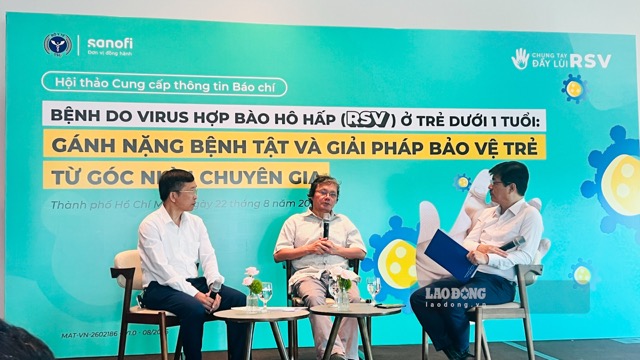
Assoc. Prof. Dr. Pham Quang Thai - Head of the Northern Regional Expanded Immunization Office, said that RSV not only affects children's health but also creates a burden for families and the health system.
When the number of children with RSV hospitalization increases, hospitals are at risk of overload. Medical resources must focus on caring for many pediatric patients at the same time, affecting the ability to treat other cases.
Hospital overload not only affects children being treated but also affects other pediatric patients. When resources must be focused on solving a large number of cases, other children may not receive adequate care as usual," Assoc. Prof. Dr. Pham Quang Thai analyzed.
From a family perspective, RSV also entails many costs. According to him, some international studies show that the cost of RSV treatment can be equivalent to 30-70% of the family's basic income, even if the child does not need treatment in the intensive care unit. If the disease progresses severely and requires ICU treatment, the cost can increase very much, even up to hundreds of millions of VND.
The burden of RSV cannot be viewed only from the perspective of an individual or family but needs to be viewed on a social scale," he said.
Dr. Truong Huu Khanh, said that the first year of life is a period that needs special protection for children from RSV, especially young children at high risk of serious illness.
In addition to hygiene measures, limiting contact with sources of infection, experts recommend that RSV can be proactively prevented by appropriate preventive measures, including vaccination for pregnant women to help protect children after birth.
Currently, there is also a new solution, monoclonal antibodies, which help directly protect children from the risk of RSV infection immediately after birth.


