
Proactive but still lacking resources
The transfer of 124 commune and ward health stations and 199 station points to the commune-level People's Committee for management was implemented from March 1, 2026, ensuring medical examination and treatment, vaccination, and epidemic prevention without interruption.
To date, 100% of health stations have been established according to the new model, most of which have consolidated leadership, maintaining more than 3,000 personnel. On average, reaching 4.3 doctors per station, equivalent to 143.33% of the plan.
The reality at Cai Nhum Commune Health Station shows that the station was transferred in its original state, continuing to serve more than 1,300 patient visits per month. Examination, treatment, vaccination and epidemic prevention are maintained.
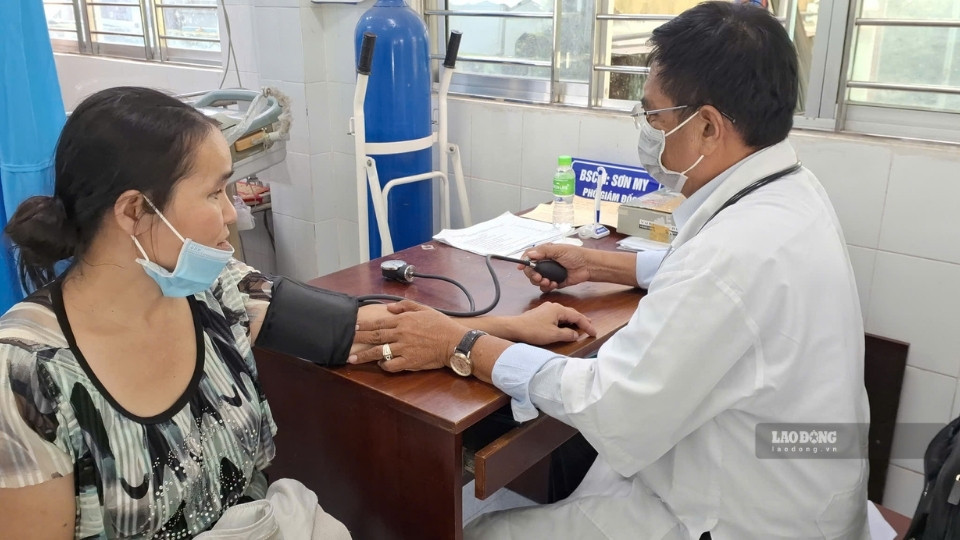
MSc.BS Pham Van Dung - Director of Cai Nhum Commune Health Station - said that the new model helps the station proactively arrange personnel according to job positions, focusing resources on medical examination and treatment and epidemic prevention and control. "The health station is more proactive, avoiding spreading out due to thin personnel," said Dr. Dung.
For people, stable operation at the facility facilitates medical examination, receipt of health insurance drugs and management of chronic diseases. Mr. Nguyen Van Tam (77 years old, Nhon Phu commune) said that he had fainted at home due to diabetes and high blood pressure. Upon receiving the news, doctors at the commune health station promptly gave first aid, called a car to transfer him to another hospital, helping him overcome the danger.
The health sector determines that bringing health stations to the commune-level People's Committee not only changes the management agency but also requires improving professional capacity, management and the ability to meet health care needs.
The reorganization of grassroots levels aims to increase the proactiveness of local authorities, bring health services closer to the people and maintain primary health care right at the place of residence.
Strengthening the front line requires resources and a roadmap
However, the new model with 5 departments, rooms and 22 tasks is creating pressure at many facilities. Some stations still lack specialist doctors, technicians, leaders; facilities are not synchronized.
At Luu Nghiep Anh Commune Health Station, maintaining the main point in An Quang Huu hamlet and facility 2 in Cho hamlet makes operating work more difficult. The station has 18 personnel, 4 doctors, but lacks testing technicians and data entry computers. "Currently, it only meets basic medical examination and treatment," said Dr. Hong Van Phan, Director of the station.
At Tan An Commune Health Station, the station is lacking the position of Director, and the headquarters is degraded. Dr. Kim Thi So Phia, Deputy Director in charge, said that with 17 personnel, the station had to merge 5 functional departments into 2, causing officials to concurrently do many jobs.
BS.CK2 Nguyen Van Doi, Deputy Director of Vinh Long Department of Health, said that the shortage of human resources and equipment according to Circular 43 is a common difficulty, which needs to be overcome according to an appropriate roadmap.
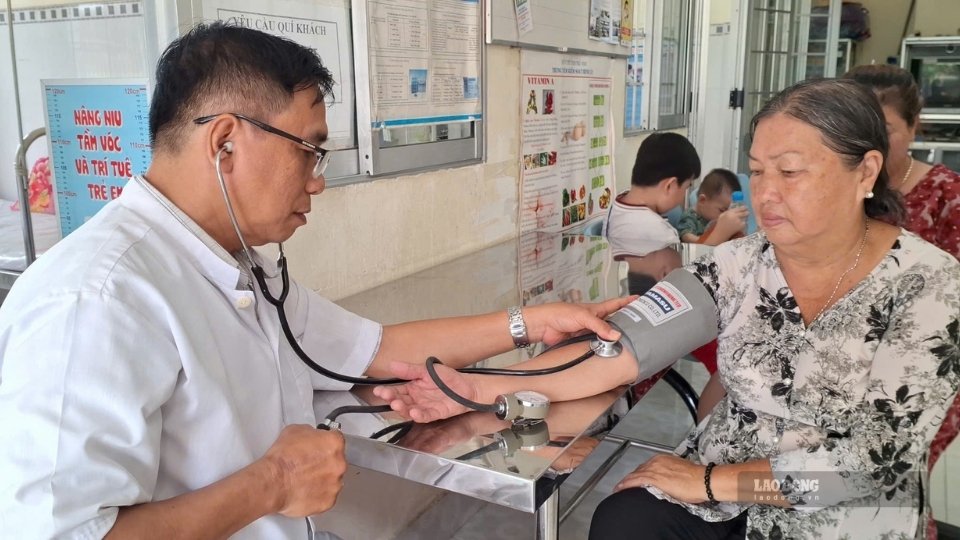
Localities need to build suitable job positions to submit to the Department of Home Affairs for approval. Facilities and equipment will be invested and compatible with skills to avoid waste," Dr. Doi said.
Comrade Nguyen Thi Be Muoi, Provincial Party Committee Member, Vice Chairman of Vinh Long Provincial People's Committee, noted that the health sector needs to synchronize solutions to improve service quality, develop specialized healthcare associated with completing the preventive health system.
It is necessary to consolidate grassroots healthcare, proactively prevent diseases early and remotely; ensure medicines, supplies, equipment, and human resources; strengthen supervision, forecasting, epidemic control, improve the quality of care, protect people's health and develop socio-economy.


