
In recent days, information about nearly 300 tons of diseased pork being smuggled into the market in Hanoi City, including many schools, has received public attention. The incident in Hanoi City once again warns localities about the risk of food insecurity.
On March 31, the Government Office said that Prime Minister Pham Minh Chinh had just signed Official Dispatch No. 26/CD-TTg to rectify the work of slaughtering control, strengthen discipline and order in the performance of official duties.
Talking to Lao Dong Newspaper on April 1st about the implementation of this telegram, Assoc. Prof. Dr. Pham Khanh Phong Lan - Director of Ho Chi Minh City Department of Food Safety said that the city has proactively implemented many solutions from before, without waiting for instructions.
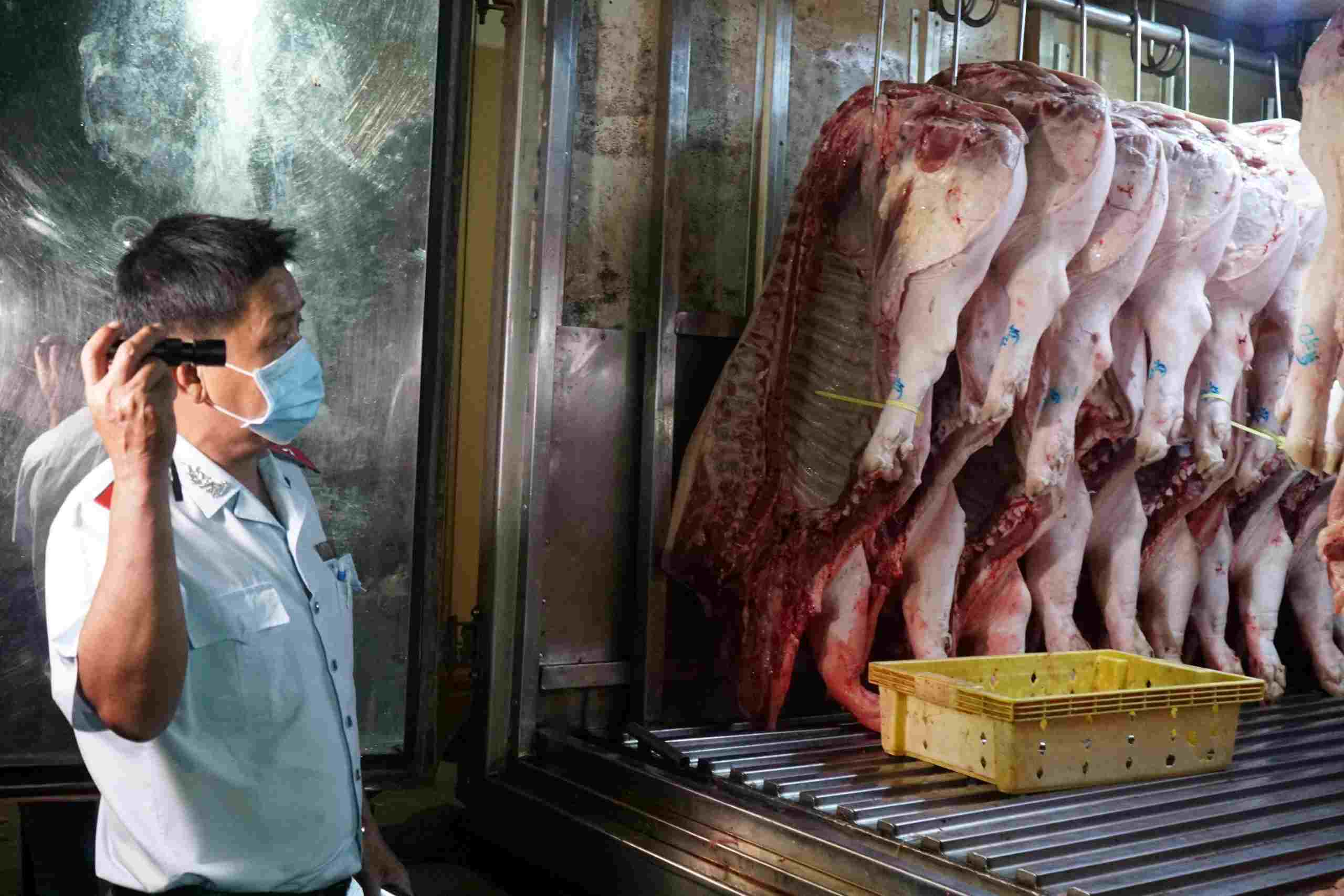
Ho Chi Minh City has organized pig slaughtering in a centralized, modern direction, not by small-scale manual methods. Products such as pork, chicken and poultry eggs are traceable by blockchain technology, helping to ensure information transparency and quality control.
For collective kitchens, especially in schools, the city focuses on prevention through training programs for about 3,500 schools. In parallel, there is regular practical inspection activities to guide the correct implementation of procedures, promptly detect and handle violations. The supervision of input materials also involves the participation of parents' associations.
Due to the large and populous area, the risk always exists, so the city is always aware of having to be vigilant and make efforts" - Ms. Phong Lan emphasized.
According to Official Dispatch No. 26/CD-TTg, some media agencies reflected that in the past time, functional agencies have detected and handled cases of collecting, transporting, slaughtering and consuming diseased pig products on a large scale in some localities, distorting slaughter control results, creating conditions for animals and products that do not meet veterinary hygiene conditions and are unsafe food to be put on the market.
This is a particularly serious case, not only increasing the risk of disease spread, affecting food safety and people's health, but also affecting discipline and order in the performance of official duties and the effectiveness of state management in the veterinary field.


