Reduced 238 health stations after arrangement
After arranging and implementing the 2-level local government model, the number of commune-level health stations in Gia Lai province decreased from 373 to 135 stations.
The average population of each station increased from about 9,000 people to 26,000 people. Along with that, the management area is wider, 135 stations must manage 369 more health points.
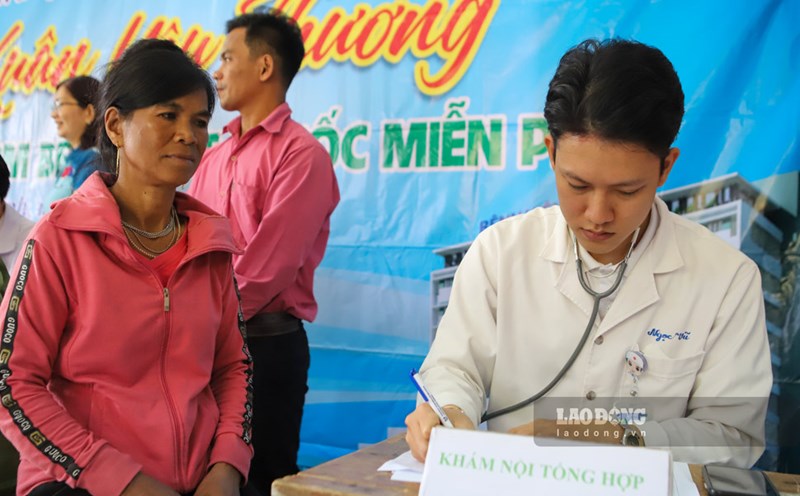
The new model sets out the requirement that commune-level health stations must perform many tasks, from primary health care, medical examination and treatment, preventive medicine to population, food safety and communication for education and health.
Therefore, human resources need to be arranged in sufficient quantity, reasonably in structure, especially professional titles such as doctors, medical assistants, nurses, midwives, pharmacists and public health.
According to the report of Gia Lai Provincial People's Committee on resolving voters' petitions related to ensuring human resources at commune-level health stations after organizing 2-level local government, voters proposed that the province supplement sufficient human resources, arrange suitable for positions, regions and population size; and at the same time have policies on salaries, allowances, training and working conditions to attract and retain medical human resources at the grassroots level.
Before this proposal, Gia Lai Provincial People's Committee directed to review human resources, job positions, recruitment needs, training, fostering, rotation of professional support and implement policies to attract human resources suitable to the new model.
Difficult to recruit, difficult to keep people
After arrangement, 135 commune-level health stations have a total increase of 114 people on duty. The province also implements allowance policies, supports, attracts medical personnel and maintains a team of population collaborators, village health workers, residential groups, and village and hamlet midwives.
However, human resources are still lacking and unbalanced. Total human resources present are lower than the assigned number of 494 people; 112/135 stations lack human resources. Among them, 4 stations do not have full-time doctors, 31 stations only have 1 doctor. Many stations lack pharmacists, midwives, public health and administrative - financial human resources.
Currently, 111/135 communes and wards have arranged specialists in charge of health, but only 16 people have medical and pharmaceutical expertise. This situation affects the capacity to advise, coordinate and handle medical work in the locality.
In the transitional period to become public non-business units, many health stations do not have enough capacity and experience to perform tasks such as recruiting public employees, bidding for procurement of medicines, medical supplies and signing health insurance medical examination and treatment contracts.
The biggest difficulty currently is the shortage of human resources, imbalance in the structure of titles and human resource distribution between localities; especially difficult to ensure that doctors work regularly at health stations in remote, isolated, ethnic minority, mountainous and border areas.
Attracting and retaining qualified human resources in these areas is still difficult, even recruiting civil servants but there are no candidates...
Gia Lai Provincial People's Committee believes that the resolution of voters' petitions is related to many levels and sectors. The organization of health stations according to the 2-level local government model is a new content, related to the organizational structure, job positions, number of employees, financial mechanisms, assets and operating conditions.
Therefore, some obstacles cannot be resolved immediately but need to continue to improve mechanisms, policies and allocate resources according to a roadmap suitable to local realities.
In the coming time, the Provincial People's Committee will continue to direct units and localities to clearly identify focal points to handle each group of problems; strengthen inspection, urging and evaluating results, ensuring that voters' recommendations are resolved according to a roadmap, with specific results.