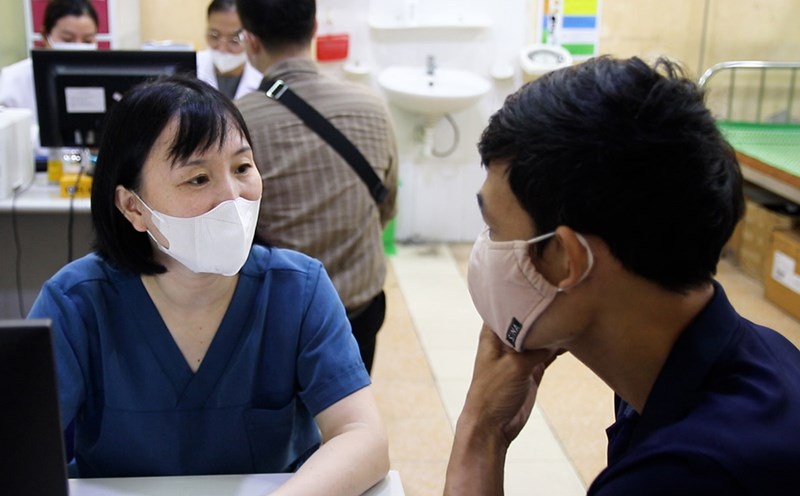
According to Mr. Vo Van Thanh - Director of Quang Ngai Provincial Department of Health, in the past time, the grassroots health system in the province has been concerned with investment, consolidation and gradually improving capacity.
However, in practice, after implementing the two-level government model and transferring health stations to commune-level People's Committees for management, it shows that the capacity of grassroots healthcare, especially in mountainous communes, remote and isolated areas, still has limitations.
Service quality is uneven between localities, especially between plains and mountainous areas.
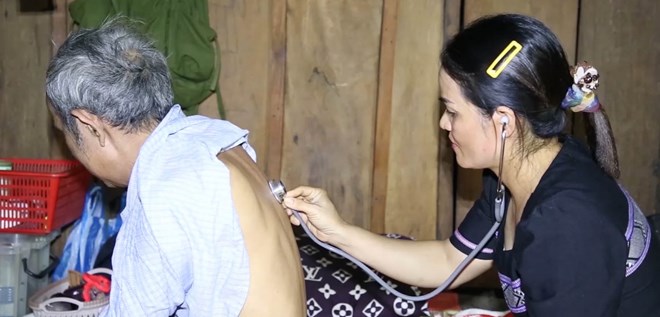
At the same time, after being transferred to the Commune People's Committee for management, some places have reduced proactiveness in expertise, relying heavily on higher levels; infrastructure, medical equipment and office equipment at some stations are currently degraded, lacking functional rooms, lacking medical examination and hospitalization areas, standard waste treatment areas; living conditions for medical staff are still difficult (office housing, clean water...).
Human resources at the station have great fluctuations, such as it is difficult to attract doctors to the grassroots level, difficult to retain them for a long time; mobilization and rotation are also difficult.
According to Mr. Vo Van Thanh, the current grassroots health system only meets the "minimum level" of primary health care, is not capable of playing an effective treatment line role, has not created confidence for people to choose to use services at the grassroots level; potentially posing a risk of reducing the effectiveness of the entire health system and increasing the situation of exceeding the line.
Currently, according to the decentralized management authority of the Provincial People's Committee, the Department of Health is coordinating with agencies, units, and localities to review and submit to the Provincial People's Committee, submit to the Standing Committee of the Provincial People's Council to consider the policy of building a resolution on policies to attract doctors and remuneration for civil servants and public employees of the Quang Ngai provincial health sector in the period 2026–2030, including the content of attracting and remunerating doctors at health stations in the province.
The Director of the Department of Health of Quang Ngai province said that if the above resolution is decided and promulgated by competent authorities, it will contribute to attracting and retaining doctors at stations, thereby contributing to improving the quality of people's health protection and care at the grassroots level.
In addition, according to the draft resolution of the Provincial Party Committee, it is expected to assign the Department of Health to preside over and advise on the promulgation of a project to recruit and arrange a team of doctors to work at major hospitals in the province, and at the same time link it with the obligation for hospitals to send doctors on a fixed-term assignment to work at commune-level health stations, ensuring the requirement for regular doctors to operate at commune-level health stations. It is expected to recruit 100 doctors to strengthen 95 commune-level, ward-level health stations and Ly Son Special Zone Health Center.
If the above project is decided and promulgated by competent authorities, it will contribute to ensuring the requirement for regular doctors to operate at commune-level health stations, thereby contributing to improving the quality of people's health protection and care at the grassroots level" - Mr. Vo Van Thanh emphasized.