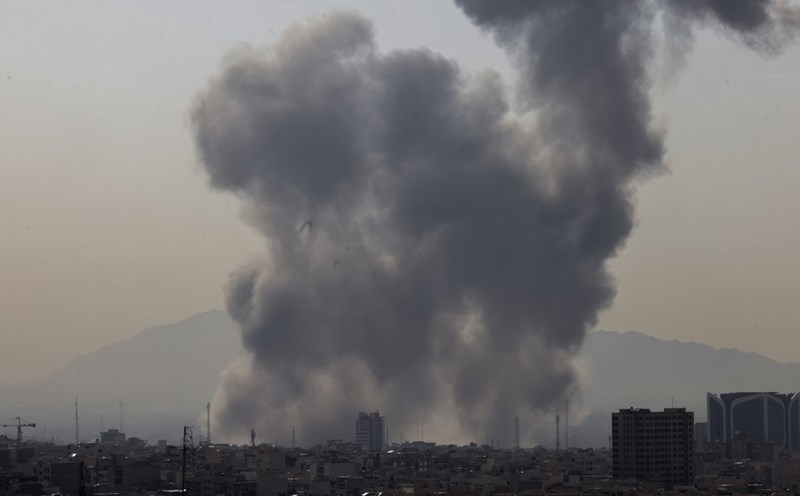
On February 28, Israeli media reported that General Amir Hatami - Commander of the Iranian Army may have been killed when a missile hit a strategic command center in a joint US-Israel operation.
If confirmed, this will be Tehran's largest military loss since the beginning of 2026, taking place immediately after US President Donald Trump announced the start of major operations to neutralize the country's nuclear capabilities.
The loss of the head of the military is predicted to paralyze Iran's ability to run and resist in the context of rapidly escalating conflict.
General Amir Hatami is a deeply influential figure in Iran's military power structure. Before becoming Commander of the Army, he served as Minister of Defense (2017-2021) and was the chief architect of Iran's "missile-based defense" doctrine.
He is the first officer from the regular army (Artesh) to hold key leadership positions in more than 2 decades, breaking the long-standing dominance of the Islamic Revolutionary Guard Corps (IRGC).
His career is associated with promoting the development of long-range ballistic missiles such as Khorramshahr and Fateh, weapons that the US and Israel consider a direct threat.
Notably, General Hatami has only been in office as Army Commander for 8 months, after his predecessor, General Mohammad Bagheri, was assassinated in an Israeli airstrike in June 2025. This development shows a serious security loophole in Iran's defense system.
According to an announcement from the Israel Defense Forces (IDF), the operation named "Lion roaring" has targeted symbolic power and intelligence infrastructure in Tehran. Israeli Prime Minister Benjamin Netanyahu affirmed that this attack is a mandatory step to destroy Tehran's nuclear capabilities, which Tel Aviv considers a threat to Israel's survival.
In the US, the Department of Defense affirmed that the airstrikes were deployed accurately to "demilitarize" resources threatening allied security. F-35 squadrons and fleets in the Gulf region have coordinated to destroy many S-300 air defense systems and Iranian ballistic missile depots. Black smoke rising from military bases around Tehran has confirmed the scale of the destruction of the attack.
Meanwhile, neighboring Iraq has announced the closure of its airspace to avoid risks from unidentified flying objects.
Currently, the Iranian Islamic Revolutionary Guard Corps (IRGC) has reacted fiercely in retaliation against US bases. International experts expressed concern that the conflict will get out of control as both sides refuse diplomatic negotiation efforts.