
On the morning of April 17, US President Donald Trump and Iranian Foreign Minister Abbas Araghchi announced that they had reached an agreement allowing free circulation through the Strait of Hormuz.
According to the plan, this important shipping route should have been reopened as soon as the US-Iran ceasefire took effect 10 days ago. However, Iran later withdrew from the agreement, requiring Israel to stop military operations in Lebanon first.
After Israel and Lebanon reached an agreement on April 16, the Iranian Foreign Minister was the first to announce a new step related to the strait.
Mr. Araghchi wrote on social network X: The travel of all commercial ships through the Strait of Hormuz is declared completely open for the remainder of the ceasefire, according to the coordinated route announced by the Iranian Port and Maritime Organization.
However, the April 17 announcement on Hormuz comes with many notable restrictions. First, President Trump affirmed that the US still maintains naval blockade on ships entering and leaving Iranian ports. This means that Iranian oil tankers cannot pass through the strait.
On social media, Mr. Trump noted that the US will not lift the embargo until a comprehensive nuclear agreement with Iran is reached.
Commander of the US Central Command, Admiral Brad Cooper confirmed that the strait is still open to ships going to and from ports not belonging to Iran, but Washington is closely monitoring Iranian ports and is ready to maintain blockade for as long as necessary.
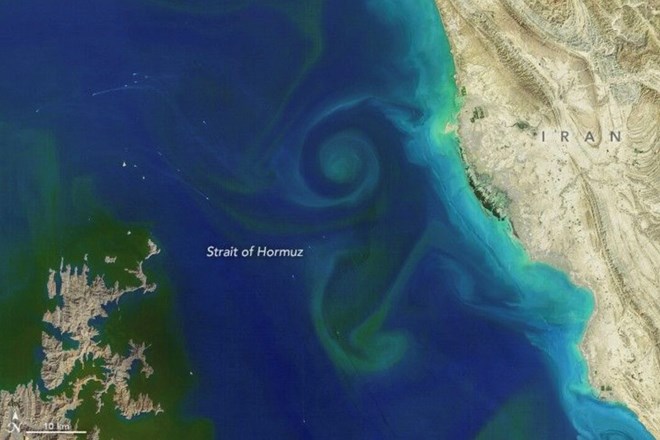
According to maritime data analysis company Kpler, there are currently about 700 ships stranded in the Persian Gulf, of which about 250 ships carry a total of 165 million barrels of crude oil and related products.
Iran's "complete opening" of the Strait of Hormuz comes with the condition: Ships are only allowed to pass through the coordinated route established by Tehran, forcing ships to move closer to the Iranian coast.
In addition, there is still ambiguity about whether Iran will accept to let the US continue the blockade or not.
Iranian state media said that the Foreign Minister's statement was incomplete, emphasizing that Iran has full authority to monitor cross-border activities and traffic will be considered invalid if US blockades continue.
Although the Foreign Minister declared the strait "completely open", the Iranian Islamic Revolutionary Guard Corps said that the route is still restricted, military ships are banned and all movements must be permitted by the Iranian navy.
On the same day, April 17, the US Central Command said that a US Navy guided-missile destroyer forced an Iranian merchant ship to return to port. A total of 19 ships were asked to turn around during the blockade.
Data from MarineTraffic shows that the first ship to pass through the strait after the announcement was the empty cruise ship Celestyal Discovery, flying the Malta flag, after 47 days anchored in Dubai.
The complete restoration of traffic through the strait will depend on the decision of the shipping lines and the level of risk they assess has been controlled. Maersk shipping group noted that all decisions to pass through the Strait of Hormuz will be based on risk assessment and close monitoring of the security situation.
Meanwhile, the International Maritime Organization is verifying information about the reopening of the Hormuz Strait, but has not confirmed that the route is safe enough for traffic.


