
Mặt trời đã tăng hoạt động trong tuần qua với các vết đen mặt trời tăng và một số vụ phóng khí vành nhật hoa (Coronal Mass Ejection, viết tắt là CME) diễn ra hàng ngày.
Theo Newsweek, Trái đất liên tục hứng chịu các cơn bão mặt trời và có khả năng một cơn bão đang xảy ra cuối ngày 25.11.
Cụ thể, NASA cho hay, một trong những vụ phóng khí vành nhật hoa có khả năng đang trong quá trình va chạm với Trái đất.
Khi CME chạm vào Trái đất có thể gây ra bão địa từ, với từ trường và bầu khí quyển của Trái đất bị xáo trộn do plasma mặt trời.
Huw Morgan, người đứng đầu nhóm Vật lý Mặt trời tại Đại học Aberystwyth ở Anh, chia sẻ: “Khi một cơn bão plasma lớn phun trào từ mặt trời, cơn bão đó mang từ trường định hướng ngược lại với từ trường Trái đất, chúng ta có một "cơn bão hoàn hảo" và một cơn bão địa từ lớn hơn".
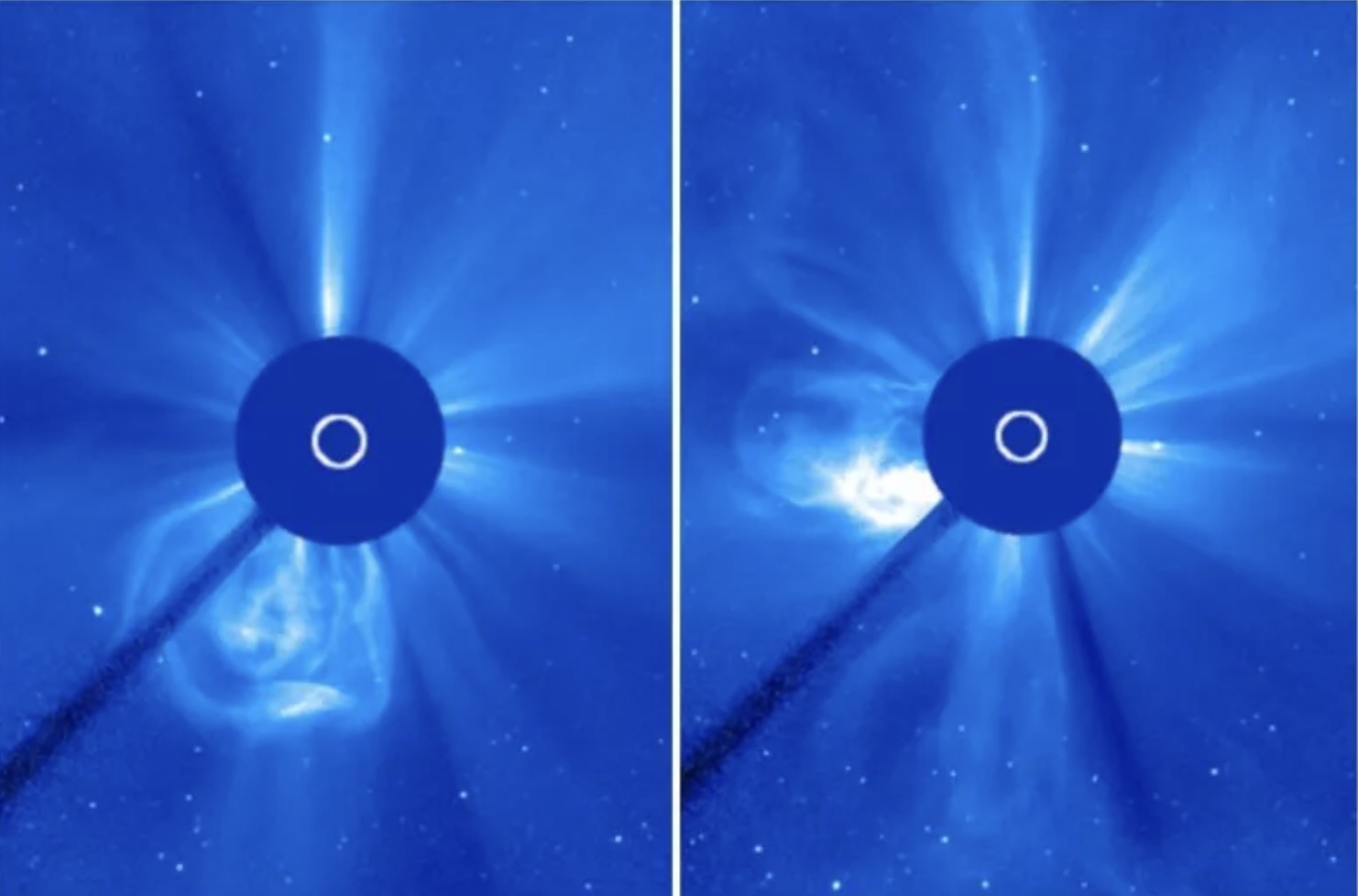
Spaceweather.com giải thích, những cơn bão địa từ nhỏ cấp G1 có thể xảy ra cuối ngày 25 đến ngày 26.11 khi 2 CME có khả năng sượt qua từ trường Trái đất. Cả 2 CME đều bị đẩy vào không gian từ vụ phun trào mặt trời xảy ra đầu tuần này.
Vụ phóng khí vành nhật hoa (CME) là việc plasma và từ trường bị phóng một lượng lớn ra khỏi vành nhật hoa của mặt trời. Chúng có thể phóng ra hàng tỉ tấn vật chất của vành nhật hoa và mang theo từ trường mạnh hơn cường độ từ trường liên hành tinh (IMF) của gió mặt trời. CME di chuyển từ mặt trời ra bên ngoài với tốc độ từ dưới 250 km/giây đến gần 3.000 km/giây.
Trong khi đó, bão địa từ là sự gián đoạn của từ trường Trái đất do khí thải mặt trời gây ra. Cường độ của bão địa từ được đánh giá theo thang điểm từ G1 đến G5. Bão G1 là bão yếu nhất và có thể xảy ra thường xuyên, nhiều lần mỗi tháng.
Cơn bão G1 khó có thể gây ra bất kỳ thiệt hại nào cho sự sống trên Trái đất nhưng vẫn có thể ảnh hưởng đến lưới điện và tác động đến một số chức năng của vệ tinh như chức năng được sử dụng cho hệ thống GPS và thiết bị di động.


