On August 1 (local time), US scientists announced the discovery of a completely new cave fish species with a strange appearance. This fish species is believed to be in the group of the rarest fish in the world.
The discovery was made at Bobcat Cave near Huntsville, Alabama (USA). Initially, the research team only intended to survey known organisms in the cave such as Alabama cave shrimp, cave crab and Southern cave fish.
However, the group suddenly encountered a fish species with an unusual shape. This creature has a hunched back, a long muzzle, many thorny fins, completely no eyes and no pigment on the body. The skin is so transparent that the brain can be seen.
Dr. Matthew Niemiller, Associate Professor of Biology at the University of Alabama in Huntsville and the lead author of the study, said he initially suspected that this was just a variant of the Southern Cavefish - a species that had been recorded before.
However, after sharing images with colleagues, the research team conducted CT scans, genetic analysis and bone structure comparison. The results showed that this is a completely new genus and species, clearly different from all known cave fish species.
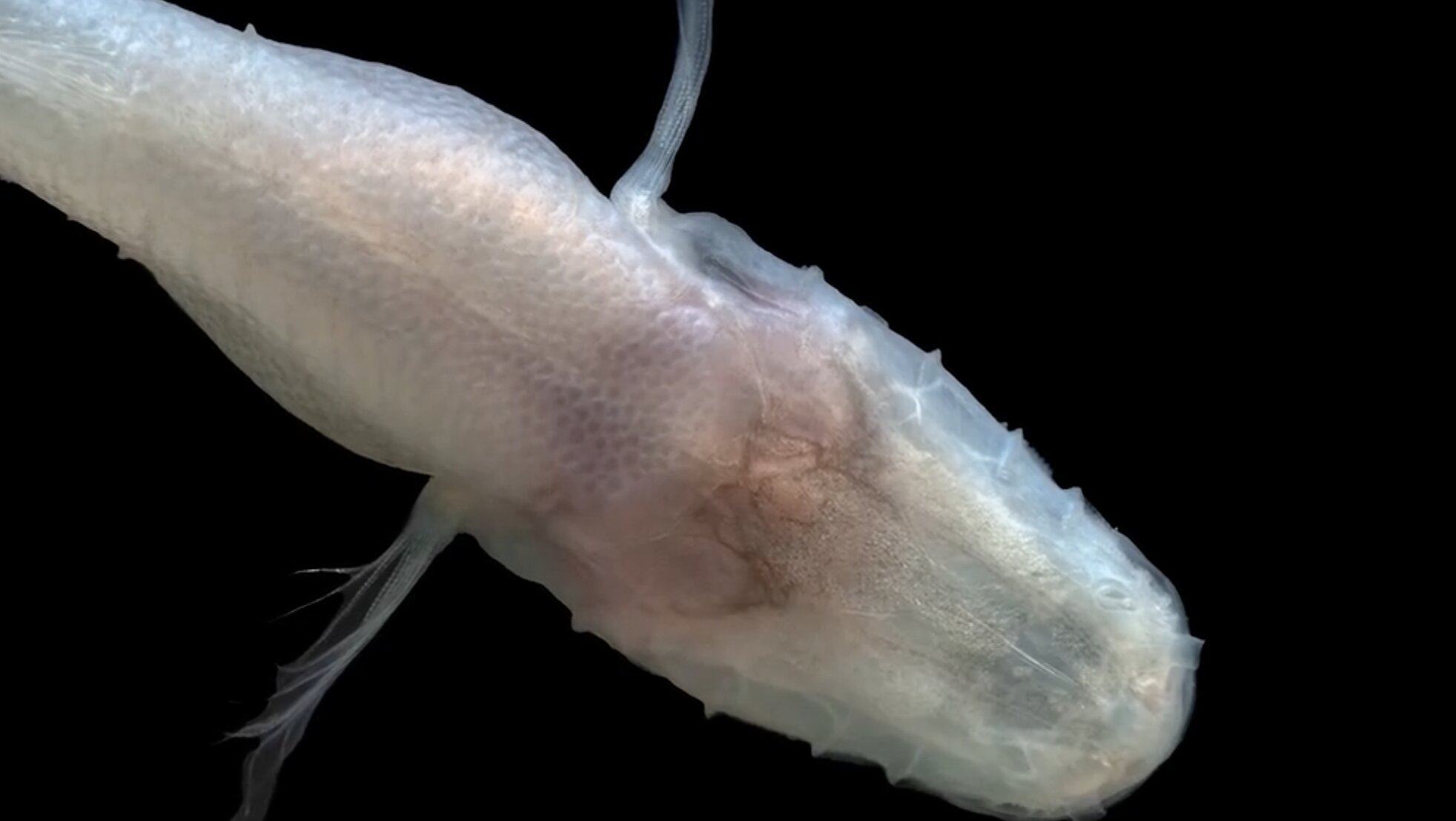
The new fish species is scientifically named Demogorgonichthys arcanus, also known as the "devil" cave fish. The name is inspired by the monster Demogorgon in Netflix's famous series Stranger Things.
According to scientists, this fish species has only been recorded at one location, Bobcat Cave. The population size is said to be very small, making them one of the rarest fish species in the world.
The research team has not yet determined how to distinguish male and female fish, nor does it know how this species reproduces. They believe that "devil" fish are more likely to eat any creature small enough to get into their mouth.
Experts believe this discovery shows that there are still many unknown animal species, even in well-studied areas. Bobcat Cave is located under the Redstone Arsenal military base of the US military - an area with very limited access.
Scientists also warn that the new fish species is likely in extreme danger because it only lives in a small cave system that is completely dependent on groundwater sources.
However, water quality protection measures have been applied in this area, so the immediate risk of extinction is assessed as not too high.
According to the research group, the discovery of rare organisms such as "devil" cave fish not only helps broaden understanding of biodiversity but also contributes to monitoring the health of groundwater ecosystems - a factor directly related to human living environment.