
Ngoại hành tinh (hành tinh ngoài hệ mặt trời) mới phát hiện thuộc nhóm sub-Neptune, tức hành tinh có bán kính nhỏ hơn sao Hải Vương dù nó có thể có khối lượng lớn hơn, hoặc hành tinh có khối lượng nhỏ hơn sao Hải Vương dù bán kính lớn hơn.
Ngoại hành tinh này được gọi là TOI-269 b, lớn hơn Trái đất gần ba lần.
Phát hiện này được các nhà thiên văn học trình bày chi tiết trong một bài báo xuất bản tháng 4 trên arXiv.
Vệ tinh Khảo sát Ngoại hành tinh Chuyển tiếp (TESS) của NASA đang khảo sát khoảng 200.000 ngôi sao sáng nhất gần mặt trời nhằm tìm kiếm các ngoại hành tinh chuyển tiếp.
Cho đến nay, TESS xác định được gần 2.700 ngoại hành tinh ứng viên, trong đó 125 hành tinh đã được xác nhận.
TOI-269 (còn được gọi là TIC 220479565) là một ngôi sao lùn M cách Trái đất 186 năm ánh sáng. Sao lùn này có loại quang phổ M2V, bán kính bằng khoảng 0,4 bán kính mặt trời và khối lượng xấp xỉ 0,39 lần mặt trời. Nhiệt độ hiệu dụng của ngôi sao được ước tính là khoảng 3.500K, trong khi tính kim loại của nó ở mức khoảng -0,29.
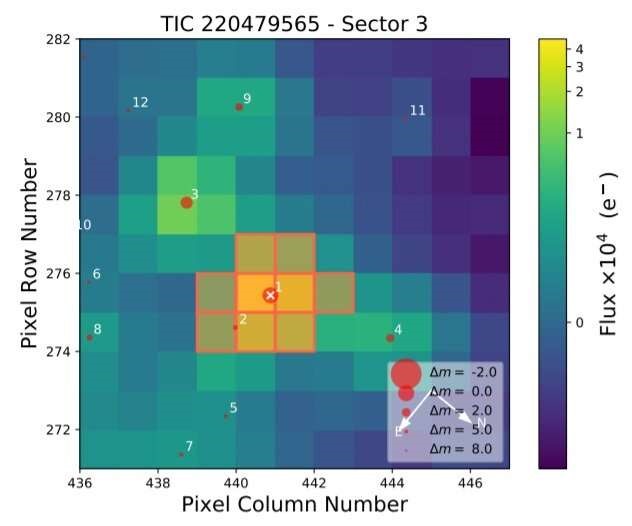
TESS quan sát TOI-269 từ tháng 9.2018 đến tháng 7.2019 với kết quả là xác định tín hiệu chuyển tuyến trong đường cong ánh sáng của ngôi sao này. Hiện tại, thông qua nhiều kính thiên văn trên mặt đất, trong đó có ExTrA tại Đài quan sát La Silla ở Chile, nhóm nhà thiên văn học do Marion Cointepas dẫn đầu đã xác nhận bản chất hành tinh của tín hiệu này.
Ngoại hành tinh mới phát hiện có bán kính khoảng 2,77 bán kính Trái đất, lớn gấp 8,8 lần Trái đất và quay quanh sao chủ 3,7 ngày một lần. Các quan sát cho thấy, TOI-269 b cách ngôi sao mẹ khoảng 0,0345 đơn vị thiên văn và nhiệt độ cân bằng của nó rất có thể ở mức 530K.
Điểm thú vị là ngoại hành tinh TOI-269 b có độ lệch tâm quỹ đạo cao bất thường - xấp xỉ 0,425. Đây là một trong những hành tinh có độ lệch tâm cao nhất trong số các hành tinh ngoài hệ mặt trời đã biết có chu kỳ dưới 10 ngày.
"Chúng tôi phỏng đoán TOI-269 b có thể có độ lệch tâm cao khi nó di chuyển vào bên trong thông qua các tương tác giữa hành tinh và hành tinh" - các nhà thiên văn nhận định.
Thêm vào đó, mật độ của ngoại hành tinh TOI-269 b, được tính là khoảng 2,28g/cm3, thấp hơn đáng kể so với mật độ điển hình của các hành tinh đá và cho thấy sự hiện diện của một lớp phủ dễ bay hơi.
Mật độ thấp như vậy cùng các đặc tính khác của ngoại hành tinh mới phát hiện khiến hành tinh này trở thành mục tiêu thú vị trong mô tả đặc tính khí quyển nhằm so sánh với các sao dạng sub-Neptune khác.


