
In the context of war in the Middle East increasing the risk to energy transport routes, Saudi Arabia is accelerating the transfer of a large part of crude oil flow from the Persian Gulf region to the Red Sea.
This move is clearly shown by Riyadh's recent opening of a tender to sell 2 million barrels of Arab Light crude oil, the country's key oil, with a cargo pickup point in the port city of Yanbu on the Red Sea coast. This is the fourth tender that Saudi Arabia has implemented in a short time to adjust export flows.
Riyadh's strategic shift is rapidly reflected on the global shipping map. Ship tracking data shows 27 large-capacity oil tankers (VLCCs) heading towards Yanbu to receive cargo, a figure showing a significant shift in crude oil shipping routes.
This number far exceeds the number of ships heading to other ports in the region. About 18 ships are moving to Jeddah, while smaller ports such as Jizan, Duba and Rabigh only recorded about 3 ships each.
Analysts believe that the concentration of a large number of super ships to Yanbu shows that Saudi Arabia is accelerating the use of the Red Sea as a replacement export route, in case traffic through the Persian Gulf is disrupted.
To implement this strategy, Riyadh has shifted a significant part of its oil production from the eastern fields to the Petroline oil pipeline - a crude oil transportation system across Saudi Arabia's territory from east to west.
Petroline has a nominal capacity of 7 million barrels of oil/day, allowing crude oil from the Persian Gulf region to be delivered directly to Yanbu without going through the Strait of Hormuz. Thanks to that, Saudi Arabia can maintain export flows to international markets even when traditional transport routes face risks.
According to data from shipping analysis companies, thanks to this shift, oil exports from Yanbu have skyrocketed to about 2.47 million barrels/day, up 330% compared to the time before regional tensions broke out.
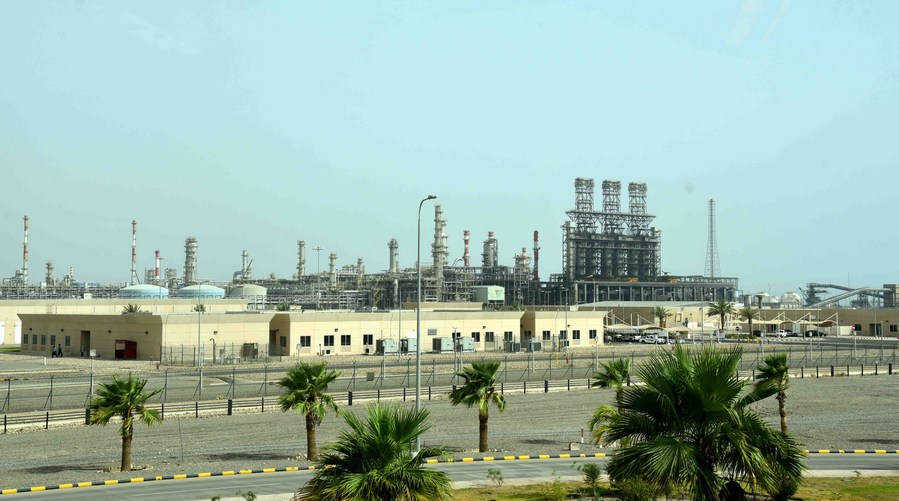
Although Petroline has a very large capacity, the cargo handling capacity at ports in Yanbu is still limited. According to data from the analysis company Vortexa, the ports here can only export a maximum of about 3 million barrels of oil/day, much lower than the theoretical transport capacity of the pipeline.
This means that although Saudi Arabia can bring large volumes of crude oil to the Red Sea coast, the actual export capacity still depends on the capacity to receive ships and load goods at ports.
Meanwhile, oil transport routes to Asia are still being maintained despite tensions in the region. A tanker loaded 1 million barrels of Saudi Arabian oil in Yanbu earlier this month just docked at an Indian port after crossing the Ormuz Strait safely.
According to diplomatic sources, Iran allowed Indian oil tankers to pass through the Strait of Hormuz, after exchanges between the foreign ministers of the two countries. At least 2 oil tankers crossed Hormuz on March 13 on their way to India.
The fact that dozens of super oil tankers simultaneously head towards the west coast of Saudi Arabia shows that global oil flows are beginning to adjust to adapt to an unstable geopolitical environment, where seemingly fixed transport routes for decades may have to change rapidly.


