At 10:30 PM on January 16, 2026, the AFC U23 Championship quarter-final match between U23 Vietnam and U23 UAE took place in a tense atmosphere. On the field, Vietnam won a breathtaking 3-2 victory, bringing bursting emotions to millions of fans.
Outside the football field, many people are lured into fake livestreams on YouTube, watching video games or old clips replayed, thinking they are watching the match live.
Mr. Nguyen Van H. (32 years old, business employee in Hanoi) recounted: "At that time, I was walking on the street, I didn't have time to turn on the TV. I went to YouTube to search for'live U23 Vietnam - UAE' and saw many videos with a red mark'playing'. I clicked on a channel with more than 100,000 viewers at the same time, so I completely believed it was true.
According to Mr. H., after only about 5-7 minutes of watching, he started to see "something wrong". "The image only has one camera angle, the player moves stiffly, the situation repeats. But the comments are very real, very familiar. Only when you look closely do you know it's a video game.
Not only Mr. H., Ms. Le Thu P. (26 years old, a student in Lao Cai) also fell into a similar situation. “I watched almost the entire first round and realized it. At that time, I was both angry and funny. Annoyed because I was deceived, but also surprised why so many people watched.”
According to records, these channels use a rather similar script: setting a title with the words "Live", attaching a timeline that coincides with real-life match hours, inserting comments from official channels, and then broadcasting football video games.
The costumes in the game chosen completely match: Vietnam red shirt, UAE white shirt. For viewers on the phone, in conditions where the network is unstable or moving, confusion is almost inevitable.
Some videos peaked at over 200,000 views at the same time. By noon on January 17, a clip of this type had reached nearly 7 million views – a number that shows an alarming level of spread.
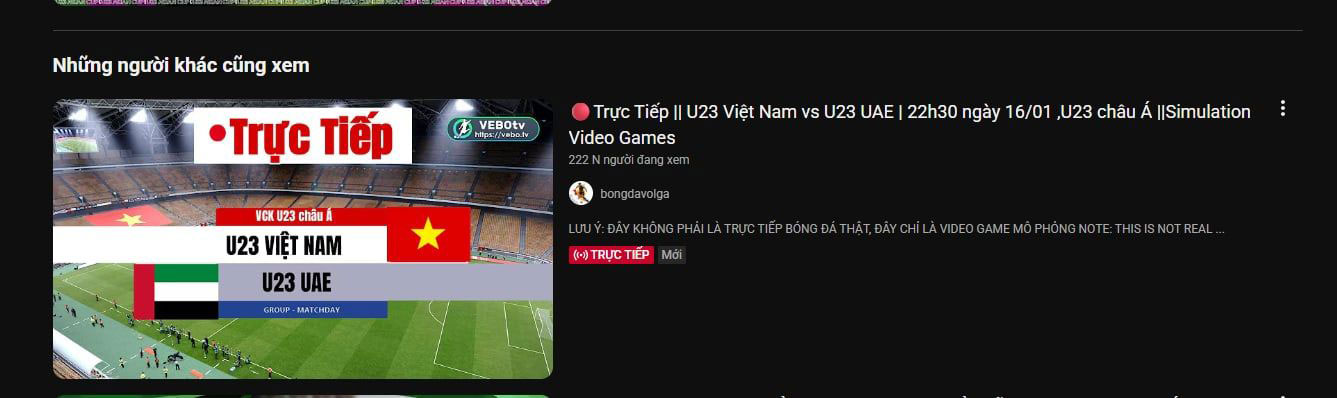
Not stopping at the Vietnam - UAE match, many other channels also replay old matches from many years ago, or continue to use video games to "anticipate" hot matches, attracting millions of views with real-and-false swaps.
Talking to reporters, Mr. Nguyen Dinh Vu, a network security expert of Tay Bac Media Joint Stock Company, said that this is a typical form of digital content scam, exploiting the psychology of the crowd and trust in large platforms like YouTube.
Viewers tend to believe in videos with multiple views at the same time. Bad guys understand this very well, so they invest in titles, playtime, and even commentary sounds to deceive the eyes and ears," Mr. Vu analyzed.
According to him, the ultimate goal is not just to get views. "High views help them earn advertising money, pushing the channel to algorithms. More dangerously, this could be a stepping stone to then lead viewers to malicious links or other forms of scams.
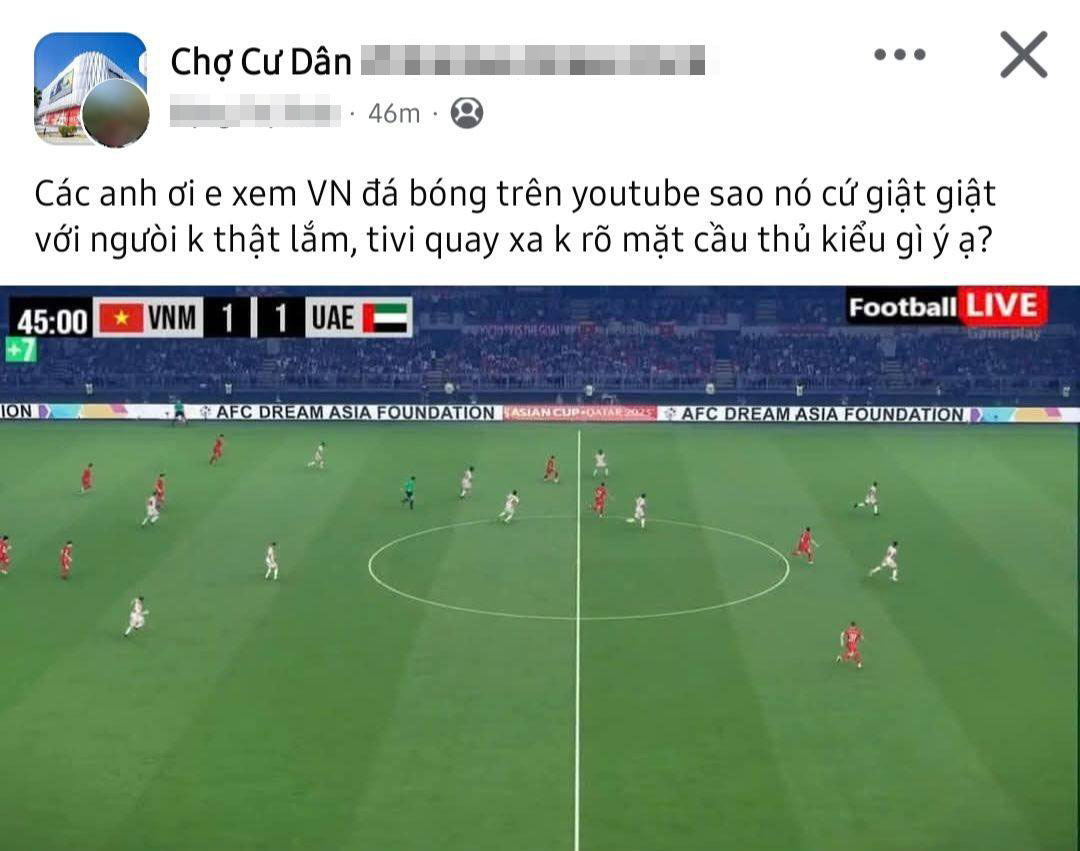
Another expert in the field of information security commented: "When the platform has not had time to control, temporary responsibility still falls on users. But in the long term, platforms are forced to have a mechanism to recognize and clearly warn livestreams showing signs of counterfeiting.
The fact that millions of people are "leaved by the nose" to watch video games instead of real football shows a large gap in controlling livestream content. When the red dot "being broadcast live" becomes a camouflage tool, user trust is easily exploited.