
Vietnamese sports move through stages
Mr. Nguyen Danh Hoang Viet - Director of the Vietnam Sports Administration - said that the 80-year journey of Vietnamese sports is not only a continuous development process but also a change in role and organization through each period.
Looking back at the 8-decade journey, it can be affirmed that this is a very proud journey, clearly showing the role and position of physical education and sports in the revolutionary cause of the nation.
During the years of resistance against French colonialism, revolutionary physical education and sports were built according to the Party's viewpoints and Ho Chi Minh's ideology, directly serving revolutionary tasks, for the benefit of the people. The movements'Health for the country','Health for resistance, national construction' became the core of physical education and sports (TDTT) in this period," Mr. Viet said.
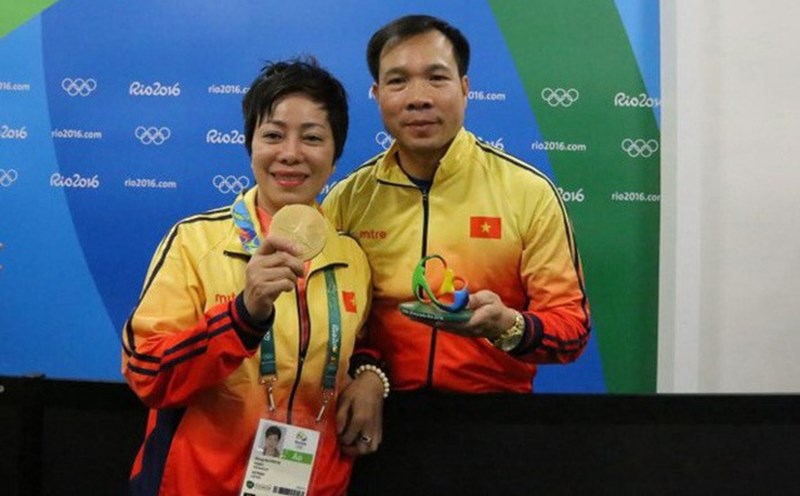
After the war periods, sports gradually shifted to a system development model, expanding mass movements and gradually integrating internationally.
This process is marked by many specific milestones, reflecting the progress in the quality of achievements. Vietnamese sports set the world record for the first time in 1962 by shooter Tran Oanh; the milestone of Olympic reintegration in 1980; the first ASIAD gold medal in 1994 by Tran Quang Ha; the first Olympic medal in 2000 by Tran Hieu Ngan; the Olympic gold medal in 2016 by Hoang Xuan Vinh; the women's football team qualified for the 2023 World Cup; the U23 men's team won the Asian runner-up title in 2018...
Throughout 80 years of journey, Vietnam has also hosted and successfully organized many major international sports events such as SEA Games 22 (2003), 3rd Asian Indoor Games (2009), 5th Asian Beach Games (2016), SEA Games 31 (2022) and many other important international tournaments.
Mr. Viet emphasized: "Those achievements not only carry professional value, but are also a vivid symbol of the will, aspiration and bravery of Vietnamese people.

Science-based orientation
At the current stage, according to Mr. Nguyen Danh Hoang Viet, the fundamental change lies in making sports science and technology a pillar in training and competition.
It can be said that sports science and technology have become one of the decisive factors in improving the achievements of Vietnamese athletes, especially when we aim for major arenas such as ASIAD and Olympic Games.
First of all, we have made clear progress in applying science to training. If previously training mainly relied on the experience of coaches, now teams have paid more attention to scientific factors such as exercise physiology, nutrition, recovery, competition psychology and exercise load management. This is an important shift, laying the foundation for a modern training approach," Mr. Viet analyzed.
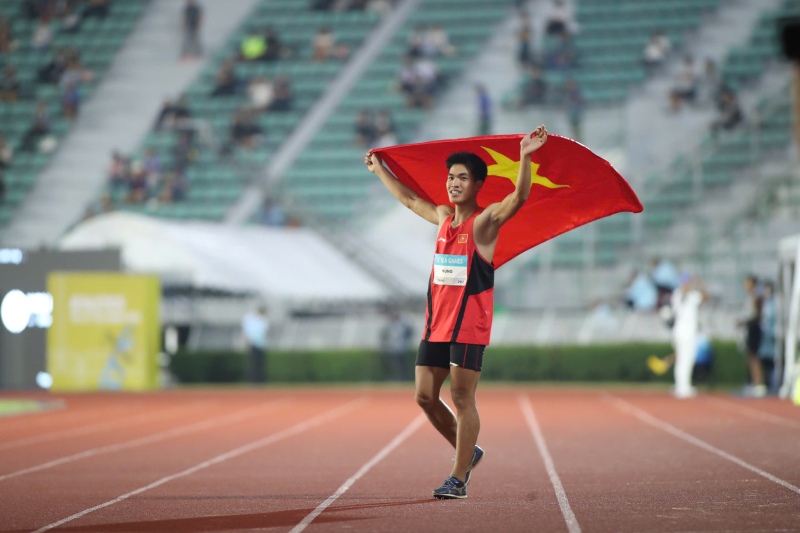
Currently, the system serving sports science is gradually being completed, from training centers, sports medicine to biomedical testing and doping control. The application of technology in technical analysis, tracking of exercise indicators and building athlete databases has also been implemented.
According to the Director of the Vietnam Sports Administration, this is the basis for the training process to become accurate, and can be individualized for each athlete, instead of applying a common method.
Not only stopping at the present, the 10-year orientation is established with the requirement to improve competitiveness quality at a higher level.
Mr. Nguyen Danh Hoang Viet emphasized: "We identify the goal in the next 10 years as continuing to develop Vietnamese sports in a sustainable, professional and approaching continental and world level direction.
First of all, in terms of achievements, Vietnamese sports strives to maintain its position in the top at the SEA Games, but more importantly, to improve competitiveness at ASIAD and aim to win more medals at the Olympic Games. This is a qualitative shift, showing the aspiration to reach out to the big playground".
Along with the goal of achievement, Mr. Viet said that the sports sector will focus on building a synchronous and in-depth training system, in which school sports play a fundamental role, and training routes are interconnected from the local level to the national team.
In addition, key investment in Olympic sports and strength sports is identified as a breakthrough solution.
Mr. Viet also emphasized: "Another important goal is to promote the application of science and technology and artificial intelligence in training, competition and sports management. This will be a key factor to shorten the gap with advanced sports.
Going along with that is the direction of developing the sports economy and strengthening socialization to mobilize more non-budgetary resources, creating conditions to improve the quality of training and competition.
Vietnamese sports is moving to a stage of development based on science, data and focused investment, with the goal of enhancing its position in continental and world arenas in the next decade.


