
SJC gold bar price
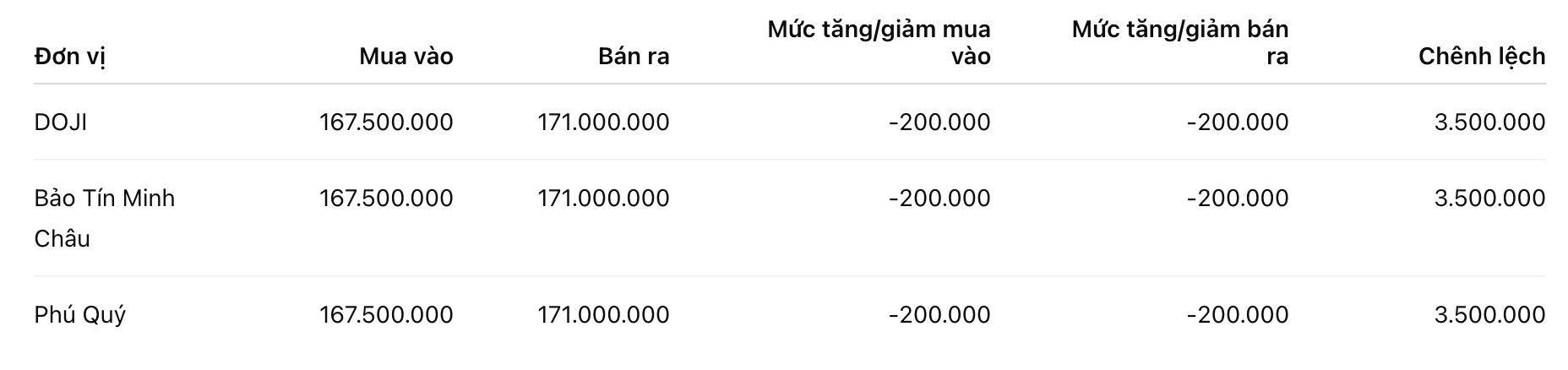
As of 6:00 AM, SJC gold bar prices were listed by DOJI at 167.5-171 million VND/tael (buying - selling), down 200,000 VND/tael in both buying and selling directions. The difference between buying and selling prices is at 3.5 million VND/tael.
SJC gold bar price was listed by Bao Tin Minh Chau at 167.5-171 million VND/tael (buying - selling), down 200,000 VND/tael in both buying and selling directions. The difference between buying and selling prices is at 3.5 million VND/tael.
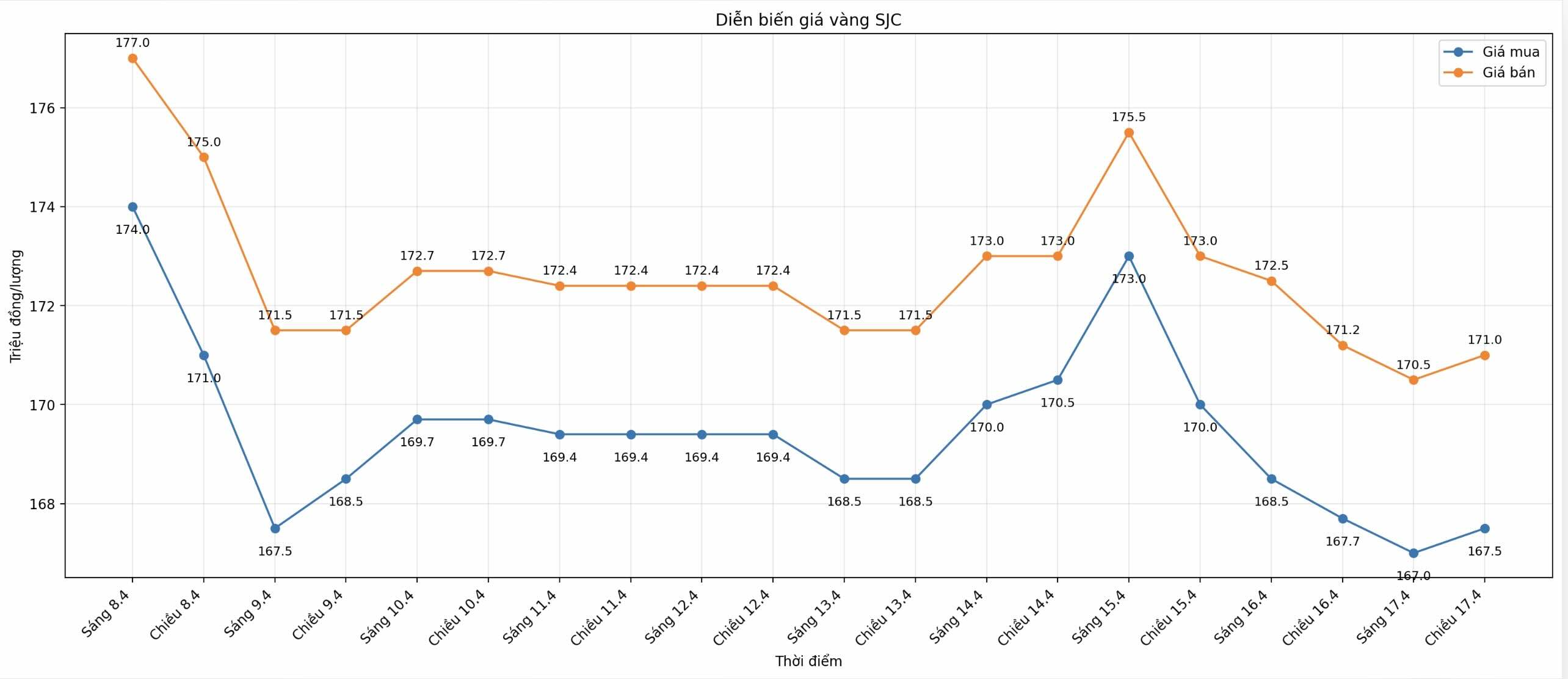
Phu Quy Jewelry Group listed SJC gold bar prices at 167.5-171 million VND/tael (buying - selling), down 200,000 VND/tael in both buying and selling directions. The difference between buying and selling prices is at 3.5 million VND/tael.
9999 gold ring price
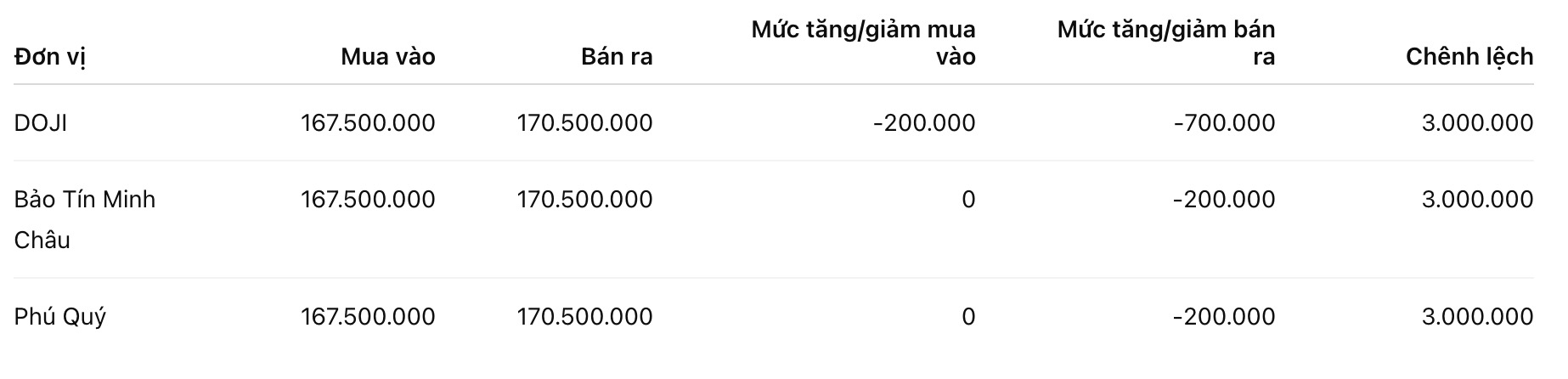
As of 6:00 AM, DOJI listed gold ring prices at the threshold of 167.5-170.5 million VND/tael (buying - selling), down 200,000 VND/tael on the buying side and down 700,000 VND/tael on the selling side. The difference between buying and selling prices is at the threshold of 3 million VND/tael.
Bao Tin Minh Chau listed the price of gold rings at 167.5-170.5 million VND/tael (buying - selling), unchanged in the buying direction and down 200,000 VND/tael in the selling direction. The difference between buying and selling prices is at 3 million VND/tael.
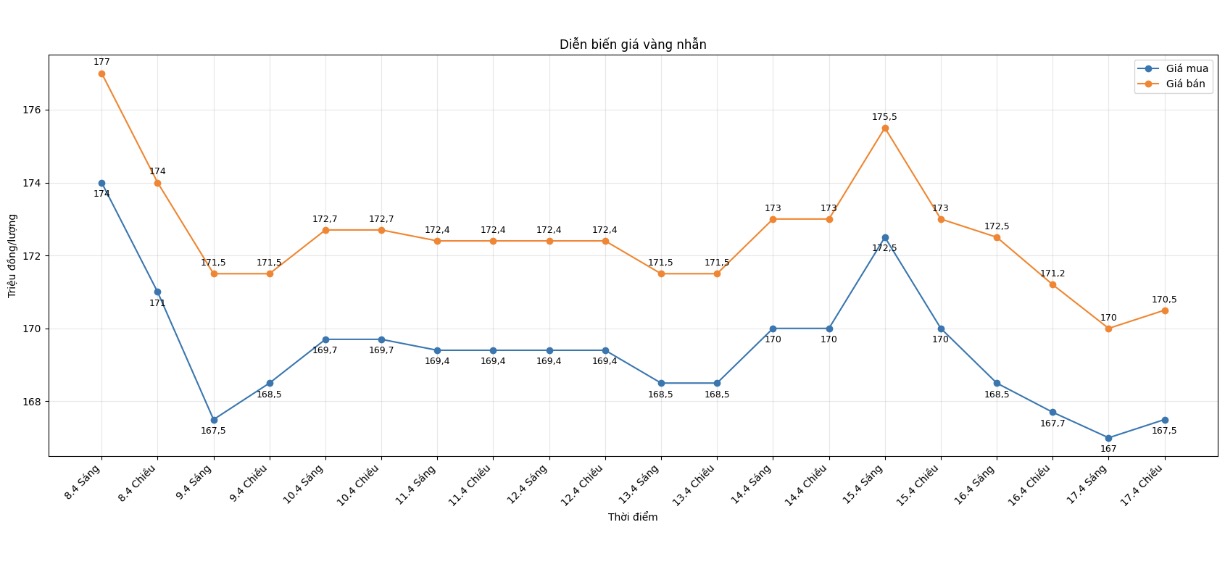
Phu Quy Gold and Gems Group listed the price of gold rings at 167.5-170.5 million VND/tael (buying - selling), unchanged in the buying direction and down 200,000 VND/tael in the selling direction. The difference between buying and selling prices is at 3 million VND/tael.
Currently, the buying - selling price difference of gold is at a very high level, around 3 million VND/tael, posing a risk of losses for investors.
World gold price
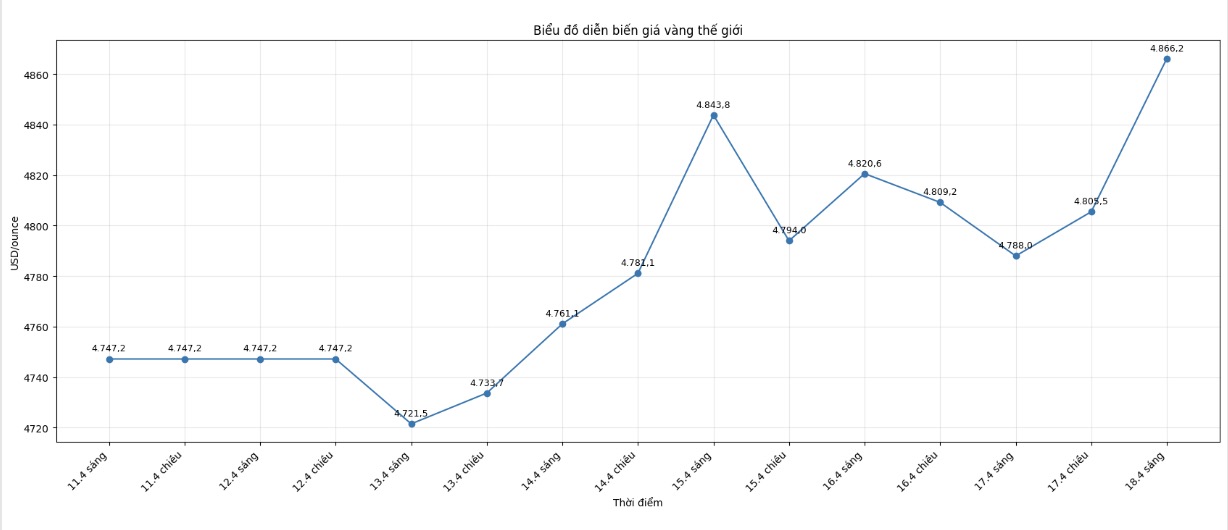
At 0:00, world gold prices were listed around the threshold of 4,866.2 USD/ounce, up 84.5 USD compared to the previous day.
Gold price forecast
World gold prices rose in the last trading session of the week, with the focus being the strong reaction of the market after information that US President Donald Trump sent a signal related to the reopening of the Strait of Hormuz.
This development immediately triggered a wave of cash flow movements in the commodity market, pushing gold prices soaring to near the threshold of 4,900 USD/ounce, while crude oil prices plummeted sharply.
One of the factors supporting gold is the weakening USD, while the yield of 10-year US government bonds is around 4.3%. According to analysts, this is a relatively favorable environment for gold to continue to keep prices high. In addition, technical buying power from short-term traders is also contributing to supporting the market.
Notably, the information that Iran reopened the Strait of Hormuz for international maritime activities has created a strong reaction in the commodity market. Crude oil prices plummeted deeply after this information, while gold rebounded sharply, at times climbing close to the 4,900 USD/ounce mark. This development shows that investors still maintain the trend of turning to gold as a hedging channel in the context of global instability not yet completely eliminated.
From a technical perspective, expert Jim Wyckoff believes that the June gold futures buyers are still holding a certain advantage in the short term. According to him, the next upward goal of gold prices is to conquer the strong resistance zone of 5,000 USD/ounce.
Conversely, if selling pressure increases, the market's important support zone is around 4,500 USD/ounce. Wyckoff also assessed the strength of the gold market at 6.5/10, reflecting that the upward trend is still present but no longer too overwhelming.
Observers believe that in the short term, gold prices will continue to be interspersedly affected by geopolitical developments, US trade policy and fluctuations in the USD. If negotiations related to Iran make positive progress, profit-taking pressure may appear. However, in the context of high global risks, gold is likely to still maintain its role as an important safe haven asset.
Gold price data is compared to the previous day.
The world gold and silver market operates through two main pricing mechanisms. The first is the spot market, where the buying and selling and immediate delivery prices are listed. The second is the futures market, where prices are set for future delivery.
Due to the impact of year-end position restructuring and market liquidity, the December gold futures contract is currently the most actively traded contract on the CME exchange.
See more news related to gold prices HERE...


