
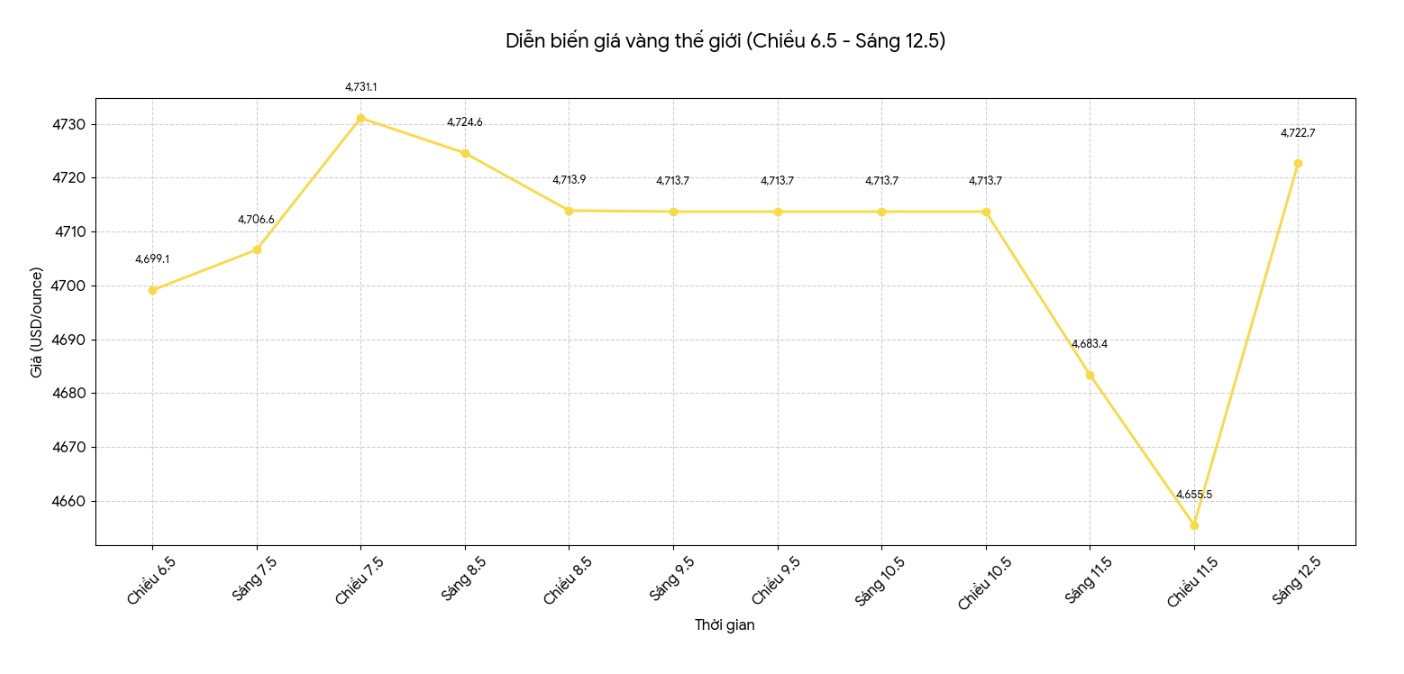
World gold prices opened a new trading week below the 4,700 USD/ounce mark and have not yet escaped the state of stalemate. However, analysts still expect this precious metal to recover in the second half of the year thanks to positive investment buying power, especially from global gold ETF funds.
According to a newly released report by the World Gold Council (WGC), global gold ETF funds recorded a net inflow of 45 tons of gold in April, equivalent to about 6.575 billion USD. This is considered a notable reversal after the market witnessed a net withdrawal of up to 84.3 tons in March.
WGC said that the total amount of gold held by ETF funds has now increased to 4,137 tons - the third highest level in history, only lower than the record of 4,176 tons set in February.
By region, Europe leads in gold investment demand through ETFs. Investors in this region bought nearly 27 tons of gold in April, worth about 3.7 billion USD.
According to the WGC, the UK is the largest contributor to this increase, alongside Switzerland and Germany. Cash flow into gold in Europe mainly stems from increased geopolitical and economic concerns, in the context of the prolonged Iranian conflict that could escalate energy prices and create additional inflationary pressure.
In North America, gold ETFs also net attracted about 6.1 tons of gold, worth about 1 billion USD. However, the WGC warned that the gold market still faces many risks in the short term due to the impact of geopolitical tensions in the Middle East.

According to experts, the global energy supply shock related to the Iranian conflict is causing oil prices to rise sharply, thereby raising concerns about inflation returning. If price pressures persist, many central banks may be forced to maintain tight monetary policy for longer, increasing the opportunity cost when holding gold - a non-interest asset.
However, WGC believes that the long-term upward trend of gold has not been broken.
The current short-term context is not really favorable for gold. The market has reversed expectations of interest rate cuts and is seeing the current shock as only temporary. If there is no new catalyst, gold prices may continue to weaken in the near future" - the analysis group assessed.
While investment demand in the West shows signs of being more sensitive to monetary policy, cash flow from Asia remains positive.
WGC said that gold ETF funds listed in Asia net absorbed more than 11 tons of gold in April, equivalent to about 1.8 billion USD. This is also the eighth consecutive month this region has recorded capital inflows.
China continues to play a leading role in the market. ETF funds in Hong Kong (China) recorded a record strong capital attraction month with about 732 million USD, while funds in mainland China continued to benefit from geopolitical tensions, reduced bond yields and gold buying activities from the public sector.


