
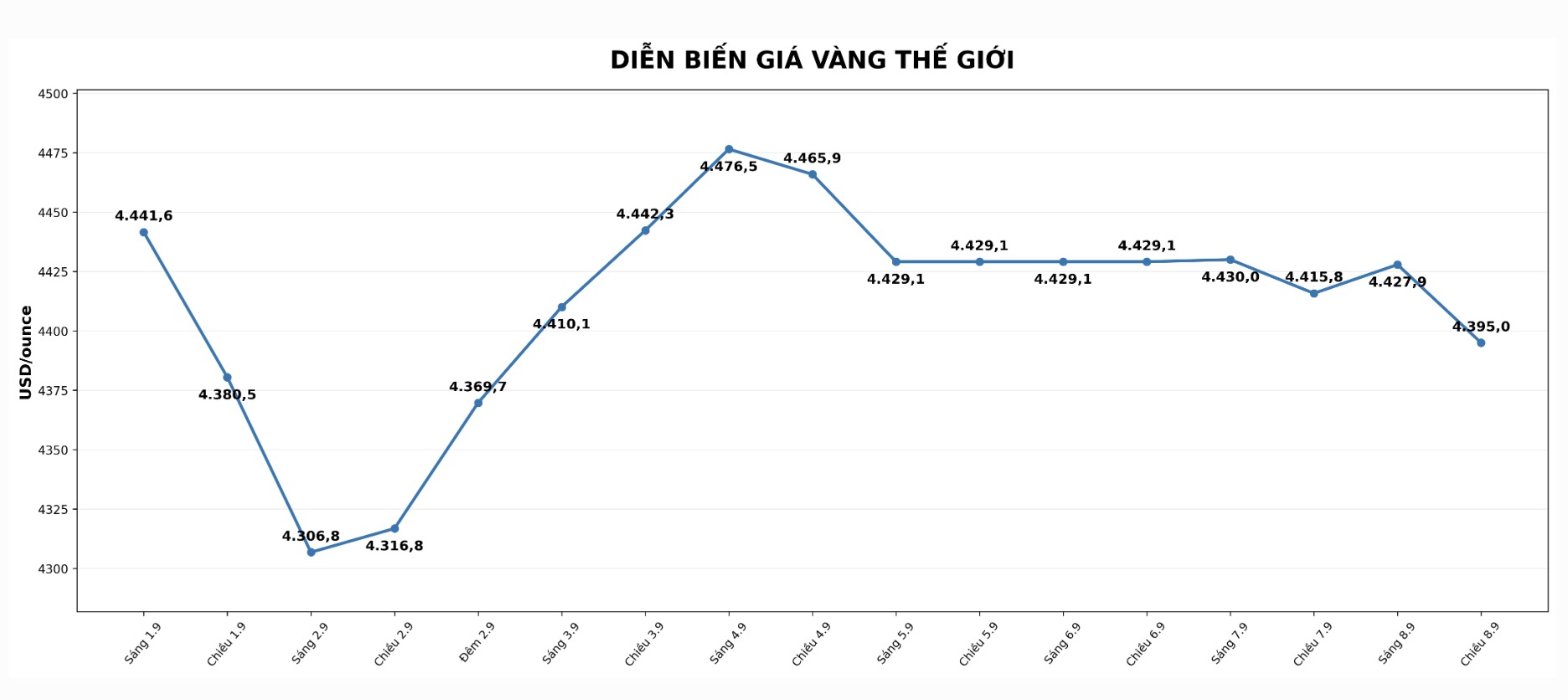
Updated at 4:35 PM on September 8 (Vietnam time), world gold prices traded around 4,395 USD/ounce, marking a slight weakening after this precious metal once approached the 4,440 USD/ounce zone in the previous session.
The downward trend of gold takes place in the context that investors are cautious about important economic information from the US. After new signals about the labor market, expectations about the Fed's interest rate policy have changed, putting more pressure on cash flow in the precious metals market.
Previously, gold prices had fallen sharply in the last session of the week after data showed that job growth in the US in August improved, while the unemployment rate remained at 4.1%. These data somewhat reduced expectations of the Fed's ability to soon switch to loose monetary policy.
Gold is considered a safe haven asset and an inflation hedging tool. However, in a high-interest rate environment, this precious metal is often disadvantaged because it does not generate yields, while other profitable assets become more attractive to investors.
Besides the interest rate factor, the upward trend of oil prices also puts more pressure on the gold market. Tensions in the Middle East continue to increase concerns about the risk of energy supply disruption, pushing oil prices to high levels for many weeks.
Rising oil prices may increase inflation risks, and at the same time cause the market to readjust expectations about US monetary policy. If price pressure continues, the Fed may maintain a cautious stance in adjusting interest rates.
Currently, investors are focusing their attention on two important data, including the producer price index (PPI) announced this week and the US consumer price index (CPI). These are important measures to assess inflation trends and the possibility of policy changes by the Fed in the coming time.
If inflation figures are lower than forecast, the market may increase expectations about the possibility of the Fed easing policy, thereby supporting gold prices. Conversely, signs that price pressure is still persistent may cause the USD and bond yields to increase, putting more pressure on the precious metal.
Gold prices falling below the 4,400 USD/ounce threshold is being seen as a market response to the tug-of-war between safe-haven demand and pressure from monetary policy. In the coming sessions, the direction of gold prices is likely to depend heavily on US economic data and new signals from the Fed.
In addition to gold, other precious metals also recorded a correction trend. Silver prices fell to 65.76 USD/ounce, platinum retreated to 1,821.36 USD/ounce, while palladium fell to 1,383.08 USD/ounce.
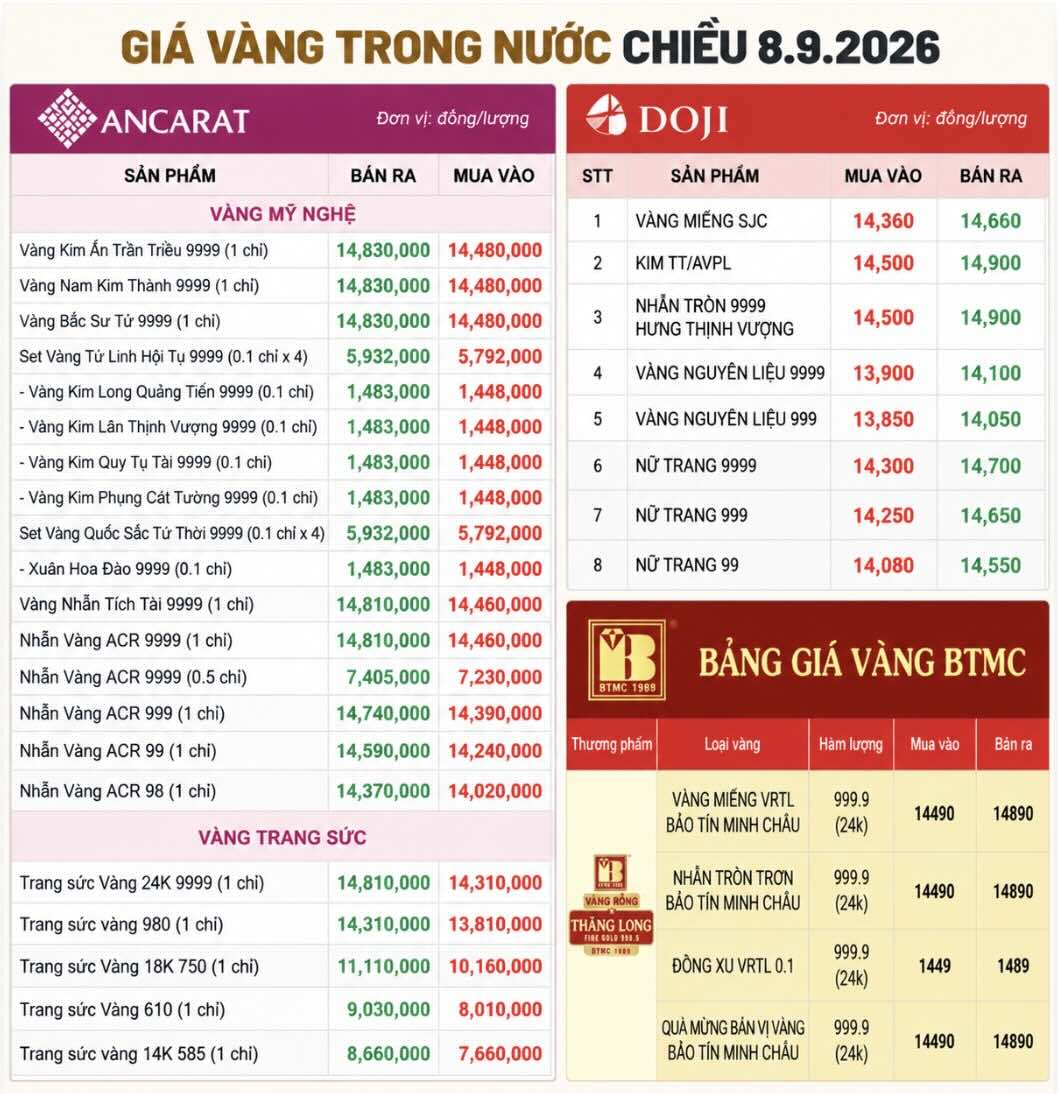
Update on domestic gold prices
The article only updates the developments of the gold market and factors affecting the price of precious metals, not investment recommendations.


