
After the strong fluctuation from the US August jobs report, gold prices are facing an important trading week as a series of economic information may create major fluctuations. The focus of attention will be data on inflation, production and service activities, and monetary policy decisions from major central banks.
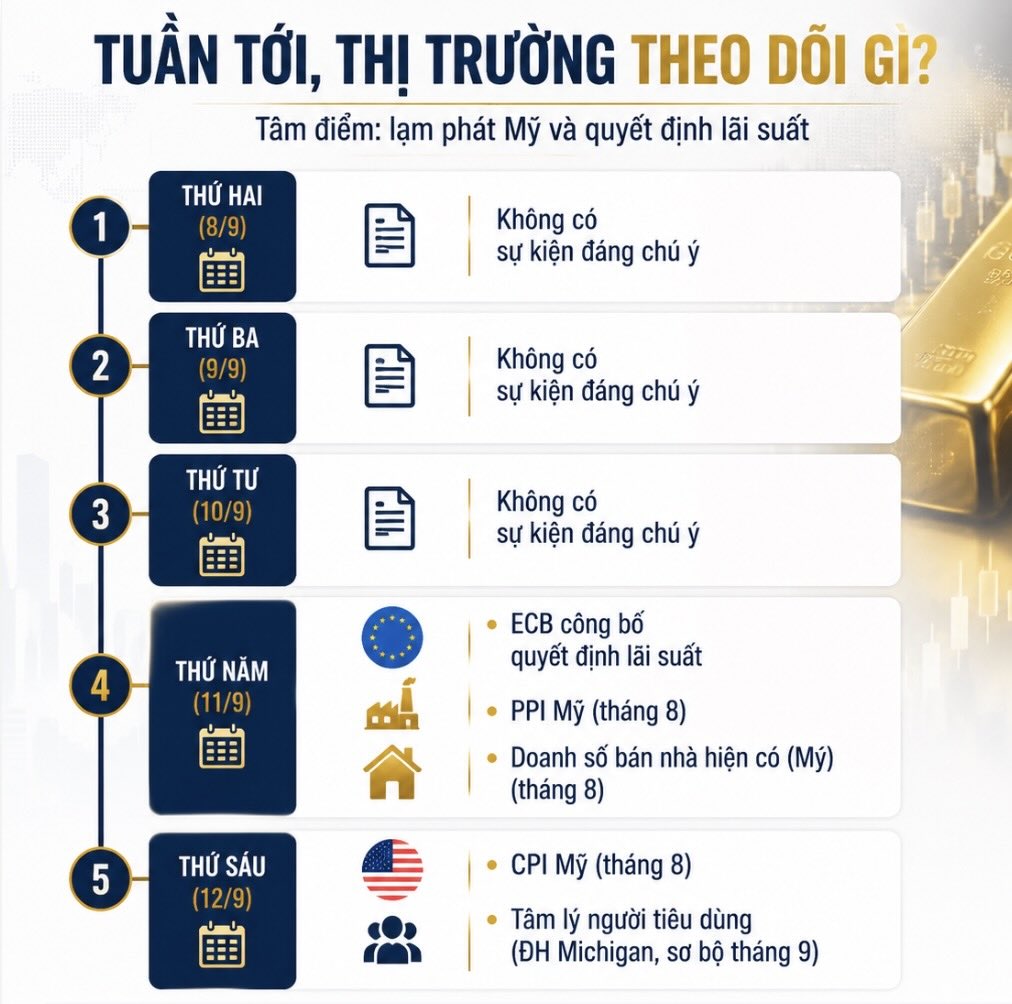
The market will focus on a series of data released from the end of the week. In which, the US Producer Price Index (PPI) report in August will be an early signal of price pressure before investors receive the consumer price index (CPI) report.
In addition, the European Central Bank (ECB) will also announce its monetary policy decision. The rise in energy prices is creating more pressure on inflation in the euro zone, causing the market to closely monitor the possibility of interest rate adjustments by this agency.
The most notable in the week is the US August CPI report and the preliminary survey of consumer confidence in Michigan in September. These are considered data that could directly impact expectations about the Fed's interest rate path in the near future.
Gold under pressure from the USD and bond yields
Previously, world gold prices were under downward pressure after the US jobs report was stronger than expected, increasing expectations that the Fed could maintain a tight monetary policy for longer.
Data shows that the US economy created 162,000 jobs in August, higher than forecast, while the unemployment rate remained at 4.1%. This information boosted US government bond yields and supported the USD, putting pressure on non-performing assets such as gold.
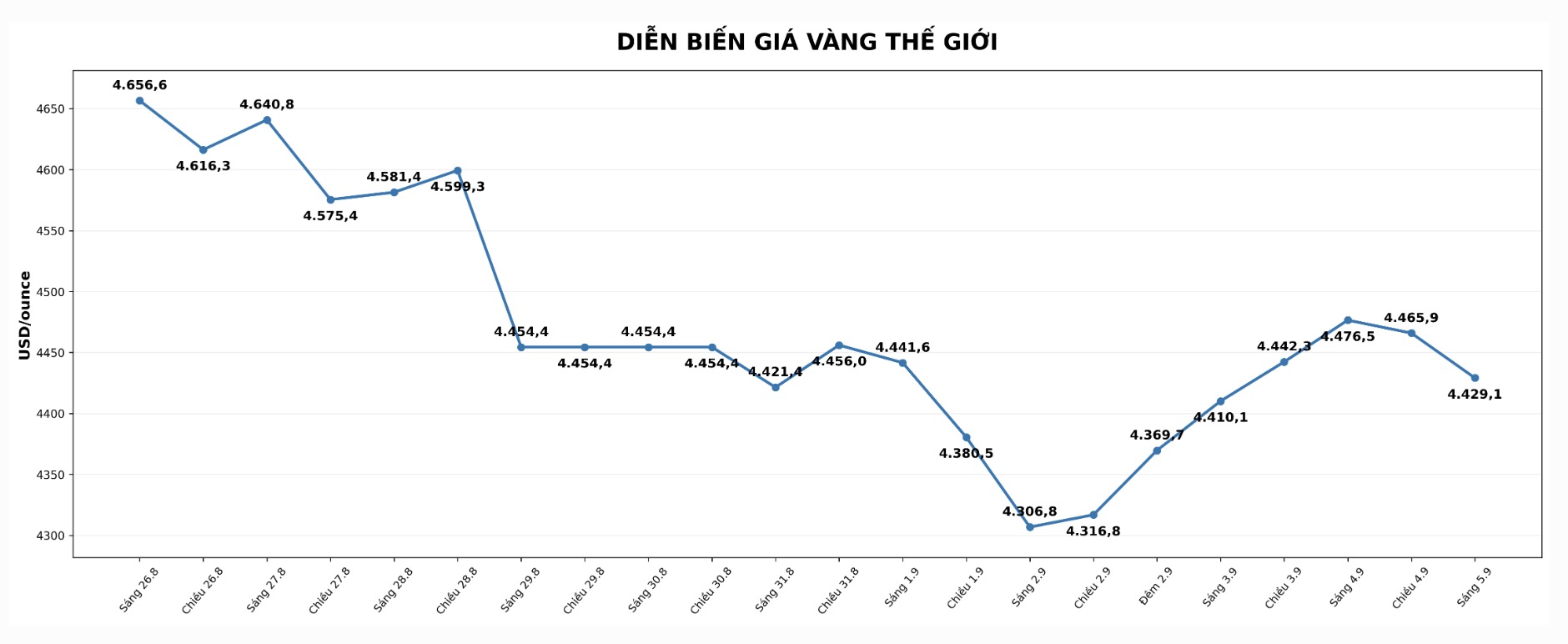
In the last session of the week, spot gold prices at one point fell to the 4,365 USD/ounce zone before recovering to above 4,429.1 USD/ounce. This move shows strong selling pressure but defensive demand still helps the precious metal maintain an important support zone.
After the jobs report, the market adjusted the Fed's policy expectations. If upcoming inflation data continues to be hotter than expected, the possibility of maintaining high interest rates may put more pressure on gold. Conversely, if PPI and CPI show a cooling trend, the expectation that the Fed will slow down tightening may create momentum to support gold prices.
Geopolitical factors continue to support shelter needs
Besides the interest rate factor, the gold market still receives attention from geopolitical risks and fluctuations in the energy market.
Oil prices remained high amid tensions in key energy transportation areas continuing to affect supply. Rising fuel costs could increase concerns about inflation, thereby creating a two-way impact on gold.
On the one hand, the risk of inflation and economic instability promotes demand for safe-haven assets. On the other hand, prolonged inflation may cause the Fed to keep interest rates higher, increasing the opportunity cost when investing in gold.
Financial markets are currently focusing on monitoring three main variables including the USD, US bond yields and Fed interest rate expectations. These will be decisive factors for gold's direction in the short term.
The upcoming trading week is assessed as a sensitive period when many important data appear continuously. Gold prices may continue to fluctuate strongly as investors react quickly to each new signal about inflation and monetary policy.
The above content is to update market developments, not to recommend investment.


