
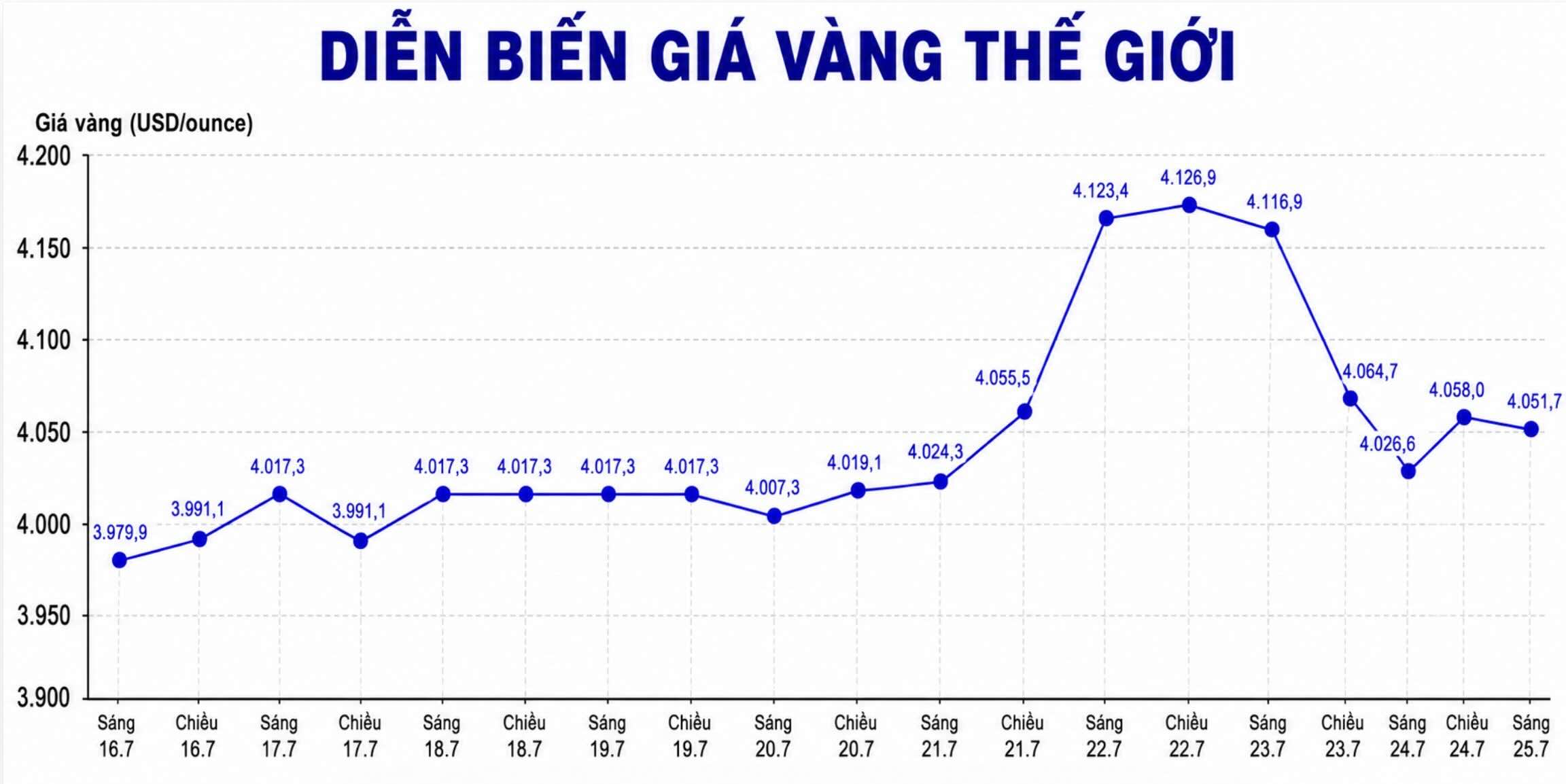
World gold prices increased slightly in the last trading session of the week, continuing to maintain above the important support level of 4,000 USD/ounce. This development shows that defensive demand still exists, although the precious metal is under pressure from a strong USD, high bond interest rates and the risk of inflation returning due to fluctuating energy prices.
In the previous trading session, gold prices fluctuated from 4,021.2 USD to 4,083.1 USD/ounce. The precious metal has recovered compared to the previous session's low, but still could not overcome the resistance zone from 4,080 to 4,140 USD/ounce. Silver prices also recovered after the sell-off, but are still below the resistance zone of 59.23-60.76 USD/ounce.
The factor supporting gold prices in the session was the yield of 10-year US Treasury bonds falling to about 4.68%, after hitting a 18-month high. The yield decrease reduced the opportunity cost of holding non-performing assets such as gold.
However, gold's upward momentum is still limited as the USD index remains near 101.47 points, in a high range in recent sessions. Strong greenbacks make gold more expensive for buyers using other currencies.
Global financial markets are differentiated. US stocks closed in opposite directions as technology stocks continued to be under pressure, while the Dow Jones index recovered. In Europe, major indexes simultaneously increased thanks to cooling oil prices and business results supporting investor sentiment.
Brent oil prices fell to about 96.78 USD/barrel after exceeding 102 USD/barrel at one point. WTI oil traded around 89.31 USD/barrel. Information about efforts to resume peace talks has helped reduce part of the geopolitical risk premium in the energy market.
However, the situation in the Strait of Hormuz and transport routes in the Red Sea remains tense. Traffic has not been completely disrupted, but is under great pressure from military, maritime and diplomatic factors. Any new disruption could cause oil prices to rise again.
For gold, energy price fluctuations create a two-way impact. Geopolitical tensions boost safe-haven demand, but a sharp increase in oil prices can also increase inflation expectations, pulling bond yields and the USD up. These are unfavorable factors for the precious metal in the short term.
Notably, gold has maintained a support zone of nearly 4,000 USD/ounce for 5 consecutive weeks. Although it has not been able to stabilize above 4,100 USD/ounce, selling pressure is not too great, even when oil prices rise and interest rate expectations remain high.
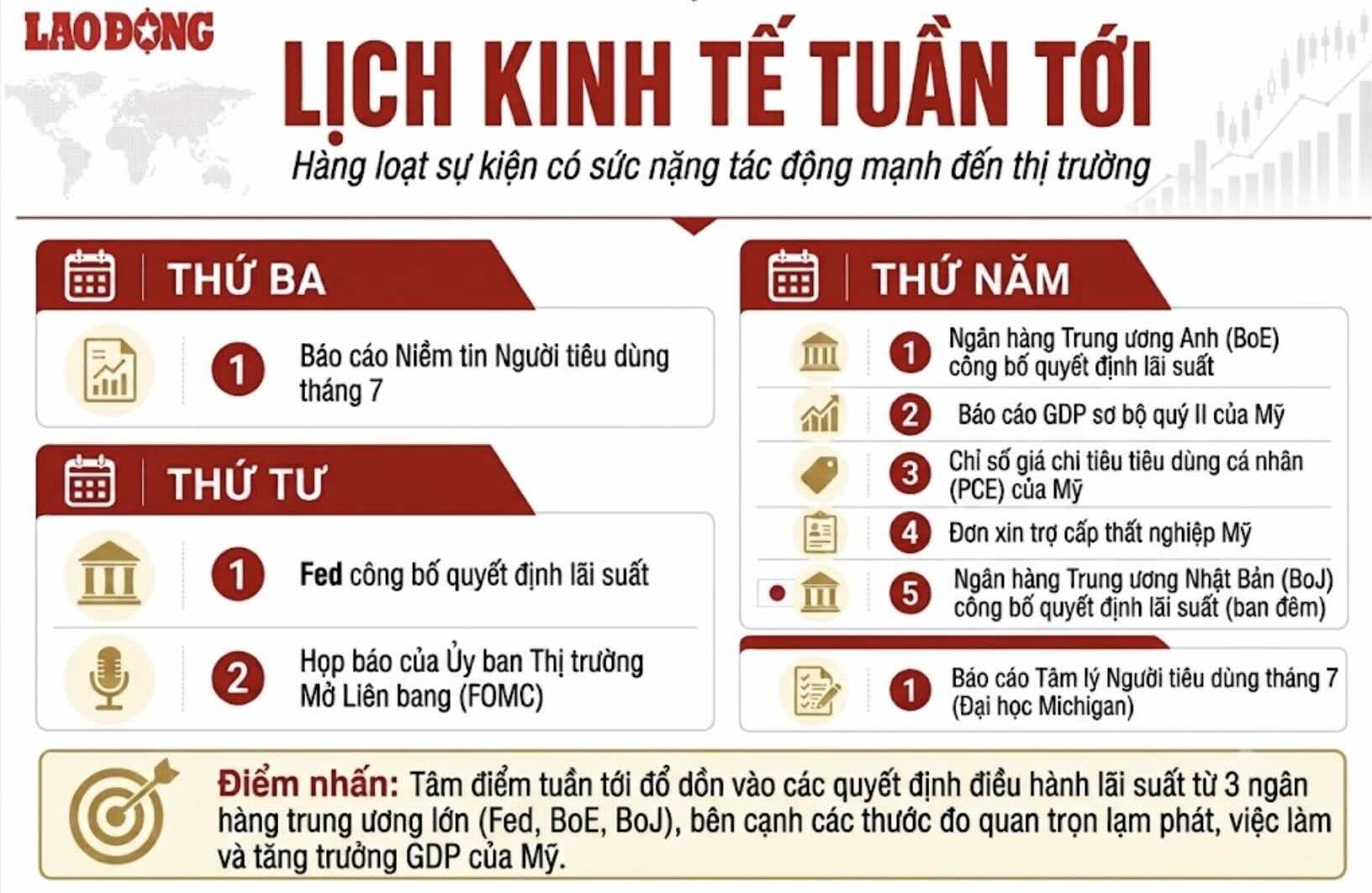
The focus of the market next week is the monetary policy meeting of the US Federal Reserve (Fed). The market leans towards the possibility of interest rates being kept unchanged, but the risk of this agency issuing a tougher signal is still present. Business activity in the US increased to the highest level in 8 months, new home sales recovered and the number of unemployment claims remained low, showing that the economy has not weakened significantly.
In addition to the Fed's decision, investors will monitor Q2 GDP growth figures, the personal consumer price index and the meeting of the Bank of Japan. The strong weakening of the yen is increasing concerns about the stability of low-interest yen lending transactions to invest in high-yield assets.
In the short term, the 4,000 USD/ounce zone continues to play an important role. If it sustainably surpasses the level of 4,083 USD/ounce, gold prices may return to the 4,100-4,200 USD/ounce zone. Conversely, if it falls 4,021 USD and loses the 4,000 USD mark, the market may retreat to lower support zones around 3,950-3,900 USD/ounce.
The content of the article updates market developments, not investment recommendations. Investors need to be cautious, proactively assess the level of risk, and monitor economic factors, monetary policy and geopolitical fluctuations before making decisions.


