
SJC gold bar price
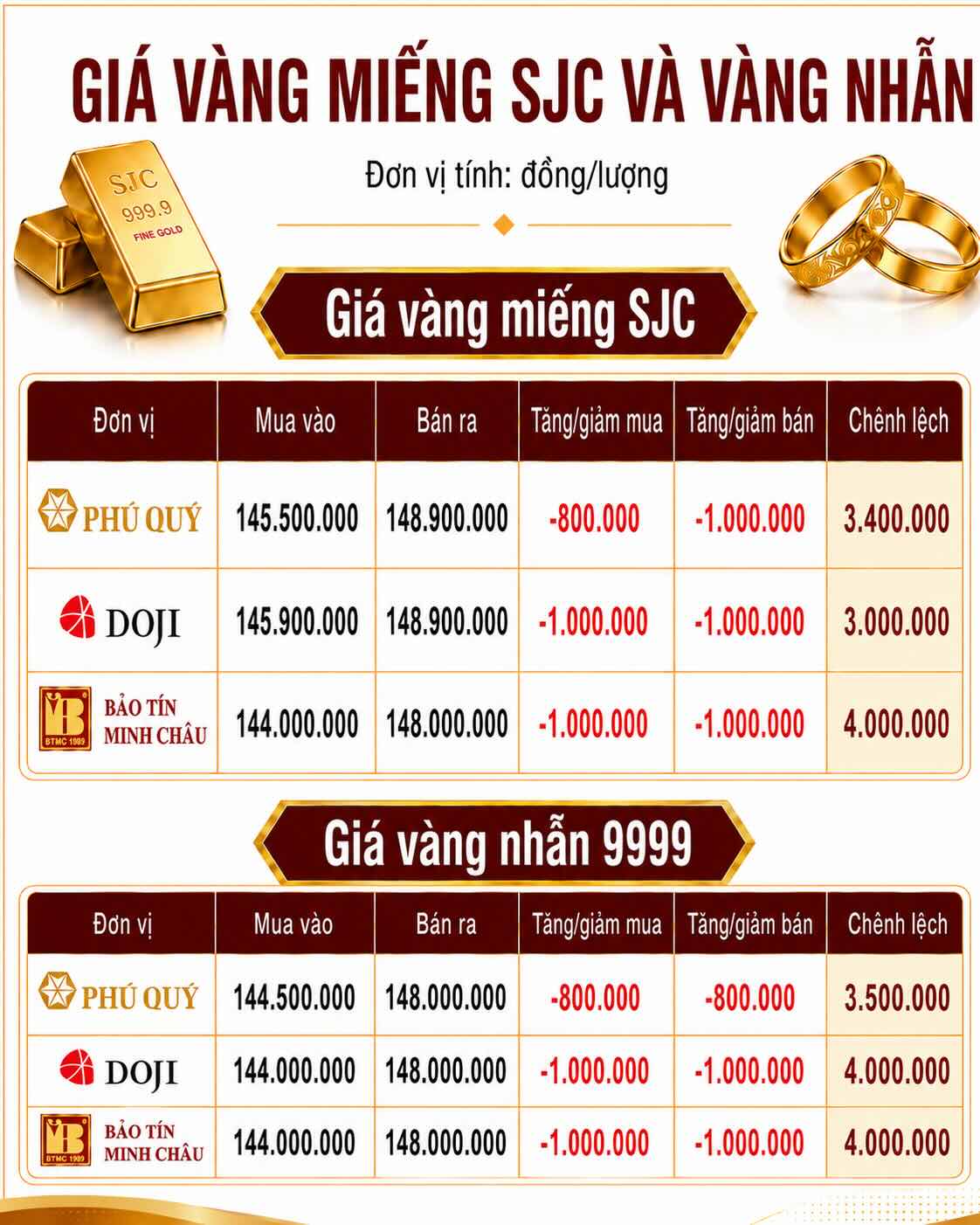
As of 9:00 AM, Phu Quy Jewelry Group listed SJC gold bar prices at 145.5-148.9 million VND/tael (buying - selling), down 800,000 VND/tael on the buying side and down 1 million VND/tael on the selling side. The difference between buying and selling prices is at 3.4 million VND/tael.
At the same time, SJC gold bar prices were listed by DOJI Group at the threshold of 145.9-148.9 million VND/tael (buying - selling), down 1 million VND/tael in both directions. The difference between buying and selling prices is at the threshold of 3 million VND/tael.
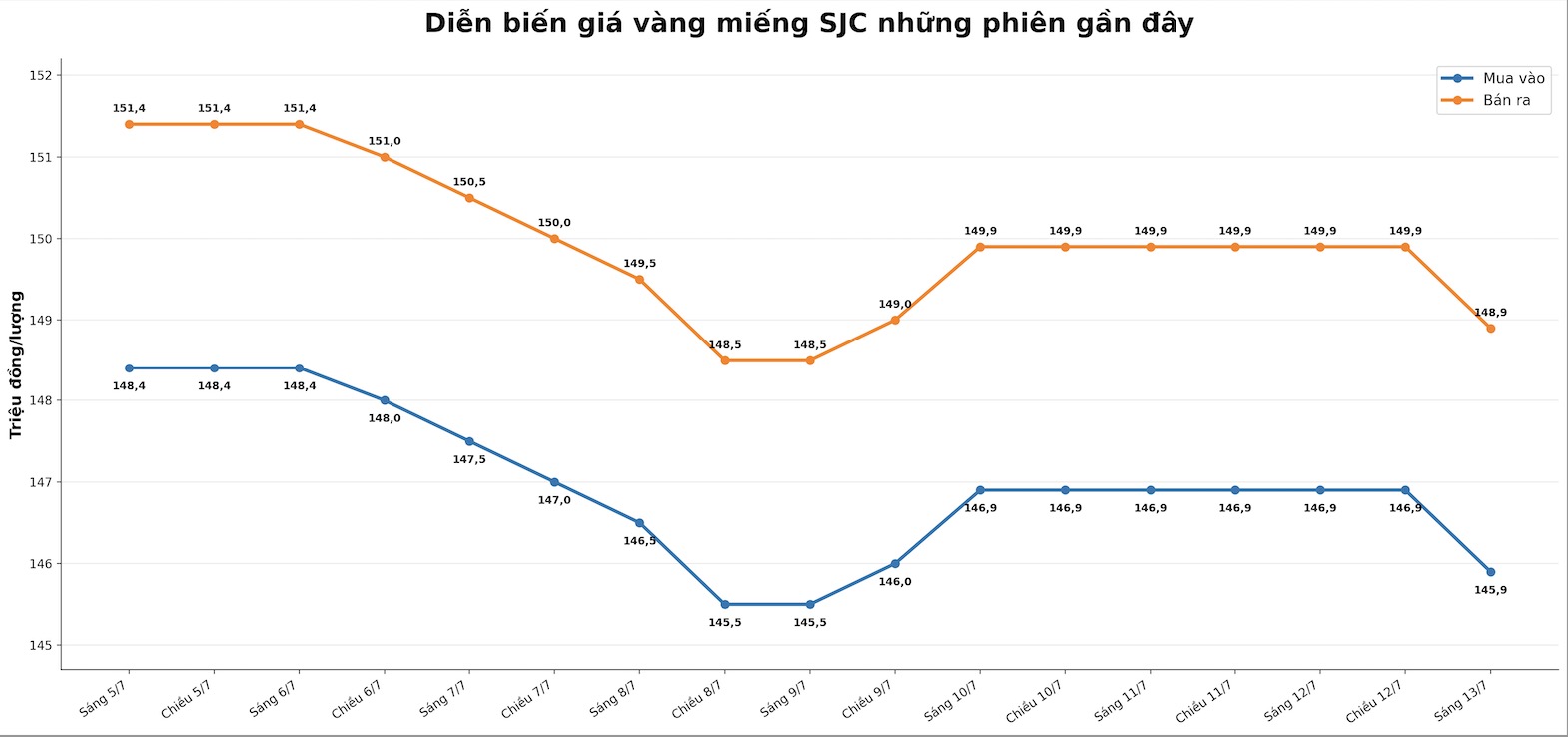
Bao Tin Minh Chau listed SJC gold bar prices at 144-148 million VND/tael (buying - selling), down 1 million VND/tael in both directions. The difference between buying and selling prices is at 4 million VND/tael.
9999 gold ring price
As of 9:00 AM, Phu Quy Gold and Gems Group listed the price of gold rings at the threshold of 144.5-148 million VND/tael (buying - selling), down 800,000 VND/tael in both buying and selling directions. The difference between buying and selling prices is at the threshold of 3.5 million VND/tael.
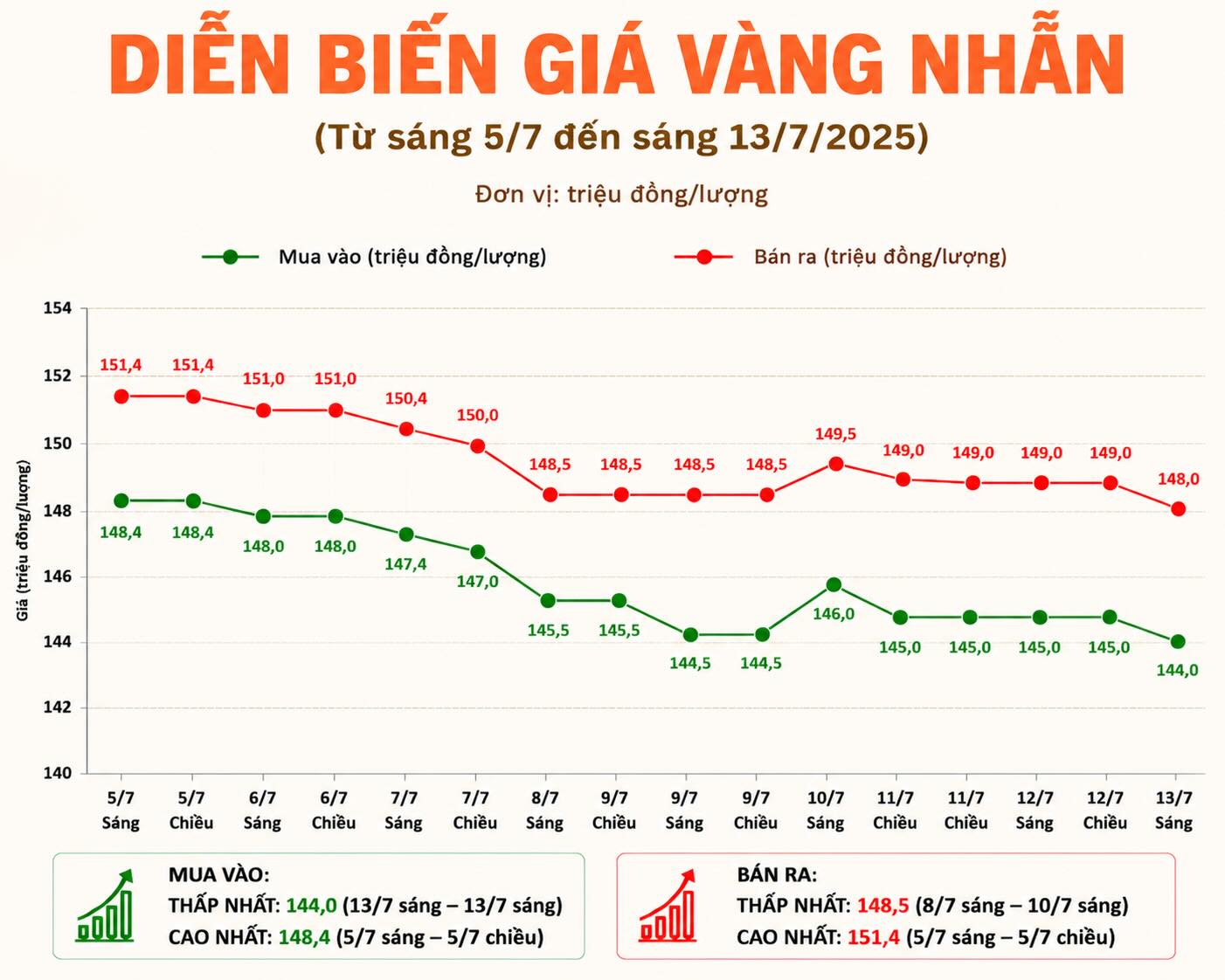
DOJI Group listed gold ring prices at 144-148 million VND/tael (buying - selling), down 1 million VND/tael in both buying and selling directions. The difference between buying and selling prices is at 4 million VND/tael.
Bao Tin Minh Chau listed gold ring prices at 144-148 million VND/tael (buying - selling), down 1 million VND/tael in both directions. The difference between buying and selling prices is at 4 million VND/tael.
World gold price
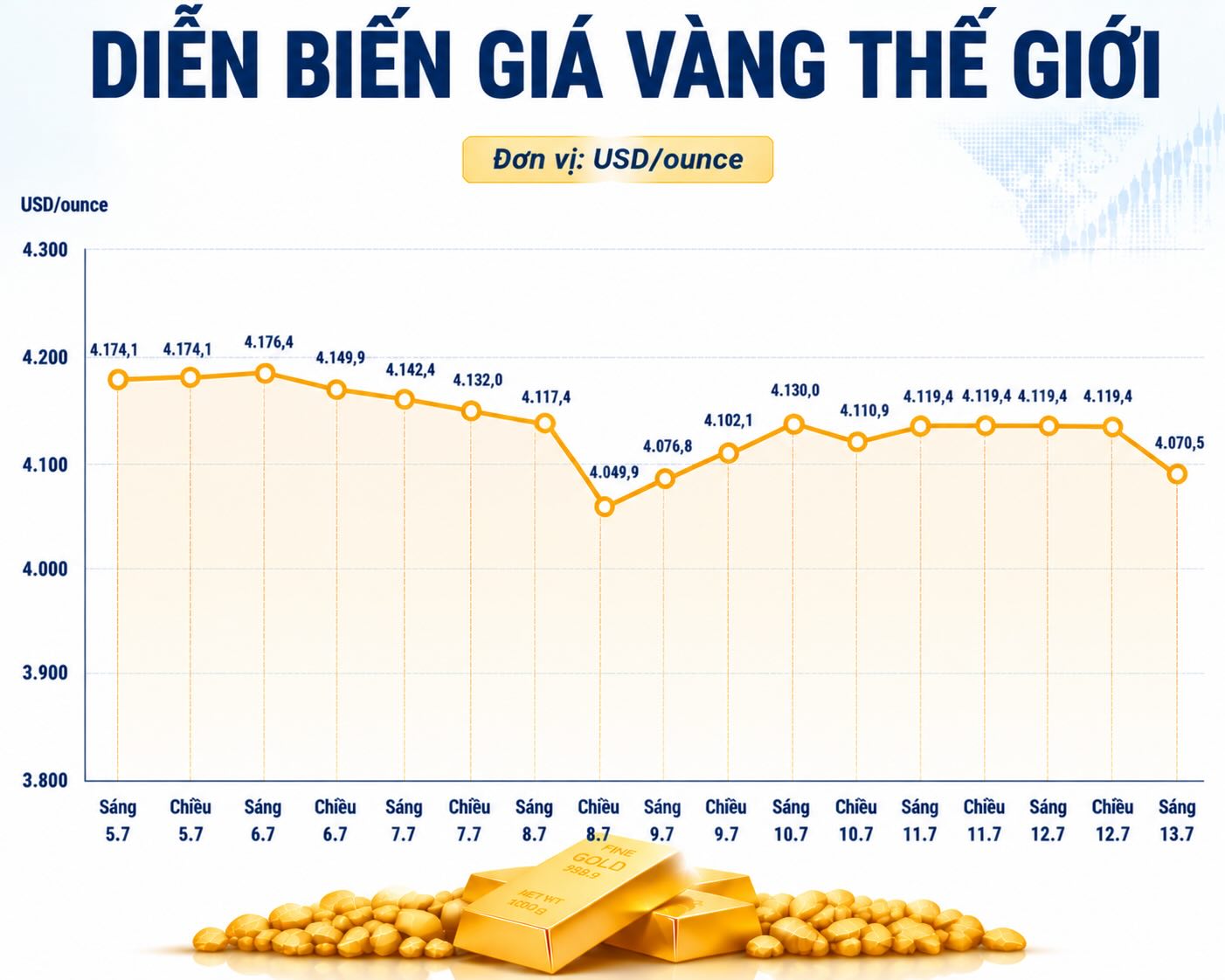
At 8:55 AM, world gold prices were listed around the threshold of 4,070.5 USD/ounce, down 48.9 USD/ounce.
Gold price forecast
The outlook for gold prices in the remaining months of 2026 is forecast to continue to fluctuate, as short-term pressure factors still go hand in hand with long-term support.
In the Q3/2026 commodity outlook report, StoneX believes that gold prices may fluctuate mainly around the 4,000 USD/ounce range, instead of quickly returning to a strong upward trend.
This development depends significantly on the policy orientation of the US Federal Reserve (Fed), the strength of the USD, bond yields and the geopolitical situation in the Middle East.
Inflation pressure in the US has not been fully controlled, making the market cautious about the possibility of the Fed soon easing monetary policy. When interest rates remain high, the opportunity cost of holding gold increases, thereby limiting demand from investment funds and short-term traders.
In addition, the tense developments around Iran and the Strait of Hormuz continue to be an unpredictable variable. If the conflict lasts or there is a risk of disruption to energy supplies, safe-haven demand may help gold prices recover. Conversely, a clearer diplomatic solution could cause defensive cash flow to decline.
Although short-term prospects are still under pressure, central bank purchases are creating a significant support for gold prices. According to published data, the central banking sector net bought 41 tons of gold in May. China continues to add gold to reserves, while Poland has bought about 82 tons since the beginning of the year and aims to increase total holdings to 700 tons.
A World Gold Council survey also shows that 45% of central banks expect to increase gold reserves in the next 12 months, the highest level since the survey was conducted. Nearly 90% of participating units believe that total formal gold reserves globally will continue to increase.
These moves show that price decreases are being seen by many central banks as accumulation opportunities, instead of long-term weakening signals. Therefore, gold prices may continue to fluctuate around the current zone in the short term, but the need to diversify reserves and prevent monetary risks is still an important support for the market in the long term.
Gold price data is compared to the previous day.
See more news related to gold prices HERE...


