
The gold market entered a new trading week with a significantly denser economic schedule than the week after the US Independence Day holiday. The focus of attention is the June consumer price index (CPI) report and two hearings by US Federal Reserve (Fed) Chairman Kevin Warsh before Congress.
CPI may decide short-term direction
The US June CPI report, expected to be released on Tuesday morning, is considered the most important data for gold prices next week.
If inflation falls more sharply than forecast, expectations that the US Federal Reserve (Fed) will continue to raise interest rates may weaken. At that time, US Treasury bond yields and the USD are likely to cool down, thereby creating conditions for gold prices to recover.
Conversely, if the CPI is higher than expected, the market may continue to bet on the possibility of the Fed maintaining a tighter stance. The prospect of higher interest rates is often disadvantageous for gold because the precious metal does not yield yields, while assets such as bonds and deposits become more attractive.
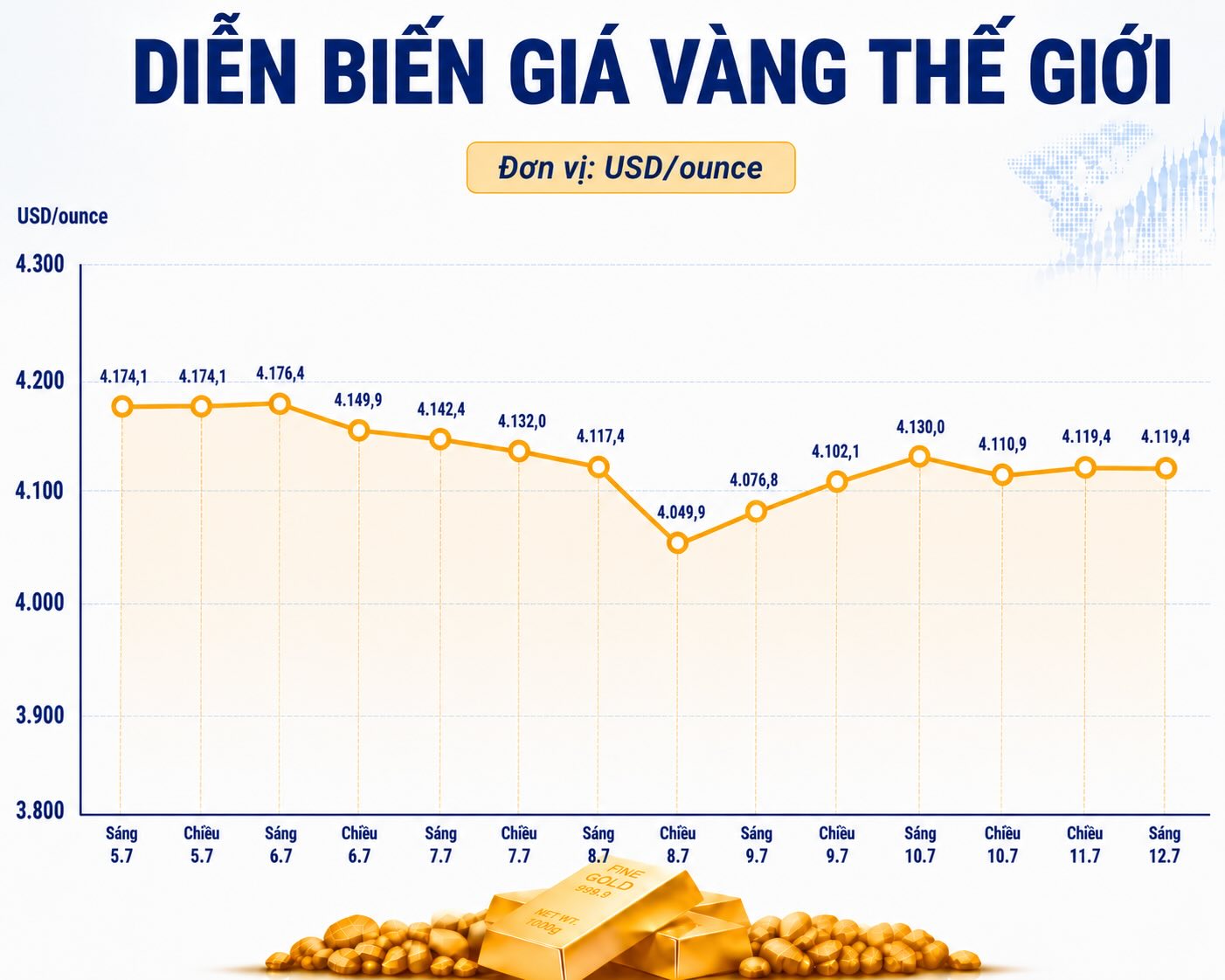
Message from Fed Chairman closely monitored
Along with CPI, the two hearings of Fed Chairman Kevin Warsh will be events that have a major impact on the financial market.
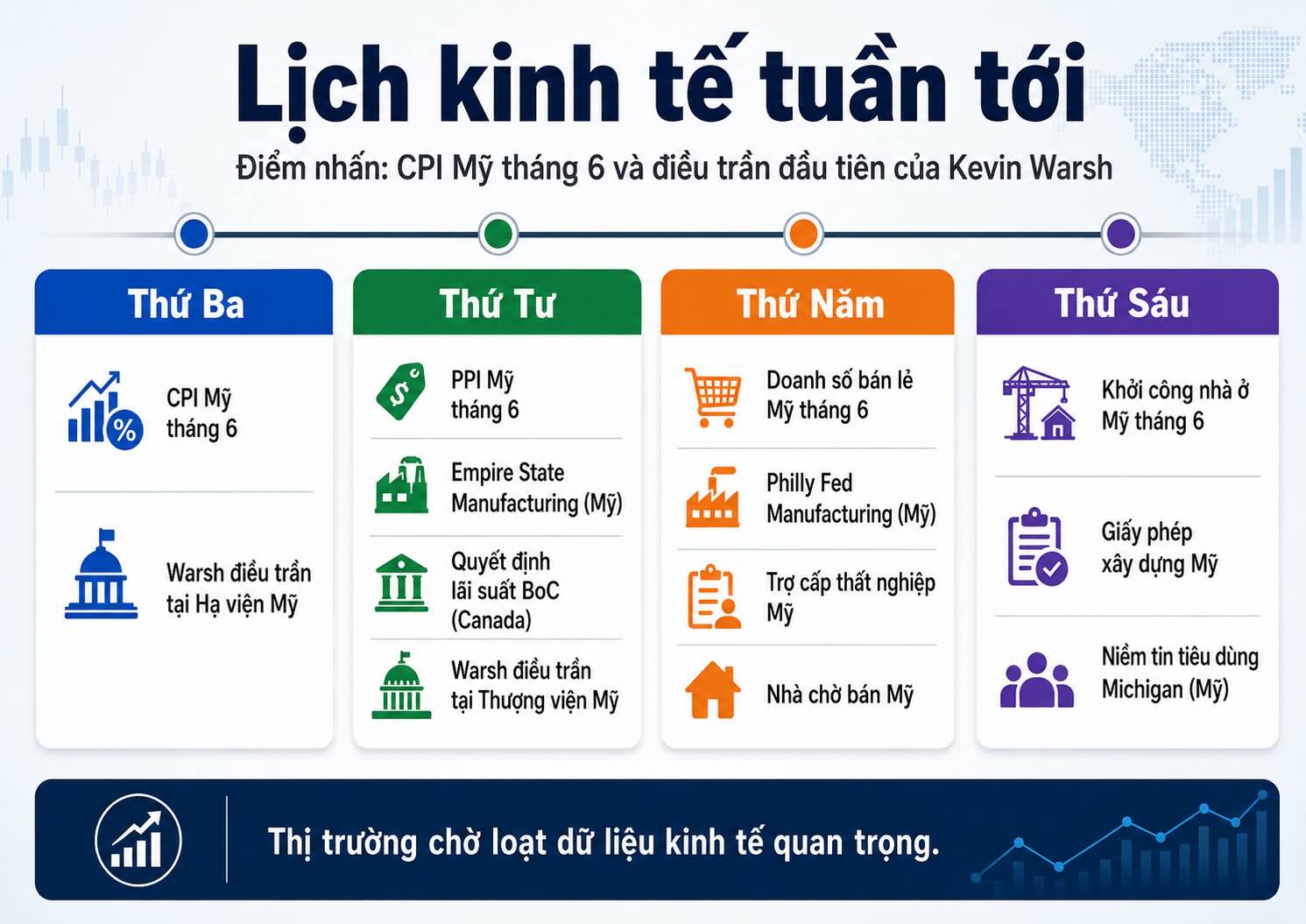
Mr. Kevin Warsh is scheduled to testify before the US House Financial Services Committee on Tuesday and before the US Senate Banking Committee on Wednesday.
Since taking office as Fed Chairman, Mr. Warsh has repeatedly emphasized the goal of price stabilization. This has increased market expectations that the US central bank may raise interest rates at least once this year, even in September.
In hearings, investors will focus on the Fed Chairman's assessment of inflation, labor market, economic growth and interest rate orientation. Just a small change in the way of expressing it can fluctuate the USD, bond yields and gold prices.
If Mr. Warsh continues to send a tough message, gold prices may face more pressure. Conversely, acknowledging that inflation is cooling down or growth is showing signs of slowing down may help the market reduce expectations of interest rate hikes.
Risk of testing the $4,000/ounce zone
In the short term, gold prices still lack a strong enough momentum to break through. Real yields are maintained at a high level, the USD is supported by interest rate expectations and cash flow has many alternatives besides precious metals.
If the CPI is higher than forecast and the message from the Fed continues to lean towards tightening, gold prices may test the support zone of 4,000 USD/ounce. Losing this mark will increase technical selling pressure and may pull prices down to lower zones.
In the opposite direction, if inflation weakens significantly, gold prices have the opportunity to regain the threshold of 4,100 USD/ounce. A sustainable increase above this level will help improve market sentiment and attract more buying power.
Dense economic schedule
In addition to CPI and hearings, many other data may also create fluctuations.
On Wednesday, the US will announce the producer price index (PPI) for June and the Empire State manufacturing survey. On the same day, the Bank of Canada made a monetary policy decision.
Next Thursday, the market will receive June retail sales, the Philadelphia Fed's manufacturing survey, weekly jobless claims, and the upcoming home sales report.
On Friday, the US released groundbreaking house data, June construction permits, and a preliminary report on consumer confidence in July from the University of Michigan.
With a series of important data released in succession, gold prices are forecast to face a volatile week. The direction of the precious metal will mainly depend on whether inflation is weak enough to change interest rate expectations, along with the toughness in the Fed Chairman's message to the US Congress.
The content of the article is for reference only, providing an additional perspective on gold price developments in the face of economic data and monetary policy signals, not an investment recommendation.


