SJC gold bar price
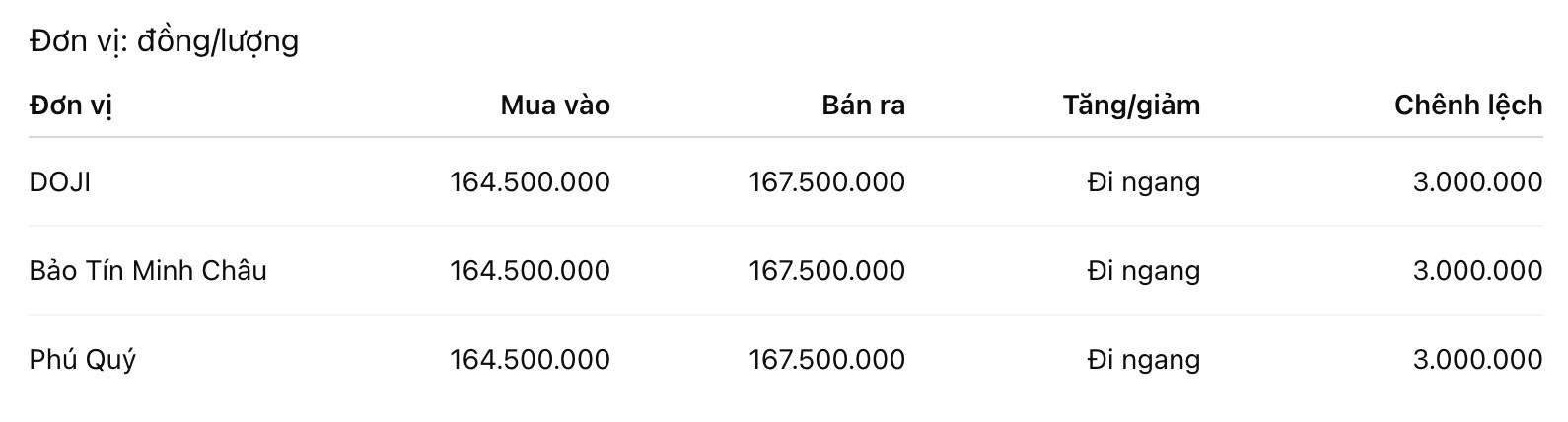
As of 10:00 AM, SJC gold bar prices were listed by DOJI Group at the threshold of 164.5-167.5 million VND/tael (buying - selling), unchanged in both buying and selling directions. The difference between buying and selling prices is at the threshold of 3 million VND/tael.
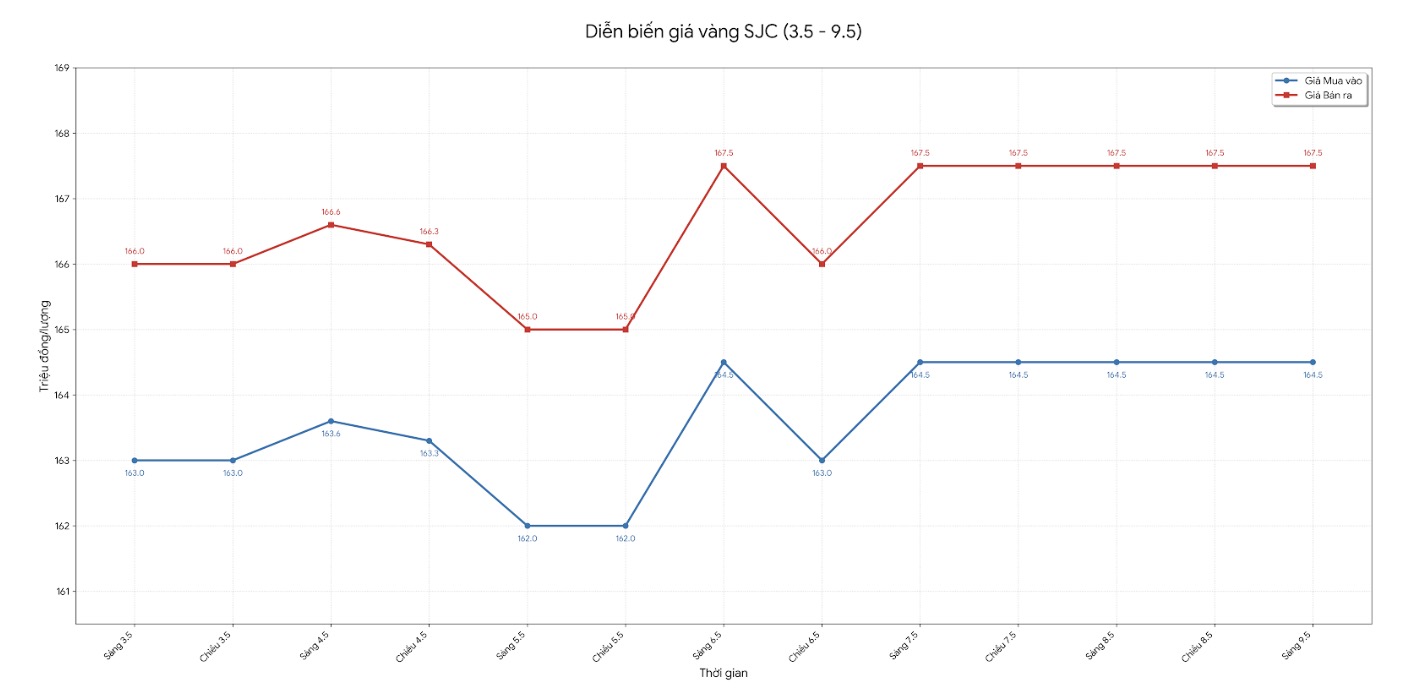
Bao Tin Minh Chau listed at the threshold of 164.5-167.5 million VND/tael (buying - selling), going sideways in both buying and selling directions. The difference between buying and selling prices is at the threshold of 3 million VND/tael.
Phu Quy Jewelry Group listed SJC gold bar prices at the threshold of 164.5-167.5 million VND/tael (buying - selling), unchanged in both buying and selling directions. The difference between buying and selling prices is at the threshold of 3 million VND/tael.
9999 gold ring price
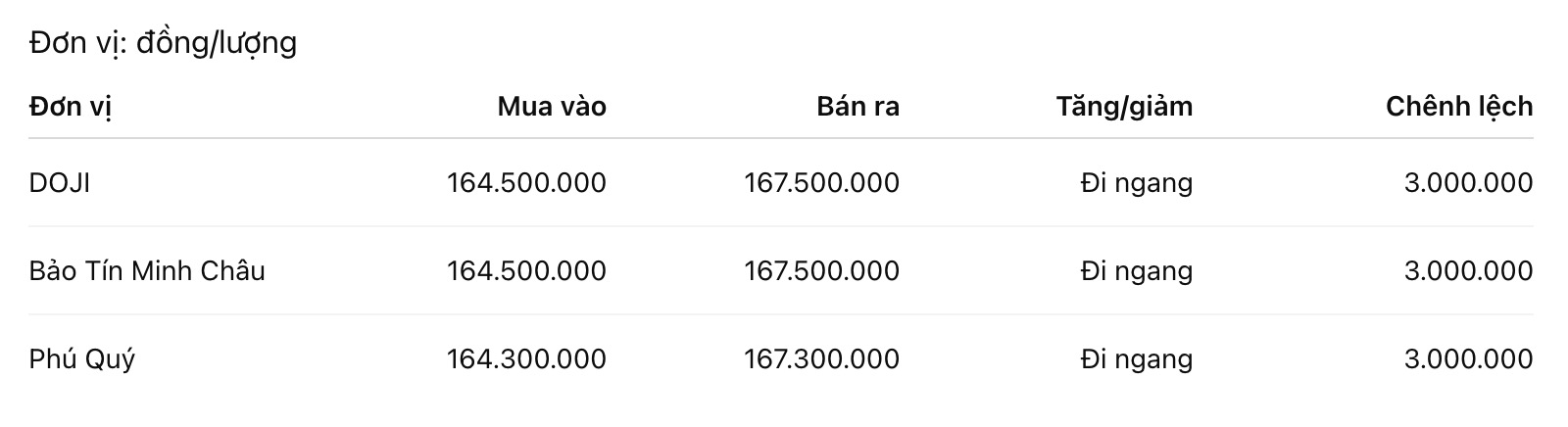
As of 9:15 am, DOJI Group listed gold ring prices at the threshold of 164.5-167.5 million VND/tael (buying - selling), unchanged in both buying and selling directions. The difference between buying and selling prices is at the threshold of 3 million VND/tael.
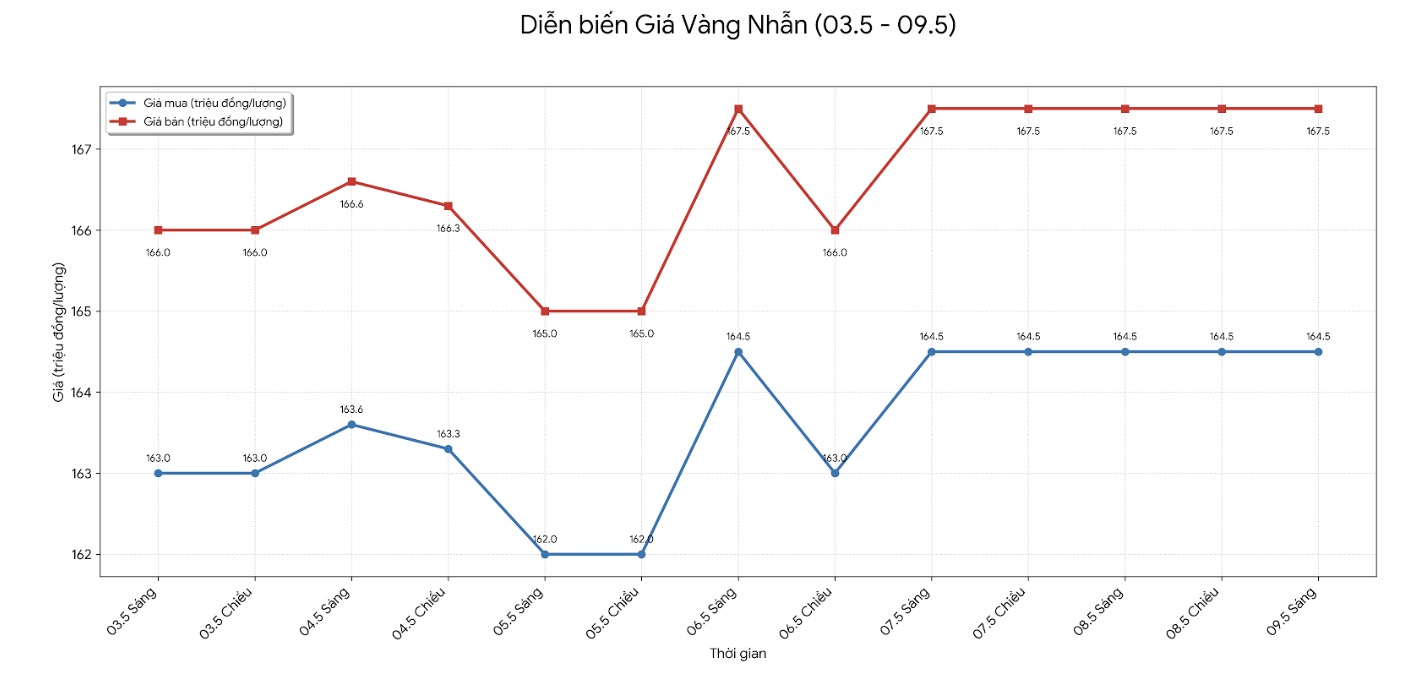
Bao Tin Minh Chau listed at the threshold of 164.5-167.5 million VND/tael (buying - selling), going sideways in both buying and selling directions. The difference between buying and selling prices is at the threshold of 3 million VND/tael.
Phu Quy Gold and Gems Group listed the price of gold rings at the threshold of 164.3-167.3 million VND/tael (buying - selling), unchanged in both buying and selling directions. The difference between buying and selling prices is at the threshold of 3 million VND/tael.
Currently, the buying - selling price difference of gold is at a very high level, around 3 million VND/tael, posing a risk of losses for investors.
World gold price
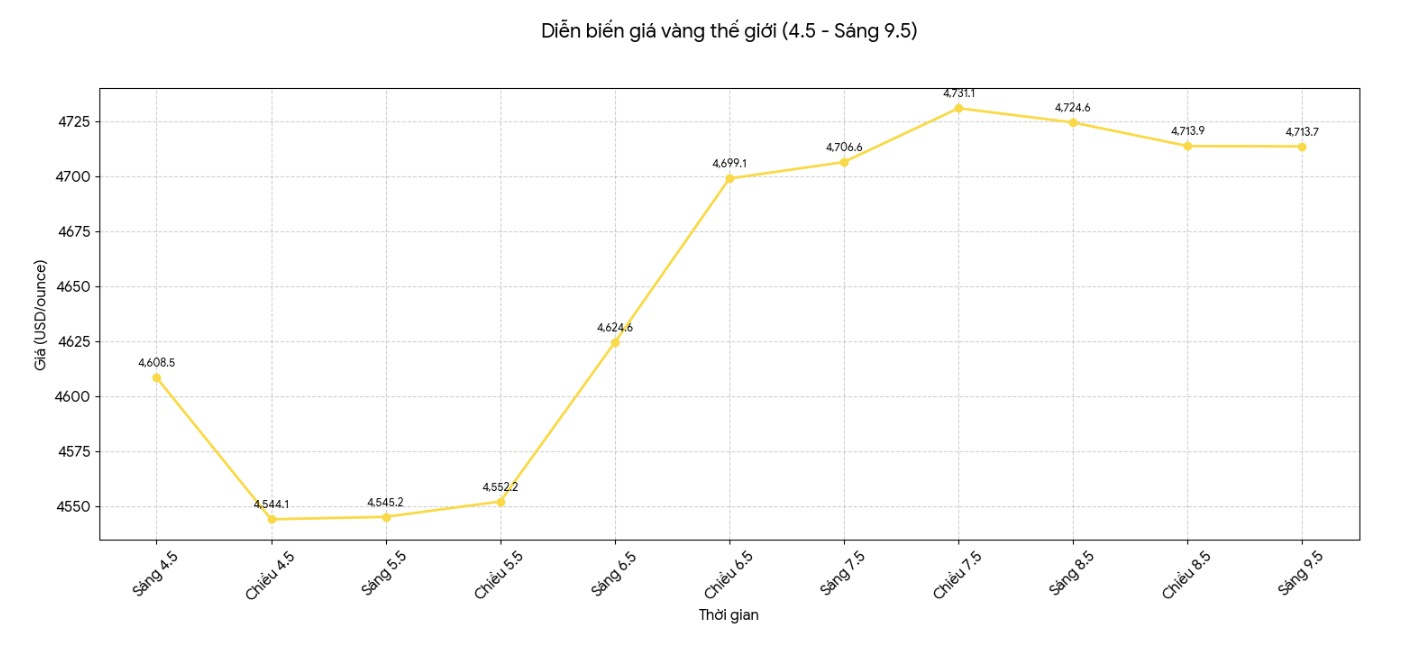
At 10:00 AM, world gold prices were listed around 4,713.7 USD/ounce, down 10.9 USD compared to the previous day.
Gold price forecast
World gold prices closed the trading week with many strong fluctuations, as the market continuously changed expectations before the developments of the US-Iran conflict, oil prices, bond yields and the monetary policy outlook of the Fed.
At the beginning of the week, precious metals faced downward pressure despite escalating tensions in the Strait of Hormuz. Investors at that time prioritized concerns about inflation due to strong oil prices rather than turning to gold as a safe haven asset. The strong USD and high US bond yields caused gold prices to retreat deeply to the mid-point of 4,500 USD/ounce at times.
However, selling pressure gradually cooled down from midweek as the market expected the risk of geopolitical escalation not to become more serious. The cooling of oil prices led to a decrease in bond yields, the weakening of the USD, creating conditions for gold to rebound strongly.
By midweek, spot gold prices once increased by 3.6%, exceeding the 4,700 USD/ounce mark. The upward momentum continued to be maintained in the next session as the market gradually shifted to a state of expectation that the US and Iran could reach a certain agreement, thereby reducing inflationary pressure from energy.
In the last session of the week, gold prices mainly fluctuated accumulatingly after the US announced April jobs data increased by 115,000 jobs, higher than market expectations, while the unemployment rate remained at 4.3%. This data partly reduced expectations of the Fed to cut interest rates soon. However, the Michigan University consumer confidence index fell to 48.2 points, contributing to supporting gold to maintain its high price range.
The latest survey by Kitco News shows that optimistic sentiment is returning to the gold market. Among 11 Wall Street experts surveyed, up to 64% predict that gold prices will continue to increase next week.
Mr. Kevin Grady - Chairman of Phoenix Futures and Options - said that the US economy still shows quite good resilience despite many fluctuations. According to him, the US maintaining domestic oil supply helps limit energy price pressure, creating more room for the Washington administration in economic issues and tensions with Iran.
In addition to geopolitical and interest rate factors, the gold market also received important support from the buying demand of central banks. According to newly released data, the People's Bank of China (PBoC) bought an additional 8.1 tons of gold in April, marking the 18th consecutive month of increasing gold reserves.
Ms. Barbara Lambrecht - commodity analyst at Commerzbank - said that central bank gold hoarding activities continue to be an important driving force helping gold prices maintain highs for many years. According to her, buying demand from the public sector is significantly limiting the risk of a sharp drop in precious metals.
Gold price data is compared to the previous day.
See more news related to gold prices HERE...