
According to Kitco, world gold prices recovered slightly after plunging to a 5-week low. Although there has been a technical recovery, the precious metal is said to still face many obstacles as the macroeconomic environment is not really favorable.
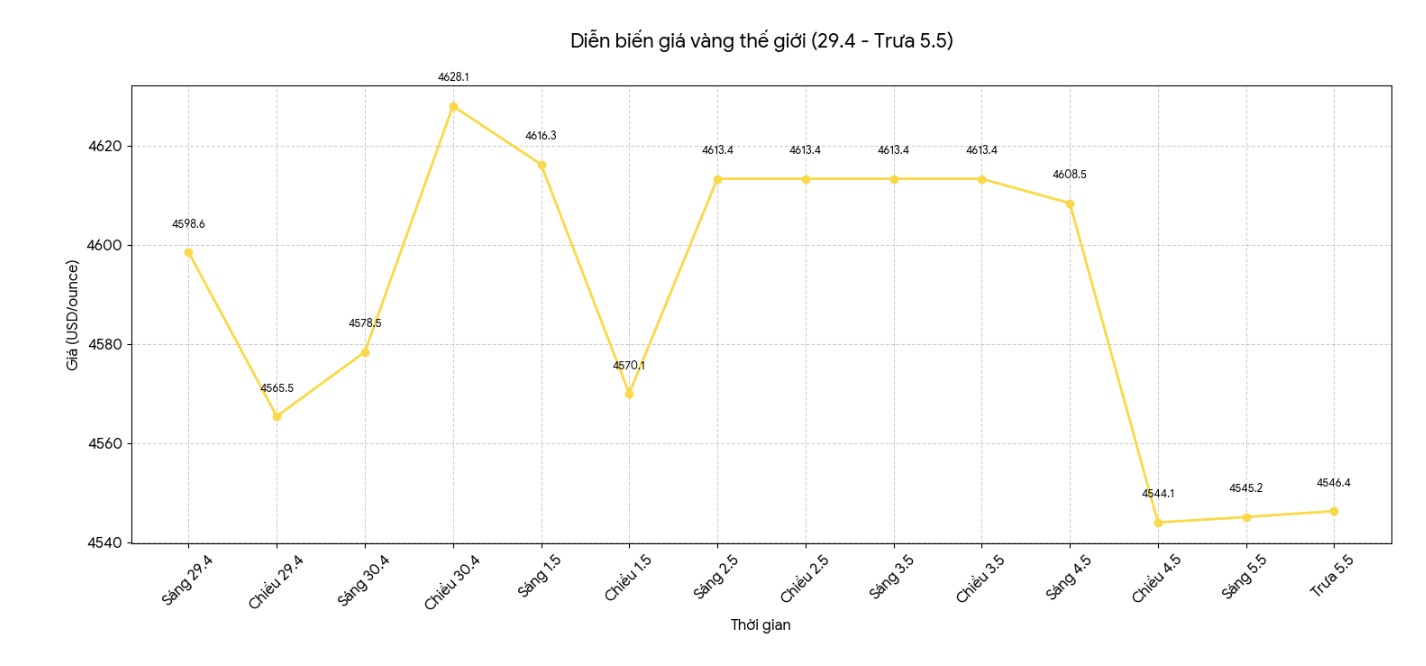
In the trading session on Monday, spot gold prices fell sharply to around 4,513 USD/ounce, losing more than 2%, while silver also weakened to nearly 72.57 USD/ounce. The day's fluctuation range of gold is quite wide, from about 4,502 USD to 4,630 USD/ounce, showing that market sentiment is still very sensitive.
The main pressure comes from the US bond yield rising to the 4.4% zone and a stronger USD, making gold - a non-performing asset - less attractive. At the same time, the sharp increase in crude oil prices also raised concerns about inflation returning, forcing the market to adjust expectations for monetary policy.
In Tuesday's session, gold prices showed signs of recovery from the bottom, but the increase was limited. As of 8:43 PM, world gold prices were listed at 4,573.64 USD/ounce, up 1.10% in the past 24 hours.
According to Mr. Ilya Spivak - Head of Global Macro Division at Tastylive, the market is "redigesting" risk factors after the wave of "war-based trading" caused gold to fall sharply earlier.
However, this expert emphasized that the recovery momentum of gold is being restrained by the combination of increased bond yields and rising USD, in the context of rising oil prices increasing inflationary pressure. This makes cash flow tend to shift to profitable assets.
Geopolitical developments continue to be the dominant factor in the market. Tensions between the US and Iran in the Hormuz Strait region not only keep oil prices above highs, but also increase the risk of disruption to global energy supplies. Although this factor often supports gold as a "safe haven", the indirect impact through inflation and interest rates is overwhelming.
In fact, the market has sharply reduced expectations of the US Federal Reserve (Fed) cutting interest rates this year. Instead, the probability of interest rate hikes in the coming period is being mentioned more, reflecting a significant change in investor sentiment.

Recent US economic data also does not support gold. Factory orders in March increased by 1.5%, far exceeding forecasts, while the manufacturing PMI index remained above the 50-point mark for the fourth consecutive month. These signals show that the economy is still strong enough to withstand, reducing demand for policy easing.
In that context, the gold market is entering a period of "contracting" between opposing forces. On the one hand, geopolitical risks and global instability are still the supporting foundation. On the other hand, high inflation and high interest rates are putting pressure on precious metals.
Technically, important levels are being closely monitored by investors. The near resistance zone of gold is around 4,645 - 4,670 USD/ounce, while important support is in the 4,500 - 4,576 USD/ounce area. If these levels are broken, the short-term trend may be established more clearly.
Analysts believe that in the short term, gold prices will continue to fluctuate strongly according to US economic data, especially jobs reports and signals from the Fed. If inflation continues to be under pressure from energy prices, the ability to maintain high interest rates will continue to extend, thereby limiting gold's upward momentum.
Conversely, any signs of weakening in the US economy or cooling geopolitical tensions could create room for gold recovery. However, up to now, the market still lacks a strong enough momentum to break through clearly.


