
Gold prices are on track to record their fourth consecutive week of decline in Friday's trading session, as the stronger USD and expectations that the US Federal Reserve (Fed) may accelerate its interest rate hike roadmap to control inflation continue to put pressure on the precious metal, causing gold prices to fluctuate around the important threshold of 4,000 USD/ounce.
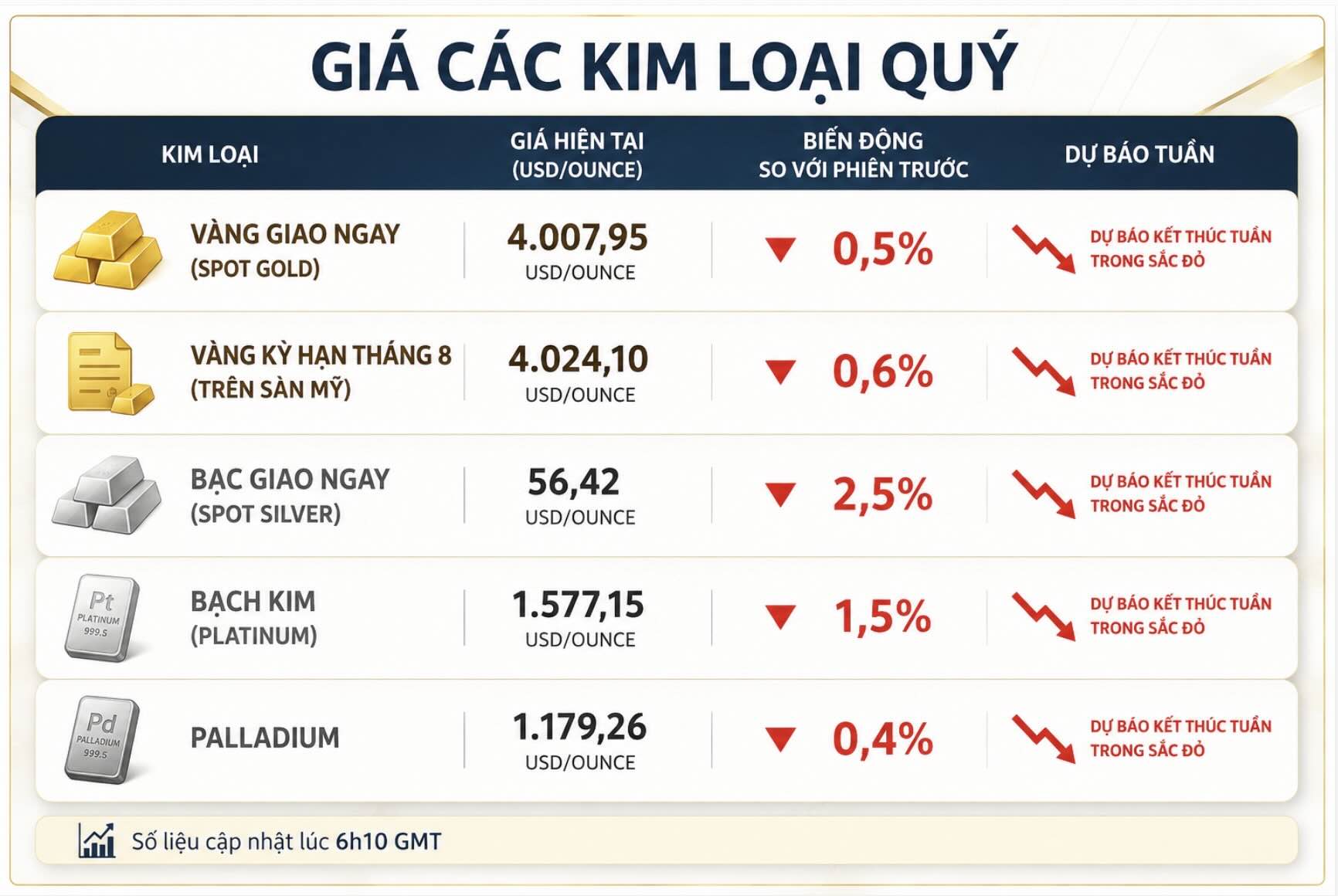
According to market data, spot gold prices fell 0.5%, to 4,007.95 USD/ounce at 6:10 am GMT (ie 1:10 pm Vietnam time). August gold futures on the US exchange also fell 0.6%, to 4,024.10 USD/ounce.
Overall for the week, gold is forecast to decrease by about 3.6%. Previously, in the trading session on Wednesday, gold prices fell below the 4,000 USD/ounce mark for the first time since November 2025.
Mr. Kelvin Wong - senior market analyst at OANDA - said: "The market's rapid correction in the direction of expecting a tougher Fed stance has created strong momentum for the USD to appreciate. This ultimately puts gold prices under significant downward pressure.
The USD Index is heading for its second consecutive week of gains. The strengthening greenback makes gold more expensive for investors holding other currencies, thereby reducing demand for precious metals.
Mr. Wong said that the months-long correction trend of gold since hitting a peak at the end of January may continue, with the long-term goal of possibly retreating to the $3,400/ounce range.
Compared to the record high of 5,594.82 USD/ounce set on January 29, gold prices have now decreased by about 29%. This development occurred in the context of geopolitical tensions and inflationary pressure in the US, increasing expectations about the Fed's ability to maintain tight monetary policy.
Data released on Thursday showed that inflation in the US continued to rise in May, exceeding the 4% mark for the first time in three years, as predicted by economists surveyed by Reuters news agency.
Although gold is often seen as an inflation hedging asset, this precious metal is less attractive in a high interest rate environment because it does not generate profitable cash flow.
According to CME Group's FedWatch interest rate tracking tool, traders currently expect the Fed to raise interest rates three times this year. The market is assessing about 64% of the Fed's ability to raise interest rates in September.
The world gold market operates through two main pricing mechanisms. The first is the spot market, which quotes prices for transactions and immediate delivery.
The second is the futures contract market, where prices are set for futures delivery. Due to year-end closing activities, December gold futures contracts are currently the most actively traded type on the CME.


