
Market strategist Michele Schneider from MarketGauge believes that military operations between the US and Israel targeting Iran so far have not created a sustainable wave of safe-haven buying for gold and silver.
According to Ms. Schneider, recent price movements show that the two precious metals may need more time to accumulate, while other safe-haven assets, especially bonds, are becoming more attractive to investors.
Before the US missile attacks that took place at the weekend, Ms. Schneider said in an interview with Kitco News that she did not see enough momentum for gold prices to surpass the resistance zone of 5,400 USD/ounce, and believed that silver's upward momentum could be limited below the 100 USD/ounce mark.
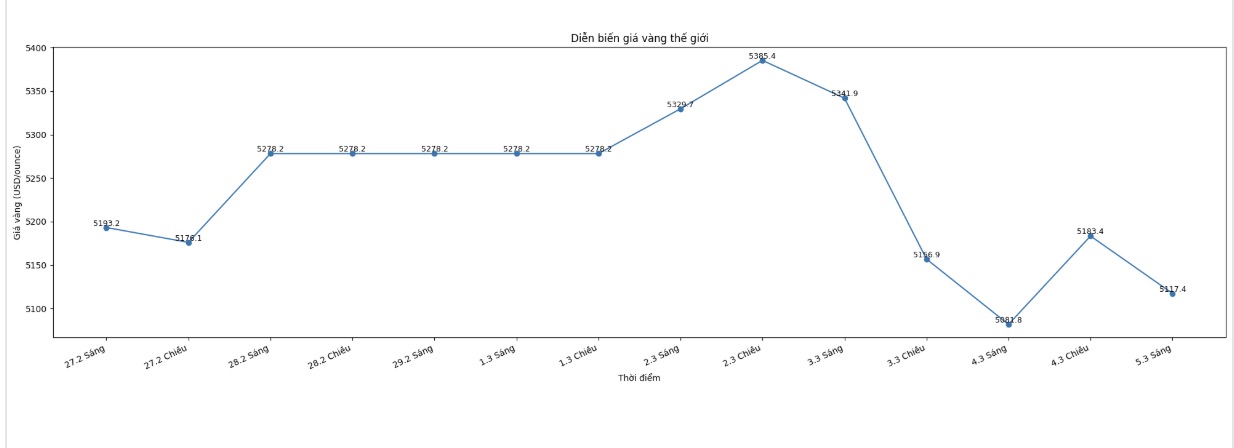
After touching these resistance zones, both metals faced significant selling pressure, causing gold prices to return to testing the support zone of 5,000 USD/ounce, while silver at one point fell below 80 USD/ounce.
Although prices have since recovered from low levels, Ms. Schneider believes that this volatility is likely just part of a broader accumulation phase. According to her, the market's next decisive step will be less dependent on short-term geopolitical news, which is mainly influenced by structural changes in the global financial system.
She believes that the only scenario that could change this outlook is if tensions escalate into a major and prolonged conflict. Then, oil, gold and silver prices could rise sharply. However, in the short term, the biggest risk to precious metals comes from the bond market.
Schneider explained that the yield on 10-year US Treasury bonds fell below 4% last week, causing many investors to begin re-evaluating capital allocation in a context of macroeconomic instability. According to her, bonds are emerging as an alternative haven, especially as concerns increase about credit markets and the stability of the global financial system.
She believes the market may be entering a major shift as speculators and bond traders begin to see bonds as a "safety net" more important than gold. This shift reflects growing concerns about the credit system as well as the possibility that governments will prioritize financial stability over inflation control if the economic situation worsens.
Although many investors have previously sold bonds due to concerns about the huge size of US public debt, causing yields to increase sharply, Ms. Schneider believes that this concern is also limited. She emphasized that the US Federal Reserve can always intervene as the final buyer to protect the stability of the financial market.

This rate once skyrocketed to over 100 in the early stages of the price increase cycle, before falling sharply when silver prices rose to a three-digit level. Currently, this rate is gradually stabilizing again.
According to her, if the gold/silver ratio falls below 55, it will be a suitable signal to buy silver. Conversely, if this ratio rises above 65, investors may need to look for opportunities in other markets. Currently, this ratio is at around 61, considered a neutral zone.
She said that if this ratio decreases more sharply, it may signal that silver will begin to outperform gold. Conversely, if the ratio rises above the mid-60 range, the upward momentum of the entire precious metals market may be weakening. Schneider emphasized that the gold/silver ratio has long been a reliable indicator for her and believes that sooner or later it will clearly define the next trend of the market.
However, Ms. Schneider still maintains a positive view of the long-term outlook for the precious metal. According to her, factors such as geopolitical tensions, supply risks and structural instability in the global economy will continue to support gold and silver prices.
According to Schneider, the strong increase in precious metals in the past time is very impressive, but after a period of hot increase, the market may need to pause to consolidate before determining the next trend. Investors should therefore be patient and monitor important signals from the market.


