
Fed faces difficult interest rate options
The financial market has just experienced a strong volatile session after US Federal Reserve (Fed) Chairman Kevin Warsh continued to emphasize the central bank's responsibility in bringing inflation back to the target.
Immediately after the speech at the Jackson Hole conference, expectations of the Fed raising interest rates in September increased significantly. The probability of an interest rate hike was market-valued from about 36% to nearly 60%, while the possibility of interest rate cuts was almost excluded from calculations.
The yield of US Treasury bonds for the 2-year term, which is sensitive to monetary policy prospects, increased by about 9 basis points. The USD also strengthened significantly against many major currencies.
Notably, the Fed internally may be quite deeply divided on the next step. Although the meeting at the end of July recorded that the majority of members chose to keep interest rates unchanged, recent signals suggest that the number of people leaning towards the possibility of tightening policies may be greater than what the voting results show.
This means that the Fed can completely keep interest rates unchanged at the September meeting but still send a tough message about the remaining months of the year. The market must therefore not only monitor interest rate decisions, but also pay special attention to the interest rate forecast charts of Fed members.
Inflation pressure is still the reason why the possibility of tightening policies cannot be eliminated. The Total Consumer Expenditure Price Index (PCE) increased by 3.7% in 12 months. If calculated at the annual rate in the last 6 months, the increase is up to 4.1%, showing that price pressure is still significant.
Gold price becomes a "measure" of confidence
In that context, gold price movements are quite clearly reflecting changes in investor expectations for the Fed's monetary policy. As interest rate expectations rise, the USD and bond yields are often supported, thereby putting pressure on gold. Conversely, concerns about inflation, economic prospects and monetary policy may continue to maintain demand for precious metals.
As inflation persists and confidence in price control declines, the demand for holding gold tends to increase. This is also one of the reasons why the precious metal has continuously established high price zones in recent times.
Demand from central banks continues to be a noteworthy factor. Many foreign central banks have maintained a net buying trend of gold for a long time, while diversifying reserves instead of focusing too much on US Treasury bonds.
Physical gold is even still prioritized over digital assets when reserve management organizations consider liquidity, stability and value preservation.
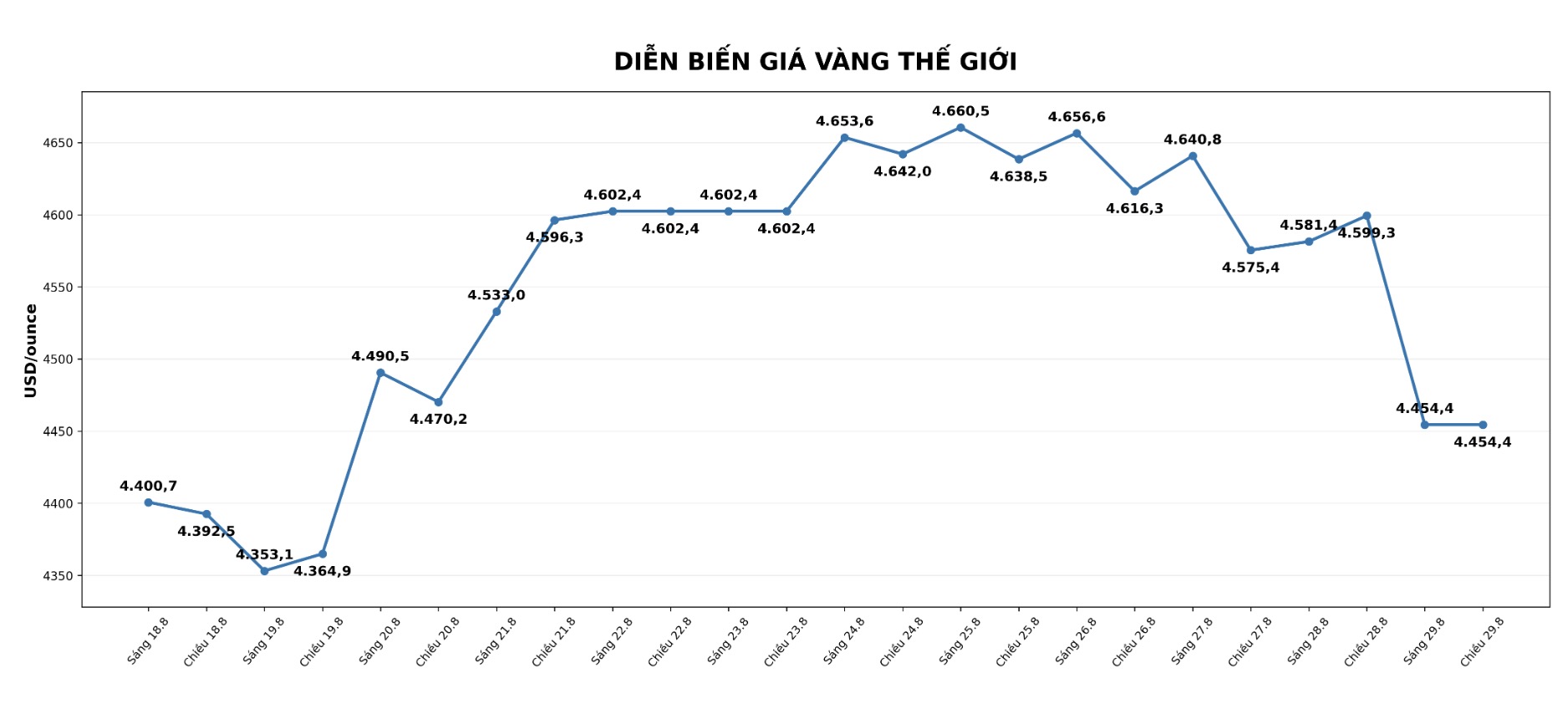
However, in the short term, the market raising interest rate expectations put great pressure on gold. Gold prices at times fell to about 4,450.9 USD/ounce, losing 148.6 USD, equivalent to 3.23% in one session. Previously, the precious metal had reached a high of about 4,629.1 USD/ounce, creating a fluctuation range of nearly 180 USD in just one day.
This development shows that gold is still particularly sensitive to Fed policy expectations. Expected higher interest rates often support the USD and bond yields, thereby reducing the attractiveness of non-performing assets like gold.
However, the long-term story is not just about an interest rate meeting. Persistent inflation, increased US public debt, high long-term bond yields and the need to diversify central banks' reserves are still factors that could continue to strongly impact the gold market.
The article only updates market developments, not investment recommendations. Investors need to be cautious in the face of strong market fluctuations and carefully consider risk factors before making decisions.


