
US job data becomes the focus
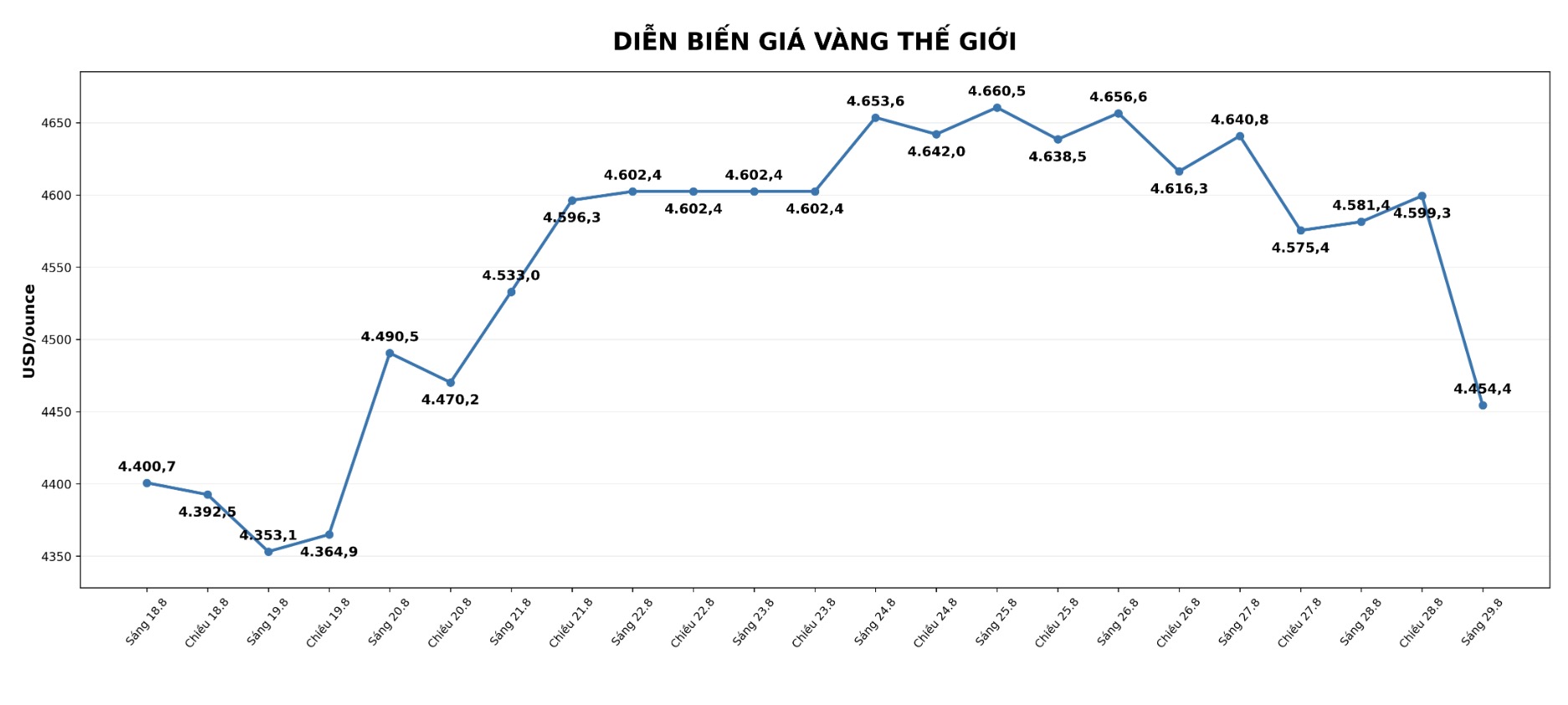
After a sharp drop at the end of the week, the gold market entered a new trading week with a series of important economic information. Among them, US jobs data is considered the factor with the strongest potential impact on the monetary policy expectations of the US Federal Reserve (Fed), thereby dominating the USD, bond yields and gold prices.
Attention to the labor market increased after Fed Chairman Kevin Warsh delivered a tough message at the Jackson Hole conference. He emphasized the goal of bringing inflation back to 2%, causing the market to raise expectations that the Fed could continue to raise interest rates.
This development immediately put pressure on the precious metal. The USD strengthened, short-term bond yields increased, and gold prices plummeted in the last session of the week.
Therefore, the economic data released next week will play an important role in determining whether the recent sell-off will continue or not.
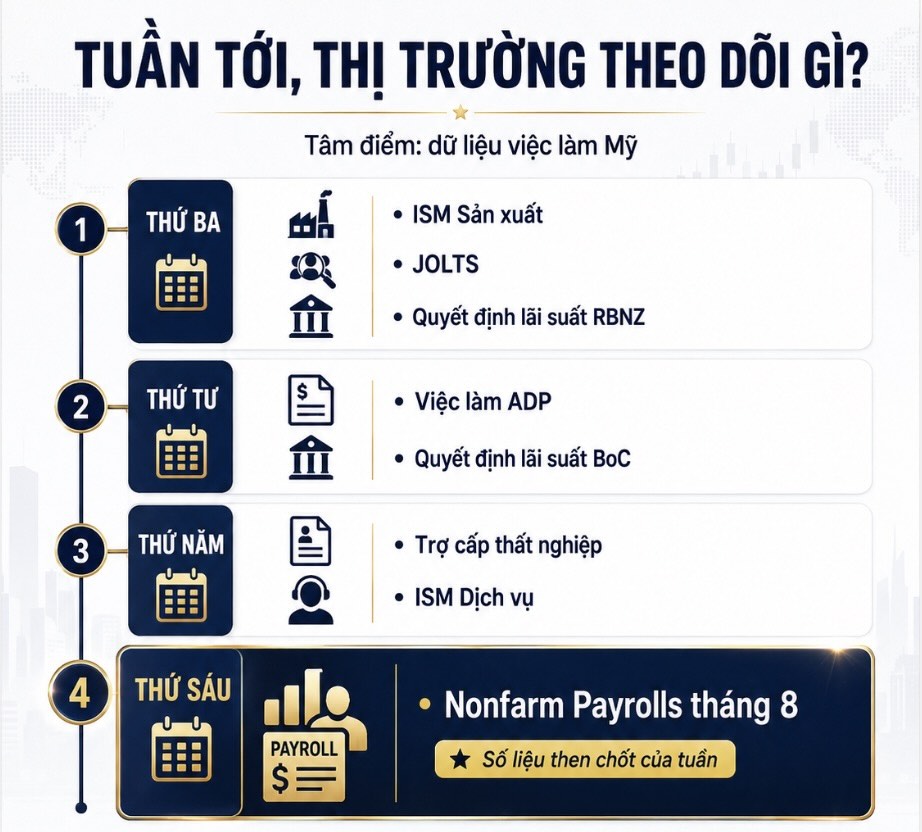
On September 1, the market will receive the August ISM manufacturing PMI index and JOLTS job opportunity report. JOLTS is particularly noteworthy because the decrease in the number of job positions may indicate that labor demand is weakening.
On September 2, the ADP private sector jobs report will provide more signals before the official jobs report is released. On the same day, the Reserve Bank of New Zealand and the Bank of Canada also made monetary policy decisions.
By September 3rd, the weekly US jobless claims and the ISM service PMI continued to be announced.
The biggest focus will be on September 4 with the US August non-farm payroll report.
If the labor market continues to weaken, expectations of the Fed raising interest rates may fall. This is likely to pull bond yields and the USD down, thereby creating conditions for gold prices to recover.
Conversely, a better-than-forecast jobs report, especially if accompanied by high wage growth, could strengthen the Fed's tightening stance. At that time, gold is at risk of continuing to be under pressure.
USD and bond yields may amplify volatility
The diễn biến of the USD will continue to be one of the indicators to be closely monitored next week. After the Fed Chairman's statement, the greenback strengthened as the market re-evaluated the possibility that US interest rates will remain high or continue to rise. A strong USD is often detrimental to gold because it makes the precious metal more expensive for buyers using other currencies.
According to traditional advocacy, increased real yields increase the opportunity cost of holding gold - an unprofitable asset. However, this relationship is becoming more complex as long-term yields increase not only due to monetary policy expectations but also due to concerns about the US fiscal situation.
If yields increase mainly because the market forecasts the Fed to tighten policy, gold may be under pressure. But if yields increase due to investors demanding higher risk compensation for large debt scale and budget deficits, the demand for gold risk hedging may still increase.
Profit-taking risk has not disappeared
Although fiscal factors still create a supporting foundation, gold prices are unlikely to increase in a straight line. After a very strong recovery in August, large accumulated buying positions made the market more sensitive to profit-taking activities. The plunge after the Fed Chairman's statement shows that investor sentiment may change very quickly when interest rate expectations are adjusted.
Therefore, gold prices next week are likely to continue to be affected simultaneously by two opposing groups of factors.
In the short term, the Fed's tough monetary policy, a strong USD, and rising yields are the biggest risks. Meanwhile, weakening labor markets, concerns about public debt, budget deficits, and the risk of a decline in USD purchasing power may create support for precious metals.
The US jobs report on September 4th may therefore become a decisive event in gold's direction at the end of the week, while shaping market expectations ahead of the next Fed policy meeting.
The article only updates market developments, not investment recommendations. Investors need to be cautious in the face of strong market fluctuations and carefully consider risk factors before making decisions.


