
World gold prices turned down in the first trading session of the week as investor sentiment improved thanks to the upward momentum of technology stocks and the temporary cooling of oil prices.
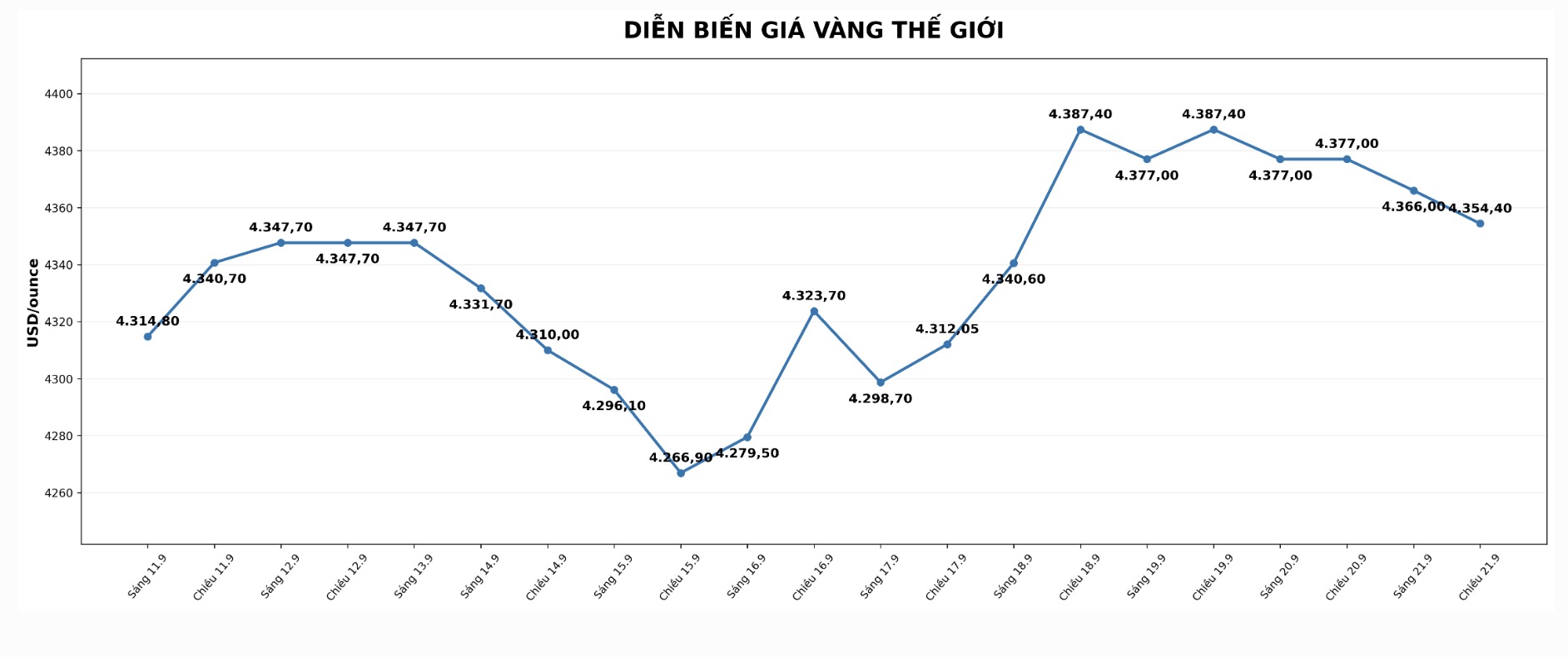
As of 5:17 PM on September 21, 2026 (Vietnam time), world gold prices were listed around 4,354.4 USD/ounce, down 0.52%. Meanwhile, world silver prices still maintained a slight increase of 0.11%, to 66.19 USD/ounce.
Cash flow is shifting as risky assets such as stocks are attracting renewed interest. The MSCI All-World global stock index increased by 0.3%, while the European stock market also recorded an increase of about 0.75%.
The main driver came from the technology stock group, especially expectations for artificial intelligence (AI) demand. Nasdaq futures rose nearly 1%, after many semiconductor stocks rose sharply in the pre-opening trading session. Some chip manufacturers recorded significant gains thanks to the prospect of AI demand continuing to expand.
In addition, the reduction in oil prices also contributed to easing concerns about inflationary pressure and the possibility that central banks will continue to maintain tight monetary policy.
Brent oil prices fell by about 2%, to $101.7/barrel, after information emerged that oil supplies from the Middle East showed signs of improvement. Market tracking data showed Saudi Arabia's oil exports in September recovered to over 4 million barrels/day, after a sharp decrease in August.
However, investors are still closely monitoring geopolitical developments in the Middle East, as tensions between the parties still pose a risk of affecting global energy supplies. Some assessments suggest that the oil market still has many unstable factors, as inventory may be under pressure in the near future.
Previously, gold prices were strongly supported by safe-haven demand as inflation, interest rates and geopolitical risks increased. However, as concerns temporarily subsided, the precious metal faced adjustment pressure.
Another factor affecting gold is expectations about the interest rate policy of the US Federal Reserve (Fed). After a tougher signal from the Fed, the financial market increases the possibility that the US central bank will continue to raise interest rates in the near future.
The yield on 10-year government bonds of the G7 group of major economies is currently maintained at its highest level since 2008, around 4.2%. Rising yields often put pressure on gold due to reducing the attractiveness of non-performing assets.
Despite falling in the first session of the week, gold is still being supported by long-term factors such as geopolitical instability, risk hedging needs and changes in global monetary policy expectations. Meanwhile, silver continues to receive support from both investment demand and its important role in industries.
The market is currently focusing on a series of US economic data this week to assess interest rate prospects, including production activity, employment and consumer sentiment indicators. New data may create more volatility for precious metal prices in the near future.
The article only updates the developments of the gold market and factors affecting the price of precious metals, not investment recommendations.


