
Gold prices are under downward pressure but support is still present
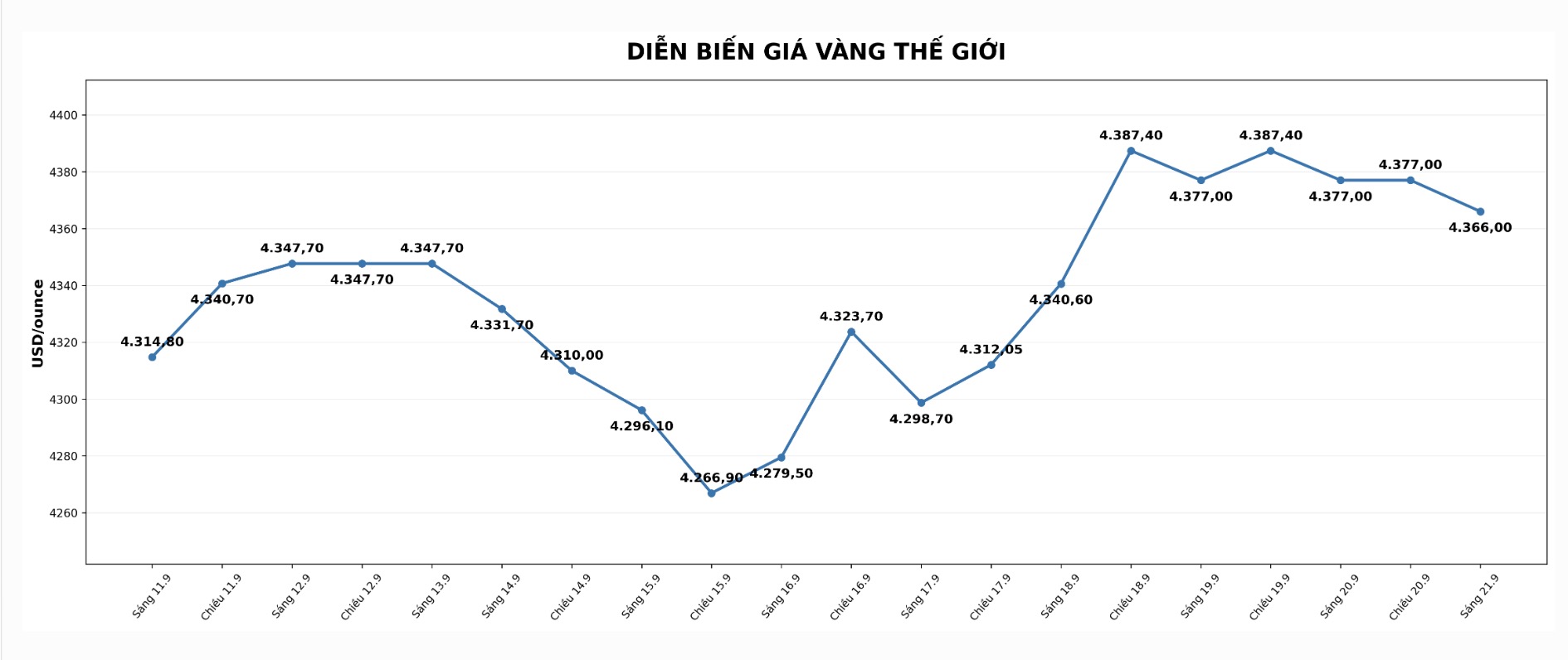
Early in the morning of September 21, world gold prices turned down slightly after a volatile trading week. This development took place after the precious metal experienced a week of strong struggle. Previously, gold prices were pressured by rising US bond yields, volatile USD and expectations that the US Federal Reserve (Fed) would continue to maintain tight monetary policy.
However, despite the factors that often disadvantage gold, the market still shows remarkable resilience. After the Fed's decision to raise interest rates by another 0.25 percentage points, gold prices did not fall deeply but still maintained above the important support zone.
Interest rate policy is no longer the only factor
The Fed's latest interest rate hike was somewhat predicted by investors. Therefore, the impact on gold prices is no longer as strong as in previous periods.
What the market is currently concerned about is the policy outlook in the coming time, especially after signals from the US central bank show that the interest rate adjustment process may be slower than previously feared.
Besides the interest rate factor, many long-term drivers are continuing to support gold prices. These include concerns about the state of US public finances, prolonged budget deficits, persistent inflation risks and changes in the distribution of global foreign exchange reserves.
Analysts believe that in the context of a volatile world economy, gold is not only seen as an asset benefiting from interest rate reductions, but also as a tool to defend against financial and geopolitical risks.
Another notable factor is that gold investment demand is showing signs of improvement. Holdings in gold ETFs have increased to a 7-month high, showing that a part of long-term investors still maintain interest even though gold prices have just undergone a correction phase.
Gold needs to overcome the resistance zone to establish a new trend
Although fundamental factors are still creating support, gold prices are assessed to need to overcome important technical resistance zones to expand the recovery momentum.
Currently, the market is monitoring the 4,420-4,440 USD/ounce zone. If it passes this zone, gold prices may aim for a higher target around the 200-day moving average, currently near the 4, 540 USD/ounce zone.
Conversely, if it cannot break through, the precious metal may continue to be under adjustment pressure in the short term as US bond yields remain high.
The diễn biến of 10-year term bond yields, the USD and oil prices will continue to be important factors affecting gold this week. In particular, if bond yields remain below the 5% threshold and oil prices cool down, gold may have more room for recovery.
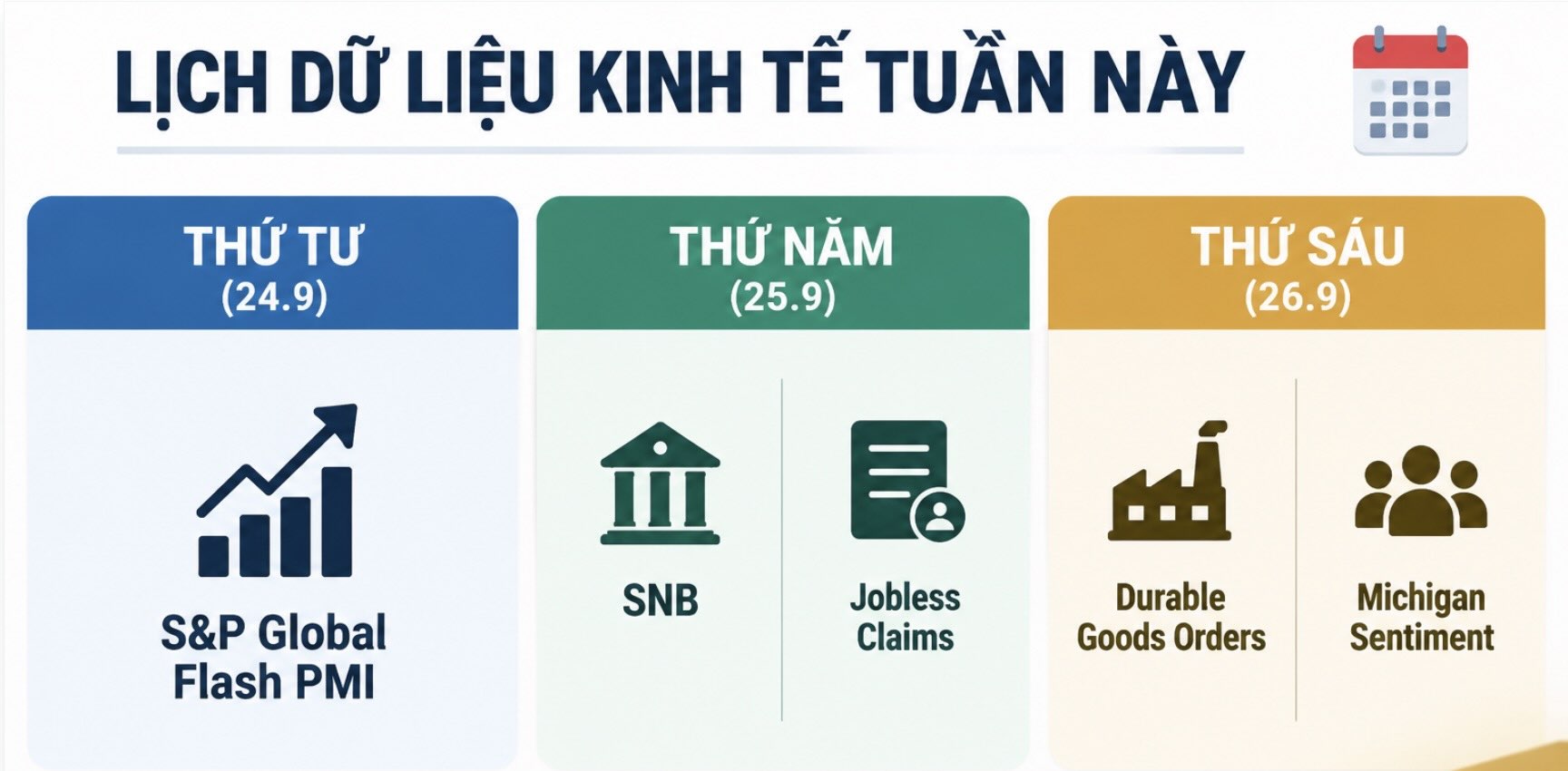
This week, the market will focus on some important economic data. Investors will pay attention to the preliminary PMI of the US, the monetary policy decision of the Swiss Central Bank, weekly US unemployment data, durable goods order report and consumer sentiment surveys.
These data may provide more signals about the health of the US economy, inflation prospects and the possibility of monetary policy adjustments in the near future.
The article only updates the developments of the gold market and factors affecting precious metal prices, not investment recommendations.


