
Although most Wall Street experts still maintain a positive view of gold price prospects for next week, the market still has notable warnings showing that the upward momentum of precious metals is not necessarily really solid.
Mr. Aaron Hill - Market Analysis Director at FP Markets, said that it is still too early to really worry about the inflation shutdown, but this worry can completely increase next week when the market receives important manufacturing data.
According to him, concerns about the stagnation only really overwhelm the risk of purely energy-induced inflation when growth figures weaken significantly, such as PMI falling or unemployment rising. He emphasized that according to the classic model of the 1970s, such a context often puts pressure on gold in the short term before the precious metal can shine again.
Not only cautious about macroeconomic factors, Mr. Hill also believes that gold prices currently still need to improve further technically before they can attract sustainable upward momentum. According to his assessment, the strong upward momentum this week from below 4,100 USD/ounce seems more like a liquidity sweep than a bottom-fishing confirmation signal.

To form a sustainable price base, gold may need to retest or maintain the 4,200 - 4,300 USD/ounce range with stronger momentum, before it can develop a convincing increase towards the 4,800 USD/ounce mark or higher. In other words, although the upward trend has not been denied, the market has not yet had enough basis to confirm that the risk has completely passed.
Sharing the same cautious view, Mr. Alex Kuptsikevich - senior market analyst at FxPro - said he believes gold prices will fall again next week.
According to him, although gold started the week with a strong sell-off, it ended the week in a positive direction, the current general environment is still quite unfavorable for the precious metal. The stock market went down and the USD appreciated, according to him, are two factors that often make the upward momentum of gold difficult to last, especially when the upward momentum is mainly explained by safe-haven demand.
Mr. Kuptsikevich also warned that when market sentiment becomes worse, margin call orders may eventually appear and directly impact gold prices. He cited an example that occurred in early 2020, when gold rose sharply after information about the COVID-19 epidemic but then fell at the same pace as stocks.
According to this expert, the view on gold should only shift to positive when clear signals from major central banks show that they are ready to ease monetary policy. That also means that, at the present time, he does not see enough basis to become optimistic.
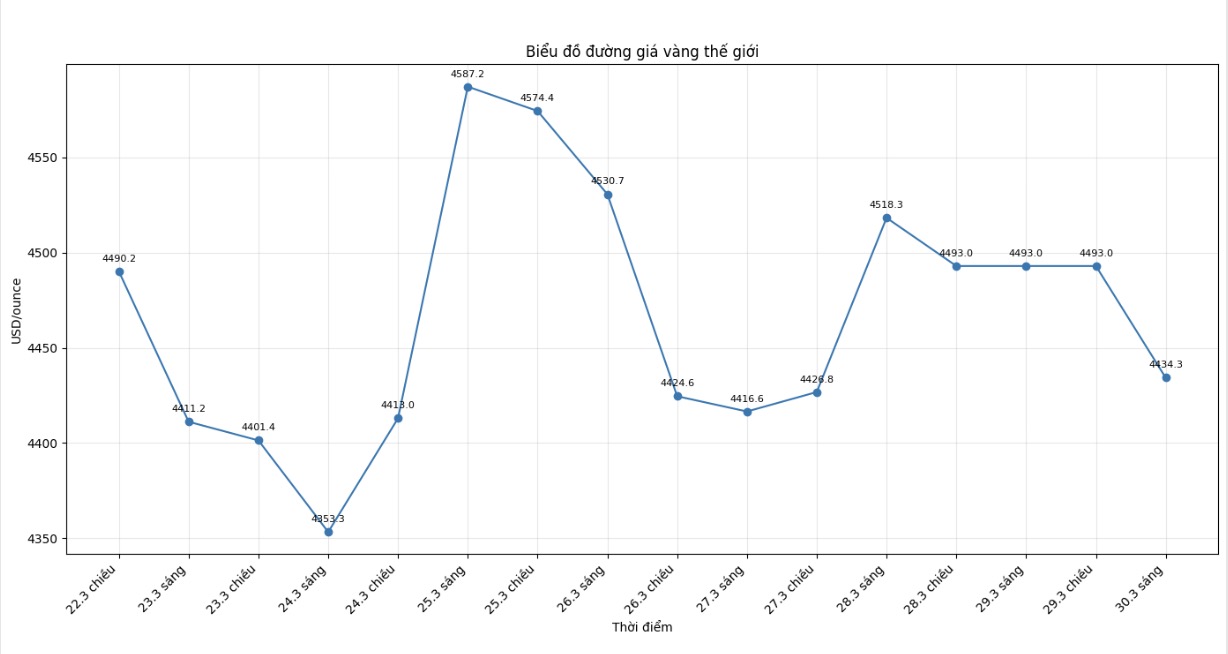
Meanwhile, Mr. Marc Chandler - Managing Director at Bannockburn Global Forex, gave a more neutral but still containing many warnings. He said spot gold prices held above the 200-day moving average around the 4,982 USD threshold in the first session of the week, but recovery efforts were blocked in the middle of the week when the price only edged up above 4,602 USD/ounce.
According to him, if this milestone is surpassed, the technical signal will become more positive and the price may head towards the 4,760 USD/ounce zone. However, if the conflict with Iran escalates, gold prices may completely return to the bottom zones, with a short support zone in the range of 4,350 - 4,375 USD/ounce.
The above assessments show a reality that, although the gold price outlook for next week is still assessed positively by the majority of Wall Street experts, the market has not entered a certain state.
Gold is still receiving support from safe-haven demand, but at the same time is bound by the developments of the USD, stocks, US economic data and especially technical signals that are not really convincing.
In the context of the upcoming trading week continuing to focus on a series of jobs reports, manufacturing PMI and statements from the Fed, cautious opinions such as those of Aaron Hill - Alex Kuptsikevich or Marc Chandler are a reminder that gold's upward momentum, if any, will not be a one-way street.
For investors, this may be a stage where they need to observe technical milestones and economic data more carefully, instead of just relying on the optimistic sentiment that is prevailing in the market.


