
Mr. Willem Sels and Ms. Lucia Ku - commodity strategy experts of HSBC (a multinational financial and banking group) - continue to maintain a positive outlook on gold in the next 6 months, while maintaining the Overweight recommendation for this precious metal.
According to the analysis group, concerns about inflation have caused interest rate fluctuations to increase and changed market expectations for monetary policy. Policymakers are likely to maintain the current interest rate level for a while longer before starting to ease.
In that context, HSBC said it still prioritizes seeking quality yields from investment-standard corporate bonds and domestic bonds of emerging markets to generate income. However, as the correlation between asset classes increases, gold and alternative assets become increasingly necessary to improve diversification efficiency.
Despite the recent adjustment, we remain optimistic about gold in the medium and long term thanks to portfolio diversification benefits and safe-haven demand" - Mr. Sels and Ms. Ku emphasized.
The two experts also believe that the factors putting pressure on gold prices in the past are only short-term, while fundamental supports are still positive. According to HSBC, gold continues to be an attractive portfolio diversification tool in the context of prolonged geopolitical instability and buying trends from central banks.
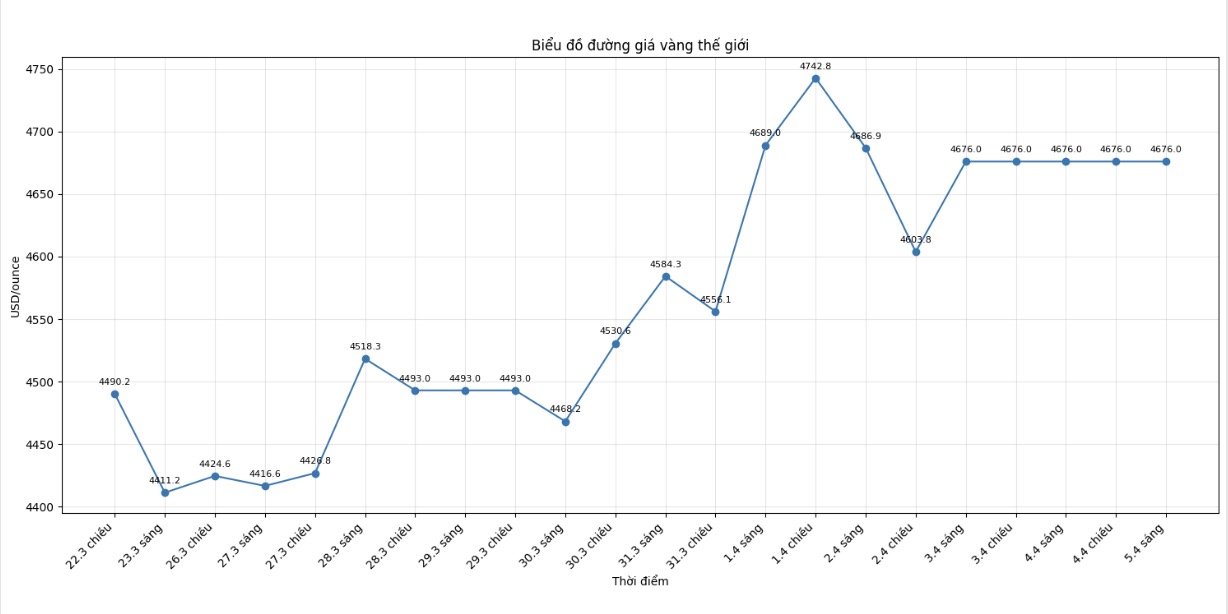
Previously, on March 30, HSBC Asset Management experts also maintained a positive assessment of gold, although they believed that this precious metal is trending to move like a more risky asset in 2026. Gold prices fell sharply amid escalating geopolitical tensions and the rising USD, contrary to market expectations.
According to HSBC, the diễn biến of gold prices since the outbreak of the conflict with Iran has gone against the "traditional scenario", which believes that geopolitical and economic instability will support gold prices to rise. Instead, this precious metal has decreased by about 15% by the end of March.
This bank believes that the strengthening of the USD is a significant drag, reducing purchasing power from non-US investors, while the market's revaluation of interest rate outlook in a "hawkish" direction has increased the opportunity cost of holding non-performing assets such as gold.
However, HSBC notes that this argument is not entirely new, because gold has resisted well the upward momentum of the USD and interest rates in 2022. This shows that the traditional relationship between gold and real interest rates and the greenback is gradually weakening.
Another reason pointed out is that the structure of gold ownership has changed. The market is currently recording a larger participation of individual investors and leverage capital flows. In stressful periods, this group of investors tends to sell to cut losses or supplement margins, making gold volatile more.
However, HSBC still believes that the long-term outlook for gold is still positive, especially in the context of the global "dedollarization" trend continuing. The bank also emphasized that the recent fluctuation is a clear reminder that building a sustainable investment portfolio needs to be based on a diverse and comprehensive approach.
Previously, on February 15, Mr. James Steel - Head of Precious Metals Analysis at HSBC - said that volatility will be the keyword dominating the precious metals market in 2026, as the policy of the US Federal Reserve (FED) and the diễn biến of the USD continue to greatly affect investment demand.
In an exchange with CNBC, Mr. Steel said that gold no longer reacts strongly to the diễn biến of 10-year US government bond yields as before. According to him, before 2022, the real interest rate of 10-year bonds had a fairly clear reverse correlation with gold prices. However, this relationship has weakened significantly in recent years.
Mr. Steel said that in addition to the interest rate factor, the gold market is currently also strongly affected by the buying power of individual investors, increased geopolitical risks and gold hoarding activities of central banks.
This expert also noted that the fact that gold prices have not increased sharply again in the short term does not mean that the long-term upward trend has ended. According to him, if calculated according to the actual value adjusted according to inflation, gold has surpassed the peak area equivalent to about 3,400 USD/ounce in April.


