
For many investors, gold is still a difficult asset to value because it does not create cash flow, does not pay dividends and is not suitable for traditional valuation models. However, Mr. Jeff Sarti - Managing Director of Morton Wealth - believes that is what makes gold a special role.
Gold is not an investment, but a savings asset. In the long run, the purpose of gold is to preserve value," Mr. Sarti said in an interview with Kitco News.
According to Mr. Sarti, gold is the ultimate value-saving asset, which has existed through generations and overcome the changes of legal monetary systems. "Reserves come and go, but gold has proven its role through generations," he said.
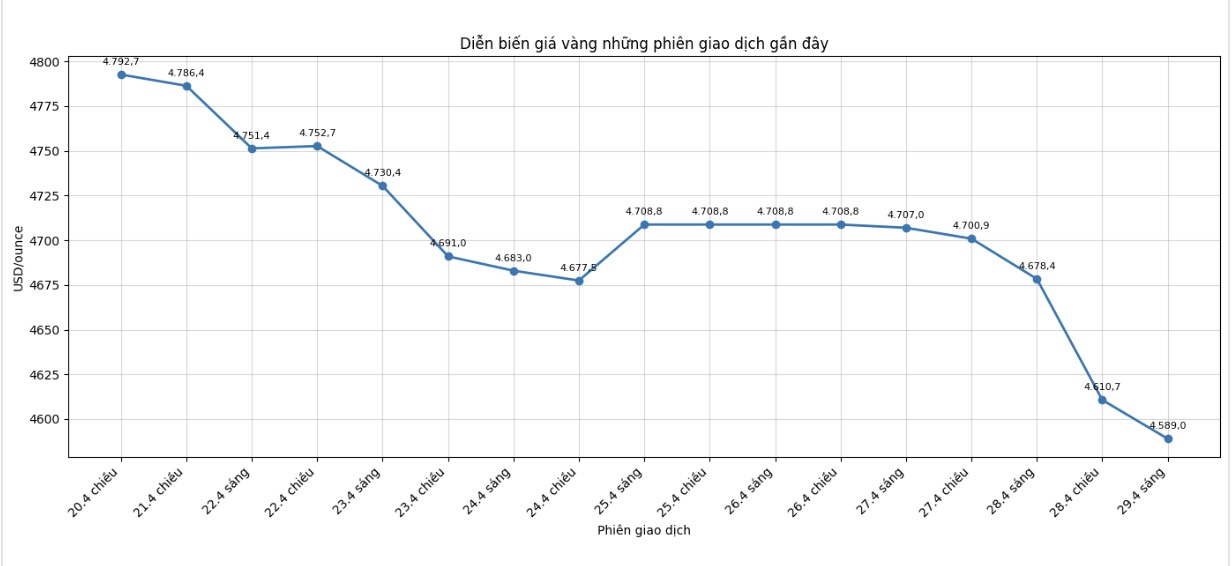
Morton Wealth has maintained its gold position since 2015. Although the strong increase in gold at the beginning of the year created a lot of excitement in the market, Mr. Sarti said this development makes him more cautious, because the real role of gold is being misunderstood.
He believes that gold is a hedge against rising public debt and the risk of currency devaluation. "A true value-saving asset is boring. I want gold at $2,500, not $110,000, because $110,000 means something is very unstable," he said.
In the past 10 years, Morton Wealth has maintained a one-digit high proportion of precious metals in its portfolio, including about 5-6% gold and 2-3% mining stocks. Instead of trying to choose a market time, the company applied a disciplined rebalancing strategy and partially took profits when gold prices peaked in January.
According to Mr. Sarti, mining stocks are seen as a tactical expansion of the gold portfolio, as this group fluctuates more strongly and is sensitive to input costs such as energy.
In the long term, he still maintains a positive stance on gold due to structural concerns about public debt and monetary policy. He believes that many countries are unlikely to solve the debt problem with higher economic growth alone.
In that context, the possibility that policymakers will continue to devalue the currency and apply financial containment measures, even control the yield curve, is unavoidable.

Mr. Sarti also believes that gold is still not widely held, especially among institutional investors. According to him, the proportion of gold in global portfolios is still very low, suggesting that the current upward momentum may be only in the early stages and is more supported by macroeconomic factors rather than pure speculation.
I don't think the general public has really discussed this," he said.
For Mr. Sarti, the sign that gold peaked is not in the technical chart, but at the level of popularity in popular culture. "When gold became a mainstream topic, appearing in Super Bowl advertisements, that's when I started to worry," he said.
However, CEO Morton Wealth emphasized that gold is only part of a broader strategy, focusing on real assets and investments less correlated with traditional markets.
In an environment of increasing debt, persistent inflation risk and the risk of stagnation, he predicts that investors will increasingly prioritize tangible assets over financial assets. According to him, this may be a factor shaping the next stage of the gold market - not as a speculative transaction, but as a foundation to help the investment portfolio become more sustainable.
See more news related to gold prices HERE...


