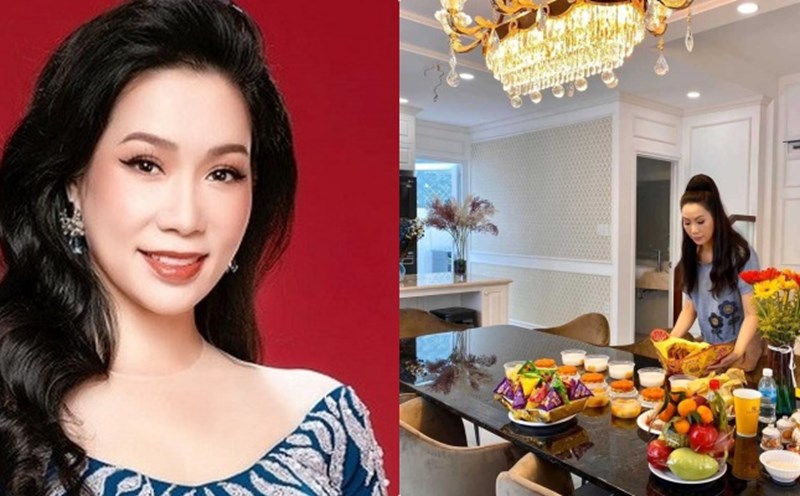
In a conversation with Lao Dong newspaper during the New Year holiday, she frankly shared about the current situation, the "knotholes" that need to be removed and expectations for the first season of 2026.
Looking back at 2025, how do you assess the overall picture of Ho Chi Minh City theater, especially in attracting audiences back?
- 2025 can be seen as a year of recovery with many positive changes. Audiences have returned to the theater more clearly than during the epidemic period, but this recovery is not even between types. There are plays and performances that perform very well, even sold out thanks to high artistic quality and effective communication strategies. Conversely, there are still many plays that fall into a state of audience absence due to limited production investment or lack of attention to promotion.
In short, the city's theater is showing positive signs, but it is still quite fragile. To go the long way, it is necessary to continue to consolidate with quality content, appropriate business models and especially sustainable connections with the audience community.
In your opinion, what are the clearest positive signs of Ho Chi Minh City theater in the past year?
- I think there are some very noteworthy points. First of all, the appearance of some well-invested plays with in-depth content, creating good media effects and attracting young audiences - a group of audiences that is very difficult to conquer.
In addition, the network of collaboration between theaters, directors and authors is increasingly expanding. People are willing to join hands to create quality works, instead of working disjointedly as before. Outdoor performances and community service projects also help theaters reach the public more flexibly. In addition, the fact that some theaters have begun to apply online ticket sales, livestreaming support and digital interaction also contributes to improving audience reach.
However, many stages still face difficulties. According to you, what is the biggest "knot" currently?
- The biggest bottleneck is still the financial problem. Ticket sales revenue is unstable, while many units have to rely heavily on short-term support sources. Currently, there is still a lack of long-term support mechanisms for production activities such as project funds, premise rental incentives or appropriate tax policies.
This makes it difficult for the theater to invest methodically in the work, and even more difficult to retain skilled personnel. I think there needs to be a synchronous solution: from a public-private partnership mechanism, a clear legal framework for socialized theater, to improving modern management skills for the theater management team.
Socialized theater used to be very vibrant. What challenges is this model facing now?
- The biggest challenge is increasingly fierce market competition, while limited capital and high financial risks. In addition, many units still lack standards in labor contracts and insurance for artists, making it difficult for professionals to be truly assured of long-term commitment. Another problem is the lack of professional marketing strategies, leading to difficulties in expanding new audiences.
The enjoyment of young audiences is changing rapidly. How does the stage need to adapt to maintain its appeal?
- In my opinion, the theater needs to diversify the language of expression: faster tempo, closer topics to life, combine multimedia and increase interaction between actors and audiences. However, the important thing is not to lose the depth of content. Creativity in storytelling, and friendly ticket prices for students will help the theater reach young audiences more effectively.
Many opinions say that the current stage script lacks breakthroughs. How do you view this issue?
- To have works with rich spreading power, I think it is necessary to encourage scripts to stick to life, exploit contemporary social issues with a humanistic perspective. In addition, it is necessary to strengthen cooperation with researchers and the press to have more practical materials. Opening up space for experimental creation, giving opportunities to young authors, investing in professional script editing and organizing training classes for screenwriters is very necessary.
What are your concerns about the successor force of Ho Chi Minh City theater?
- I am also somewhat worried. Many young people today lack basic technical foundations, are not well-trained or do not have many diverse acting experiences. There needs to be continuous training programs, creating conditions for exchange between veteran artists and the younger generation, and at the same time increasing the number of performances so that you have more opportunities to experience reality.
With Trinh Kim Chi theater, what criteria do you set when choosing scripts and production strategies?
- I am very careful in the stage of choosing scripts. Characters must have depth, clear storyline, carry human values or social messages that are strong enough, reasonable drama and have the ability to connect with the general public. Our theater also prioritizes traditional and revolutionary drama. In addition, I focus on investing in directing, editing and building appropriate performance plans, combined with performances at schools and events to expand the audience.
On the occasion of the 2026 New Year, what do you expect for the first season of the year?
- I hope the audience will increase not only because of the festival atmosphere, but because the quality of the play is really attractive. Hopefully, the stages will boldly innovate content, form, and creative experiments while still maintaining professional standards. More importantly, the spirit of companionship between artists, managers and audiences so that the stage becomes a serious, diverse and emotional entertainment choice.
Thank you for sharing!