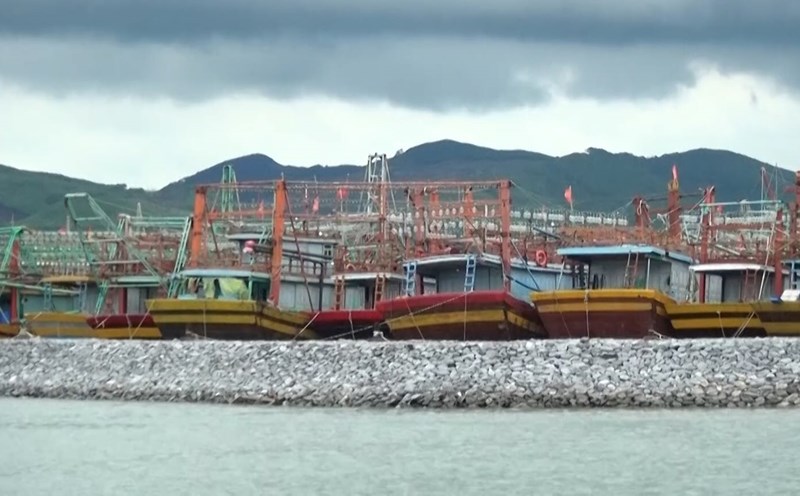
The training courses were organized by the Thang An Commune Trade Union in coordination with the Binh Minh Fisheries Union and the Center for crew Training and Sea Technology Development, Nha Trang University for 20 days from December 15. The training was attended by more than 60 fishermen, most of whom were boat owners, captains or directly controllers of fishing boats in coastal communes of Thang An and Thang Truong. These are all workers who have been attached to the sea for many years, have a lot of practical experience but have not been properly trained according to professional standards.
In reality, fishermen in the Central region have long practiced the traditional method, "father-to-son inheritance". Sea travel skills are largely based on accumulated experience, while knowledge of ship management, maritime safety, sea exploitation and environmental protection laws is still limited. The number of workers who have been properly trained, have captain and chief engineer certificates with the right class is not much, and have not met the requirements for sustainable fisheries management.
In that context, professional training classes offered by specialized university training institutions are of special importance. The 20-day curriculum combines theory with practice, focusing on ship operation, machinery management, handling situations at sea, ensuring safety for people and vehicles. More importantly, students are equipped with legal knowledge related to fisheries exploitation, maritime safety, resource protection and marine environment.
The reasons for risks at sea, violations of fishing regulations or ineffective exploitation are due to the shortage of well-trained human resources for fisheries. When fishermen are upgraded to professional standards, not only the efficiency of their sea trips is improved, but their awareness of law compliance is also significantly improved. This is a key factor in the context of the fishing industry being closely monitored for legal and responsible exploitation.
From the perspective of the trade union organization and the fishing union, the coordination of opening classes for union members demonstrates the role of accompanying and protecting the long-term rights of fishermen. The captain and chief engineer certificate of class I is not only a necessary legal condition but also opens up opportunities to access modern mining models, increase product value and reduce the risk of occupational accidents.
In the long term, such training classes contribute to gradually forming a truly "ship workers", replacing the spontaneous, disjointed image of labor. When knowledge, skills and legal awareness are consolidated, the fishing industry will have a foundation for sustainable development, protecting seafood resources and the marine environment, while ensuring stable livelihoods for fishermen in the Central region.
The opening of two training courses for captain and chief engineer of class I for union members of fishing unions in the coastal area of the Central region has a meaning beyond the framework of a short-term training activity. This is a necessary step in the process of professionalizing the fishery, meeting the increasingly high requirements of modern and integrated fisheries exploitation.