
According to documents from the National Museum of History, on January 27, 1947, on the occasion of welcoming the traditional Lunar New Year Dinh Hoi, President Ho Chi Minh wrote a "Letter to the commando soldiers of the Capital army" to inquire about the Tet situation, praising the courageous fighting spirit of the soldiers, in the letter He wrote: "You are the commando team. You commando soldiers to make the Fatherland determined to live".
His words have become a spirit of determination to fight, like a oath, a symbol of the courageous fighting of the army and people of Hanoi in 60 days and nights of "defense to death" to protect the Capital from the end of 1946 to the beginning of 1947.
Determined to die for the Fatherland to live
Historical documents record that since 1947, three-pole bombs have stopped being produced. This type of bomb was used for a very short time, almost only appearing in the 60-day and night battle to protect the Capital.
The three-pole bomb is a type of anti-tank weapon produced by the Vietnamese military arsenal in 1946. The bomb has a funnel-shaped end containing explosives (about 7-10 kg of explosives) attached to a wooden handle about 1.2 meters long.
The three-barrel bomb was designed with a collision detonator according to the principle of concave warheads, soldiers had to rush straight into enemy tanks to detonate, so the rate of sacrifice was very high. This is a measure in conditions where anti-tank weapons are still limited.
Those who received the task of detonating the three-pole bomb were determined to sacrifice. According to records from the National Museum of History, many soldiers who received the three-pole bomb were commemorated alive before performing their duties.
To see, the spirit of "determined to die for the Fatherland to live" was nurtured right from the type of combat weapon to the resilient and courageous spirit of soldiers in the 60-day and night battle (1946-1947) in the heart of Hanoi.
In the early days of fighting to hold back the French in Hanoi for the Central Government to withdraw to the war zone safely, 10 commando teams were established with a total of about 100 members.
They are recorded in history as soldiers of the Determined to Die Army, commando soldiers - different from the majority of other soldiers who are the National Guard or Hanoi Self-Defense Force. Soldiers of the Determined to Die Army often wear guard clothes, wear red scarves, hold three-pole bombs, always in a state of rushing up to fight with enemy tanks and sacrifice immediately afterwards.
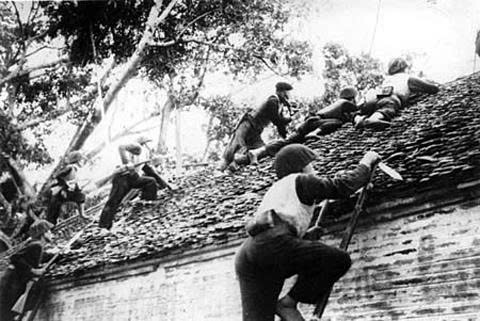
The image of the three-barrel bomb - a rudimentary weapon that requires the sacrifice of suicide soldiers when fighting against French tanks - also showed the disparity in forces and weapons between the two sides.
In that unequal battle, with advanced weapons and powerful forces, the French thought they would quickly capture Hanoi, but with the resilient and courageous fighting spirit of the capital's army and people, the battle lasted for 60 days and nights like a miracle.
60 days and nights holding the French at the Hanoi front for the central government to withdraw safely is a battle that not only has military strategic significance, but also shows the strength of the people's hearts battlefield, the strength of courageous fighting spirit, when any son of the Capital enters that battle, he also carries the oath and the spirit of "determined to die for the Fatherland to live".
History lives forever in the heart of the nation
When peace was restored, around Hanoi's Old Quarter, many monuments and reliefs were erected to show gratitude to later generations and commemorate the legendary war to protect the Capital in the winter of 1946.
On each relief or monument, images of commando soldiers holding three-pole bombs along with soldiers and militia forces fighting in the Capital have been carved as a historical symbol of 60 days and nights (December 19, 1946 - February 17, 1947).
The statue named "Determined to die for the Fatherland to live" by sculptor Kim Giao was completed in 1984, placed on the campus of the National Relic Ba Kieu Temple (Hoan Kiem ward).
Recently, the Hanoi City People's Committee directed the Department of Culture, Sports and Tourism, the Capital High Command, and the Hoan Kiem Ward People's Committee to coordinate in implementing the plan to relocate the statue "Determined to die for the Fatherland to live" in the campus of the National Relic Ba Kieu Temple, the relocation plan was proposed during the reorganization of the Hoan Kiem Lake area.
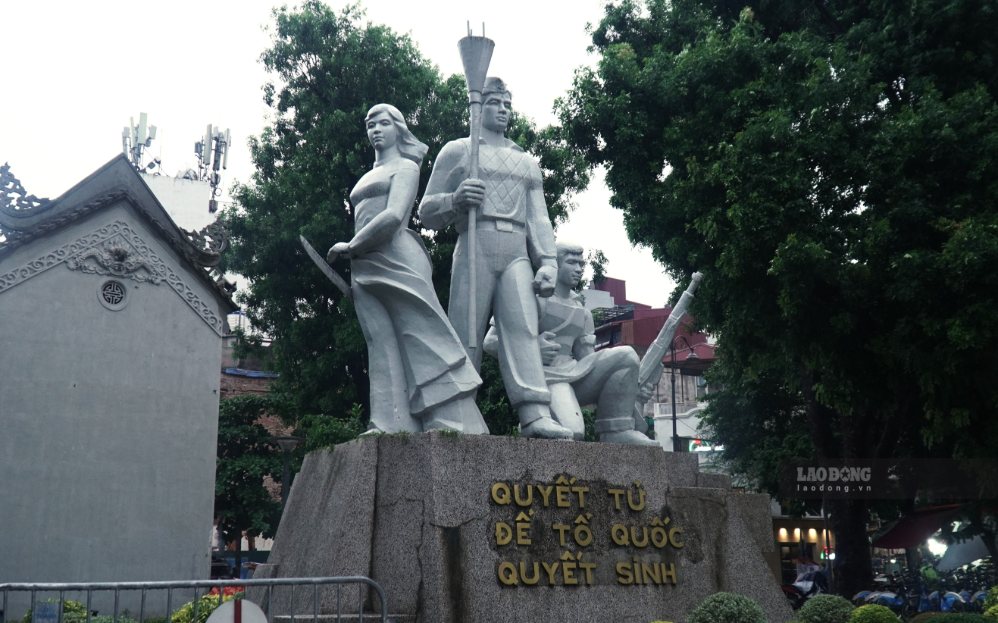
Talking to Lao Dong reporters about this relocation decision, Assoc. Prof. Dr. Le Quy Duc - former Deputy Director of the Institute of Culture and Development of the Ho Chi Minh National Academy of Politics - said: "I understand the feelings and thoughts of both supporters and opponents of the relocation. The statue "Determined to die for the Fatherland to live" has been in that position for more than 40 years, has become a historical symbol at Hoan Kiem Lake, and is familiar and attached to the vision of many people in the Capital.
The relocation will certainly create a void, will touch the minds of generations who have lived, experienced the 60-day and night war to protect the Capital in 1946, touch the minds of those who are familiar and attached to that symbol by Hoan Kiem Lake.
But, I also understand, the reason for relocating the monument to the Capital High Command. From a certain perspective, this decision is also reasonable”.
According to Assoc. Prof. Dr. Le Quy Duc, each era poses challenges regarding changes in the pace of life and urban planning.
“Ho Guom Lake space needs to be planned to be more spacious and expanded. The previous generation fought and sacrificed bravely to create a peaceful future for us today. Today's generation must also shoulder the mission of building the foundation and urban space for the future..." - Assoc. Prof. Dr. Le Quy Duc said.
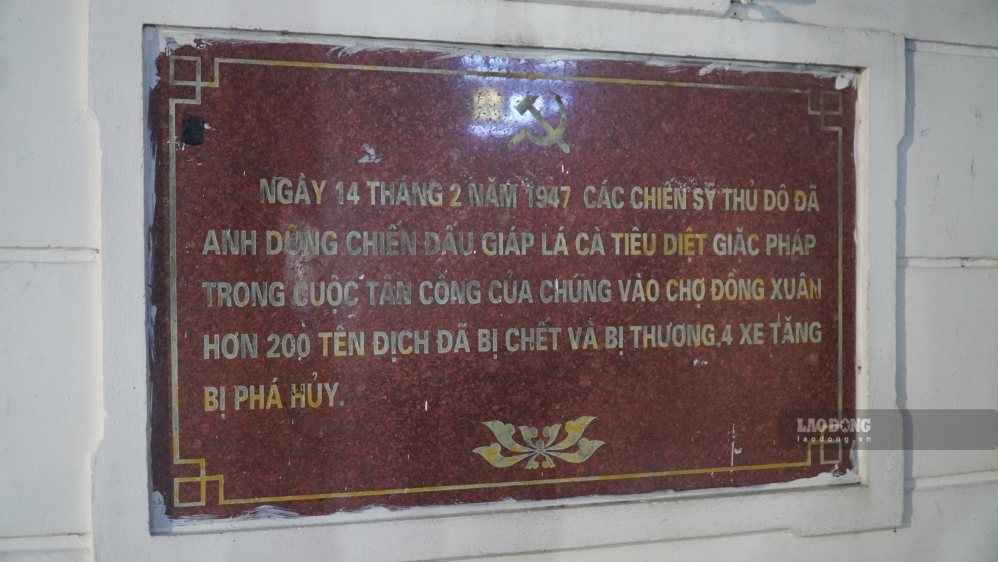
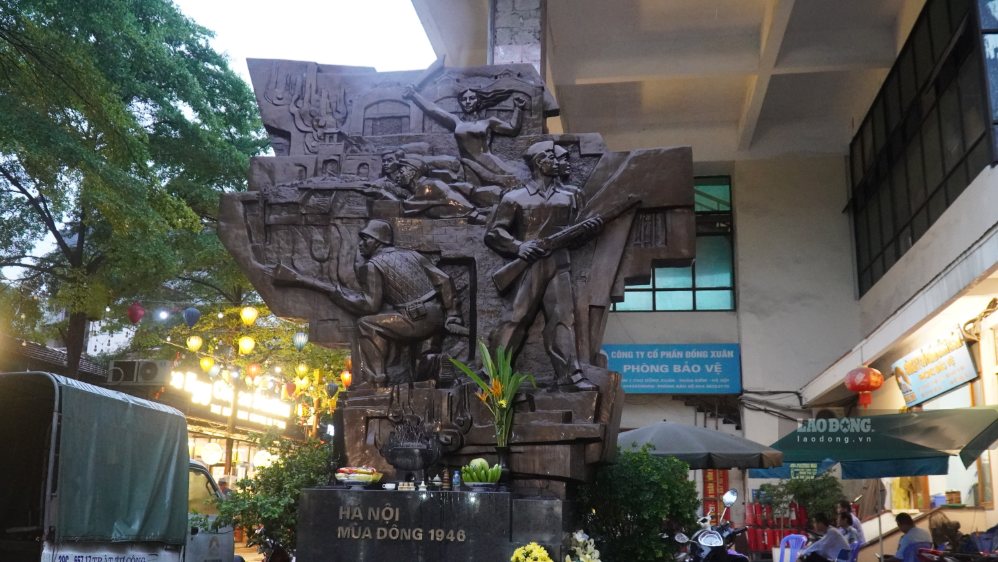
Dubbed the "Hanoi scholar", writer Nguyen Ngoc Tien said, "The Statue of Determined to Die for the Fatherland to Live, no matter where or where it is placed, the spirit of December 19, 1946 is still there. The 60-day and night "defense-to-death" battle of the army and people of the Capital will never be lost, will forever be in history books, in the hearts of the nation.
In addition to the statue "Determined to die for the Fatherland to live" in the National Relic Site of Ba Kieu Temple, there is also the relief "Hanoi winter 1946" at Dong Xuan market and another statue on the same theme in Hang Dau flower garden.
These places all bear the mark of the heroic and resilient battles of the capital's army and people at the end of 1946 and the beginning of 1947.
I believe that history is not only told on reliefs, but also passed down on pages of books, history books, in commemorative programs, and lies in the spirit of "drinking water, remembering the source" of the whole nation...".
There are many ways for us to express gratitude to history, when history belongs to eternity.
Assoc. Prof. Dr. Le Quy Duc expressed his wish that, in the process of re-planning the Capital, in the future, Hanoi will have its own memorial area, a place to display reliefs, monuments and even historical artifacts for heroic milestones such as the 60-day and night war to protect Hanoi in 1946.
Writer, "Hanoi scholar" Nguyen Ngoc Tien said that changes in urban planning are inevitable.
Before the statue "Determined to die for the Fatherland to live" was placed in the Ba Kieu Temple relic site, there was a stele commemorating father Alexandre de Rhodes (commonly known as the Alexandre de Rhodes stele built in 1941).
In the past 40 years, the relocation of the monument "Determined to die for the Fatherland to live" has also been discussed many times.


