
Phong Nam islet is located in the middle of the Hau River, the first place to welcome the Cuu Long branch flowing into Ke Sach district, Soc Trang province (old), now Phong Nam commune (Can Tho city). The sweet land is all year round rich in alluvium, famous for its mangosteen, durian, rambutan, star apple, purple longan, plum gardens... laden with fruit.
The special mark of this land is the ancient gardens that have existed for centuries. Among them, Mr. Hua Van Len's garden attracts many tourists with 4 mangosteen trees that are over 100 years old.
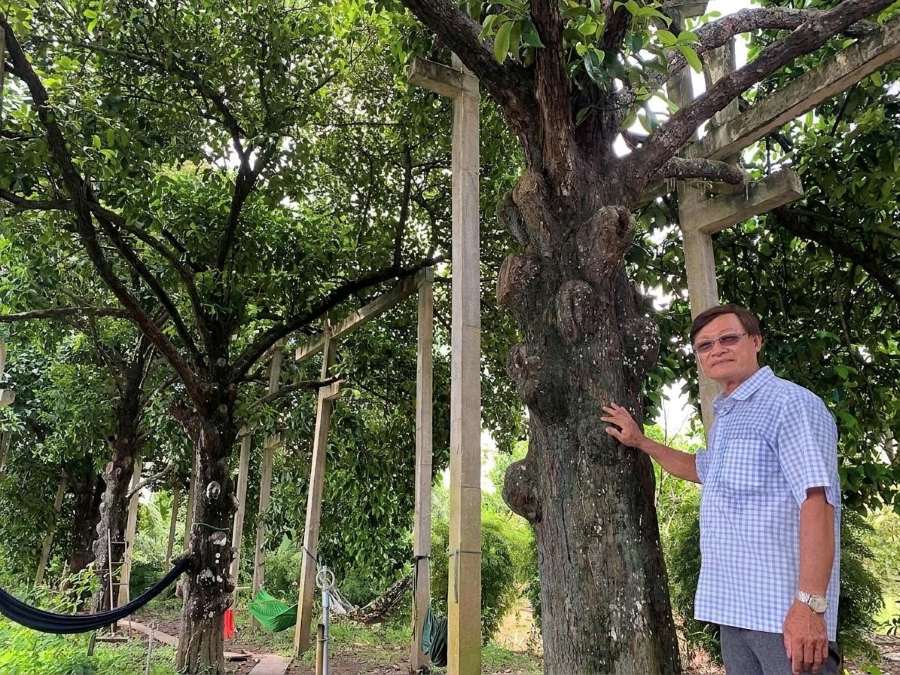
According to Mr. Len, these mangosteen trees were planted by his grandmother from about 1923 - 1924 when the family came to reclaim land and start a business. After more than a century, the "old mangosteen trees" are still green and lush, bearing fruit regularly every year. The trunk is so large that an adult cannot reach out to hug it, the canopy is tens of meters wide. In favorable years, each tree can bear from 300 - 500kg of fruit, even higher yields than many young mangosteen trees in the garden.
The special thing is that although it is old, the tree has very few pests and diseases, and almost does not need to use fertilizer or pesticides. The fruit has a thin peel, thick flesh, and a characteristic sweet and refreshing taste. To preserve these precious ancient trees, Mr. Len's family has built a system of concrete pillars to support large branches after many times being affected by storms.
Good news spreads far, every ripe fruit season, the garden welcomes hundreds of visitors to visit and enjoy mangosteen on the spot.
Also on Phong Nam islet, Mr. Hai Than's rambutan garden is a favorite destination for many tourists. Located along the Hau River, the large garden is always cool thanks to the river wind blowing in all year round. Every harvest season, clusters of bright red rambutans cover the canopy of trees, creating a scene imbued with the Southern garden style.
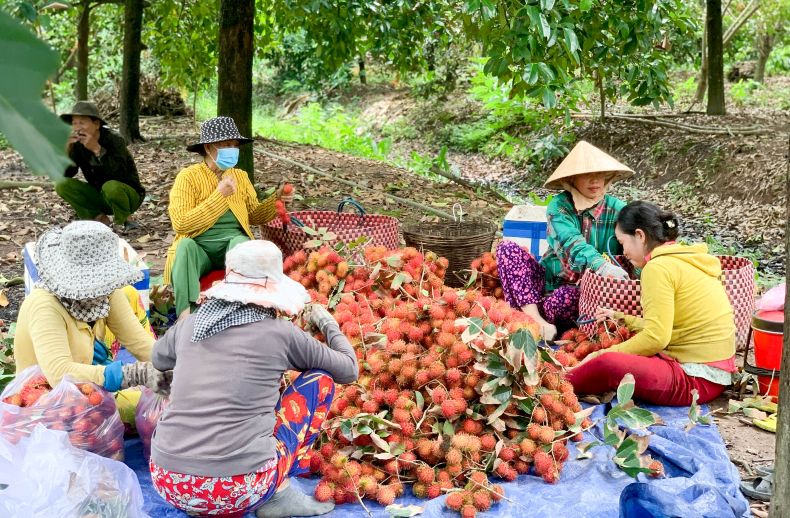
According to Mr. Hai Than, previously his family mainly grew rambutan to sell to traders. However, realizing that the demand for experiencing ecotourism is increasing, in recent years his family has opened its doors to welcome visitors to visit, enjoy fruits and learn about garden life. The combination of agricultural production and ecotourism not only helps improve the value of the orchard but also contributes to promoting the image of Phong Nam islet to tourists from near and far.
Not only Phong Nam, My Phuoc islet in Nhon My commune (belonging to Ke Sach district, former Soc Trang province) now Nhon My commune (Can Tho city) is also a familiar rendezvous point every Doan Ngo Tet. This place has long been famous for its lush fruit orchards and is considered one of the unique eco-tourism destinations of the downstream Hau River region.
This year, the 20th Garden River Festival is held right on the occasion of the Doan Ngo Tet with many attractive activities such as a delicious fruit contest, a folk cake culinary contest, amateur music exchange, folk games and agricultural experience activities.
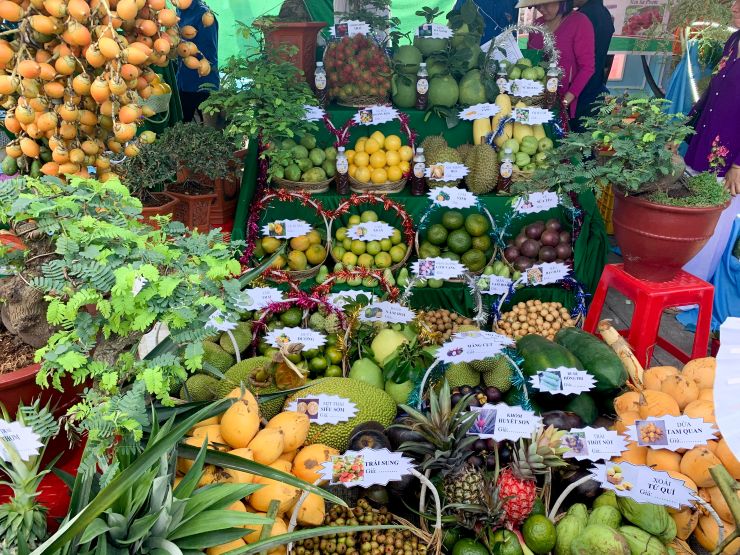
Coming to My Phuoc islet these days, visitors can witness hundreds of specialty Mekong Delta fruits displayed at the festival. Many unique tree varieties are bred and grafted by gardeners to improve yield and quality such as four-season star apples that bear fruit all year round or longan varieties grown from grafting longan branches with cowhide longan roots.
Besides enjoying fruits at the garden, visitors can also experience rowing boats, casting nets, placing traps to catch fish, rummaging for carp or unloading fish with local people. Rustic dishes such as bong lau fish cooked with chua ban soup, bong ban salad, eel stewed with rau ngo or young banana core chicken salad, banh xeo with Siamese duck and coconut bulbs,... further enhance the flavor of the river region.
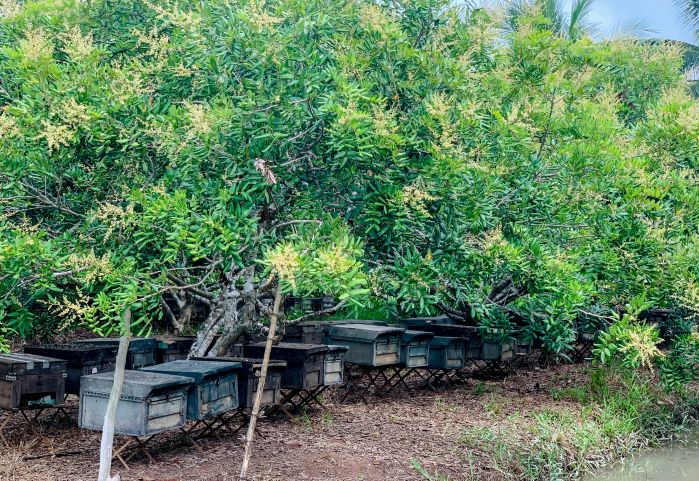
What makes the attractiveness of the islets and islands is not only the sweet fruit or natural scenery but also the simplicity and hospitality of the people. Amidst the modern pace of life, the green lands in the middle of the Hau River still retain their inherent peaceful beauty, becoming an attractive destination every Doan Ngo Tet, when the fruit season enters its sweetest ripening phase of the year.


