On July 19, Dr. Doan Ngoc Khoi, Deputy Director of Quang Ngai General Museum, said that the kilns were just discovered during the excavation of two holes with a total area of about 100 m2 in Chau Sa ancient citadel, Tinh Khe commune.
The excavation was urgently deployed after people dug holes to plant trees, revealing part of the ancient kiln. Because the relic is located under a thick alluvial soil of about 30 cm and is at risk of being affected by farming activities, the Quang Ngai Department of Culture, Sports and Tourism proposed urgent excavation. In 2006, the Quang Ngai General Museum discovered an ancient kiln in this area.
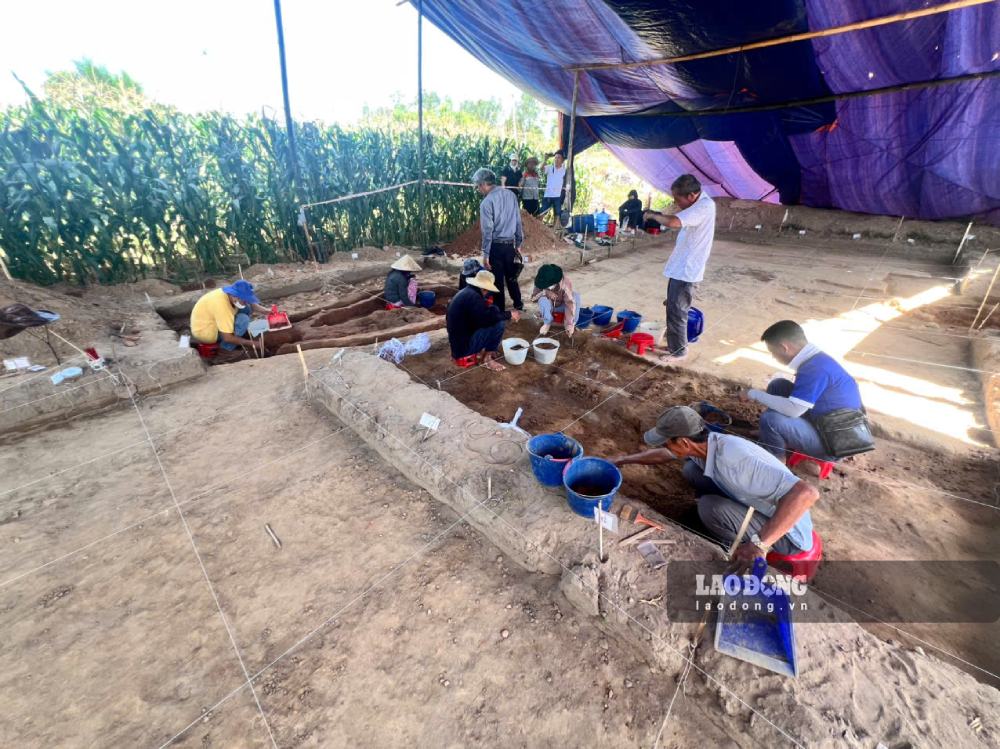
The kilns are still quite intact, oval-shaped, about 3.5 m long, one meter wide, dating from the 2nd-3rd centuries. Along with the kiln, the archaeological team collected many tile fragments, burned coal and related artifacts.
The four kilns discovered to date show that Chau Sa ancient citadel once had a whole complex of Cham tile kilns," Dr. Khoi said.
According to him, this discovery contributes to clarifying the material production techniques of ancient Cham residents, and at the same time supplements research materials on the transition period from Sa Huynh culture to the formation of ancient cities in the Central region.
Chau Sa ancient citadel is located on the north bank of the Tra Khuc River, spreading over Tinh Khe commune and Truong Quang Trong ward. The project was built before the X century with two inner and outer citadel rings, connecting the Tra Khuc River to Dai and Sa Ky estuary, creating a trade and defense advantage.
After Dai Viet took over this land in 1471, King Le Thanh Tong chose Chau Sa citadel as the place to place the Thua Tuyen agency (administrative unit) of Quang Nam, managing the land from Quang Nam to Phu Yen.
Ranked as a national relic since 1994, many ancient citadel areas are still cultivated by people. According to experts, the main use of manual agricultural tools instead of machinery has helped many underground relics to be preserved.
Dr. Khoi proposed expanding the excavation scope, combining research with conservation, and re-planning production land around the ancient citadel area.
It is not advisable to dig up and then fill it up, but it is possible to make a canopy, a tourist corridor, and restore the ancient pottery kiln so that this place becomes a research, education and cultural tourism destination," he said.