
In recent years, digital technology has been strongly changing the way of producing, publishing and accessing content. If previously, publishing activities were mainly associated with the model of editing, printing and publishing paper books, now, a publication can simultaneously exist in many forms such as ebooks, audiobooks, podcasts or digital content on online platforms.
This change also makes the boundary between publishing, media and technology increasingly blurred. Many publishers are now having to compete directly with cross-border digital content platforms instead of just competing in the traditional book market.
In that context, many current legal regulations are beginning to reveal delays in the development of technology and the digital content market.
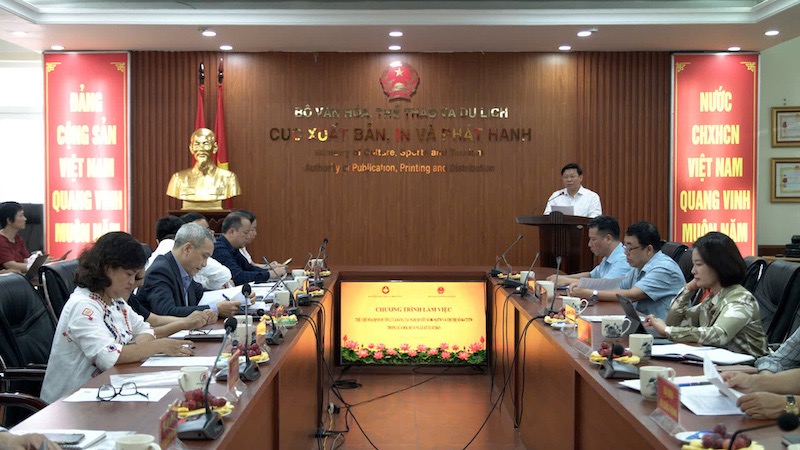
Sharing at the Workshop on institutionalizing the Party's orientation in Resolution No. 08 - NQ/TW and Directive No. 04 - CT/TW in amending and supplementing the Publishing Law, Director of the Publishing, Printing and Distribution Department Nguyen Nguyen said: "Looking at the reality of law enforcement in the past time, it can be seen that some legal bottlenecks are present and are increasingly revealed more clearly in the context of digital transformation.
According to industry experts, one of the major pressures today is the story of copyright in the online environment. The situation of copying, digitizing and illegally disseminating publications is becoming increasingly common, when content can be shared with just a few actions on the internet.
According to the direction of perfecting the law, regulations related to combating pirated printing, copying and illegal dissemination of publications will continue to be supplemented. The management agency also orients to strengthen the application of technology in identifying violating content and protecting digital copyright.
Not only changing the operating model, the view on the role of the publishing industry is also undergoing a remarkable shift.
For many years, publishing has been viewed mainly from a cultural - ideological perspective. However, along with the development of the digital economy, this field is increasingly closely linked to data, technology and the content market.
Member of the Party Central Committee, Deputy Head of the Central Propaganda and Mass Mobilization Commission Tran Thanh Lam emphasized: "This amendment of the Publishing Law is not simply a specialized legislative technique but a task of timely and fully institutionalizing the five major viewpoints and guidelines of the Party, creating new space for the Publishing sector to operate and develop in the new era.
According to Mr. Tran Thanh Lam, publishing activities currently need to be placed in the overall strategy of national development, especially in the digital transformation era and the development of the knowledge economy, digital economy, and cultural industry.
Opinions at the Conference agreed on the requirement to innovate the approach to the Publishing sector, which is both an important cultural and ideological field, and a cultural industry associated with content economy, technology, and data.
This is a notable change in management thinking for the publishing industry. If previously, publishing was mainly viewed from a cultural - ideological perspective, now this field is increasingly closely linked to data, technology and the digital content market.
In the context of technology continuing to strongly change the way content is produced and distributed, experts believe that perfecting the mechanism for digital publishing is not only the story of the book industry, but also directly related to the development potential of Vietnam's cultural industry and creative economy in the coming time.


