
KOL and increasing influence in the digital age
KOLs, from singers, actors to businessmen and content creators, are holding great power thanks to social networks. With millions of followers, each action and statement they make can create trends and strongly impact the community.
In fact, recently, many KOLs have been involved in controversies related to advertising, statements or content shared on social networks. Through the Kera candy production case, the investigating agency pointed out that celebrities when advertising products have expressed it as a personal experience that makes viewers think it's true. Some cases such as Thuy Tien, Quang Linh Vlogs, Hang Du Muc show that when the influence is greater, the requirements for responsibility and information standards are also increasing.
Talking to Lao Dong, Mr. Ngo Duc Duy - content creator - said that for KOLs, the boundary between "personal freedom of speech" and "social responsibility" when sharing views on current issues in cyberspace is very important. According to him, each opinion is no longer limited to the personal scope but can reach and spread to many people, so "one millimeter wrong, one mile wrong" is completely possible.
Trinh Ha Vi - content creator - believes that when there is influence, each statement is "amplified" many times. At that time, the issue is no longer "have the right to speak or not", but "what will words affect".
According to Ha Vi, before sharing a topical issue, she often asks herself three questions: is information reliable or not, does the perspective cause hurt or misunderstanding or not, and is sharing intended to contribute or just personal emotions. For her, the boundary is not a rigid line but a "cognition zone", where each person needs to proactively control responsibility in their words.

Responsibility for public opinion orientation
According to Assoc. Prof. Dr. Do Anh Duc - Head of Digital Communication Department, Institute of Journalism and Communication Training, University of Social Sciences and Humanities, Vietnam National University, Hanoi, KOL today is not only a content creator but has actually become a new form of "media intermediary" in the digital ecosystem.
Their role is not only in conveying information, but also in interpreting, framing and creating emotions for the public. A KOL's statement, especially in sensitive issues, can make a view more popular or vice versa, be pushed to the sidelines. Therefore, the responsibility of a KOL lies not only in the accuracy of the information, but also in the perception of the social impact from their words, because each statement contributes to shaping how the public understands a problem.
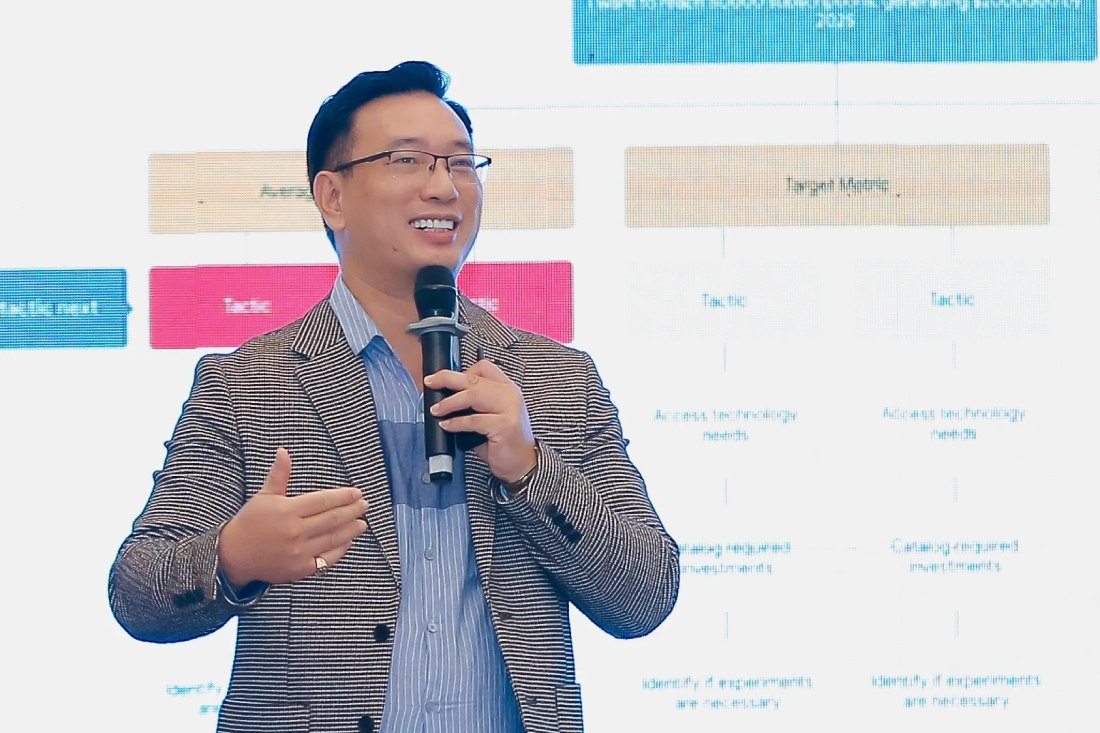
According to Assoc. Prof. Dr. Do Anh Duc, KOLs need to verify information before sharing, because not every "hot" content needs to speak up immediately; slowing down to verify shows responsibility. If information has been shared inaccurately, publicly admitting and adjusting does not reduce prestige but also contributes to strengthening trust. Along with that, it is necessary to maintain a goodwill attitude, avoid radicalizing the issue; in the social media environment, controversial content often spreads quickly, but if KOLs follow emotions or "trends", they may inadvertently increase polarization in society.
KOL today has no less influence than many traditional media agencies, so building ethical standards is necessary. These standards include information responsibility, publicity transparency, sponsorship, as well as awareness of social impact" - Assoc. Prof. Dr. Do Anh Duc said.
On the other hand, "control" needs to be understood in a broad sense, not only management from the State but also including self-adjustment by the KOL itself, pressure from the public and the operating mechanism of the digital platform. If control is too tight, it can reduce creativity and freedom of expression - which are characteristic of the digital environment; but if completely lax, the risk of misinformation and public opinion manipulation will be very large. In cases where violations cause serious consequences or specific damage, current legal regulations have clear handling mechanisms to ensure responsibility and deterrence in the digital media environment.


