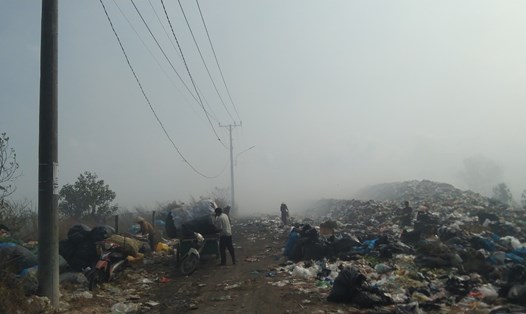
On April 2, at the regular press briefing, the Department of Agriculture and Environment of An Giang province informed about the contents related to environmental pollution treatment plans, landfills causing pollution in the province, especially waste and waste treatment plans in island communes and special zones.
Mr. Vo Van Len - Deputy Director of the Department of Agriculture and Environment of An Giang province said that from July 1, 2025, An Giang province (new) will be formed on the basis of merging the entire area and population of An Giang province (old) and Kien Giang province. The province becomes a strategically important area but also faces unprecedented challenges in environmental management.
Currently, the Department of Agriculture and Environment has completed the Draft and submitted it to the Provincial People's Committee for promulgation of the Project "Environmental protection, adaptation to climate change and sustainable development of An Giang province in the period 2026 - 2030, vision to 2050" to establish a modern solid waste (CTR) management roadmap, gradually replacing traditional methods that are already overloaded.
The total volume of domestic waste generated in the whole province is currently about 2,274 tons/day. Of which, urban areas generate about 962 tons/day (accounting for 42%). Rural areas generate about 1,311 tons/day (accounting for 58%). The specific nature of waste in the locality has a very high percentage of organic matter and humidity (accounting for 55% - 75%), creating great pressure in treating odors and leachate at collection points.
The total amount of waste collected and transported reached 1,737 tons/day (equivalent to 76.4%). However, this rate is not uniform, if urban areas reach over 94%, rural areas and remote island communes only reach about 63%.
Currently, the province is operating 3 main models: 38% sanitary landfill; 22% treatment at factories (garbage burning, compost production); 40% dumping at open landfills. The dumping situation at open landfills still accounts for a high proportion because centralized waste treatment plants in Binh Hoa (Chau Thanh), Canal 10 (Chau Doc) and Phu Thanh (Phu Tan) are all seriously overloaded, receiving garbage far exceeding the initial designed capacity.
The whole province currently has 24 open landfills that have stopped operating but have not been completely handled, with a total estimated amount of accumulated waste of about 153,744 tons. Many of these landfills are located interspersed in residential areas or near water sources, causing secondary pollution (odor, leachate) directly affecting the health and lives of people, typically the old landfill area in Cho Moi, Chau Thanh districts and some localities in the old Kien Giang area.
Mr. Len said that, identifying island communes and special zones as ecologically sensitive areas and playing an important role in sustainable tourism development, the Department of Agriculture and Environment is implementing specific plans.
In the Kien Hai special zone (Hon Tre, Hon Son, Nam Du), there is a technical solution to maintain the operation of existing waste incinerators in Hon Tre (330kg/h), Hon Son (500kg/h) and An Son (350kg/h). For the Nam Du area, due to the lack of land fund to build factories, the immediate solution is to implement the process of compressing waste, covering with waterproof tarpaulins and spraying biological products periodically to prevent pollution into the sea.
Applying microbial technology, a "favorable" solution to help people and service businesses on the island self-treat organic waste on the spot into fertilizer, reducing 50% of the amount of waste to be transported to the mainland or put into incinerators.
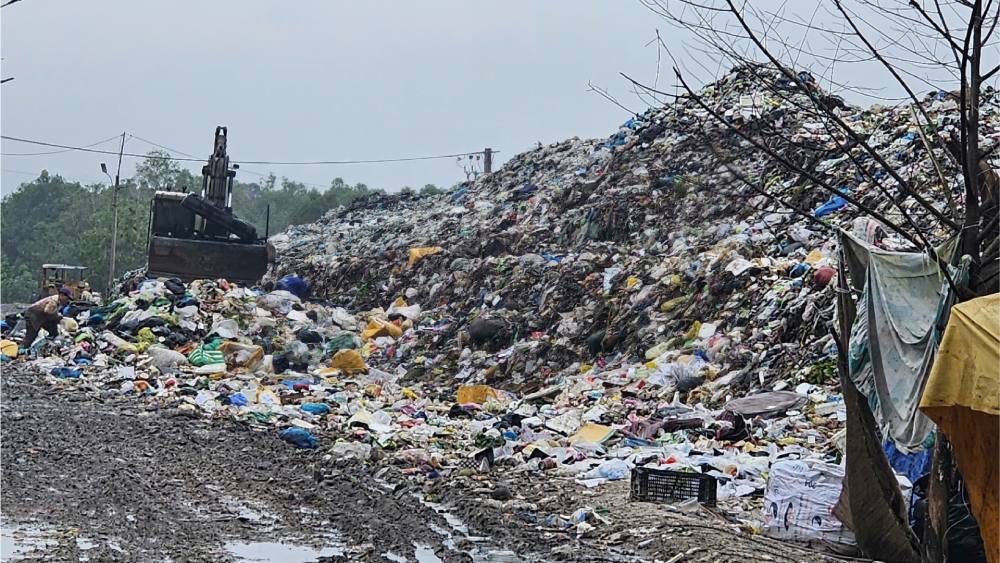
In Phu Quoc special zone, focus maximum resources to operate two waste treatment lines at Dong Cay Sao landfill with a total capacity of 500 tons/day. This is a key step to relieve the pressure of accumulated waste over the years.
Accelerate legal procedures, especially the conversion of forest land use purposes, to start construction of 3 waste treatment plants. The highest goal is to put the plants into official operation before APEC 2027, ensuring Phu Quoc is a green special zone, without waste.
In the Tho Chau special zone: Proposing to invest in a specialized waste incinerator system with small capacity combined with the recovery of recyclable waste to strictly protect the offshore sea and island ecosystem.