
On the morning of June 30, at Chau Phu Martyrs' Cemetery (Vinh Thanh Trung commune, An Giang province), delegations respectfully offered flowers and incense to commemorate the heroic martyrs who sacrificed for the independence and freedom of the Fatherland. This is the opening activity for the program of practicing taking samples and handing over martyrs' remains samples for DNA testing - an important step forward in the work of identifying martyrs who lack information.
Immediately after the incense offering ceremony, the program entered the opening content of the practice of taking samples and handing over samples of martyrs' remains at Chau Phu Martyrs' Cemetery. This is a step to concretize the policy of the Government, the Ministry of National Defense and the National Steering Committee 515 on applying the DNA testing method in identifying martyrs.
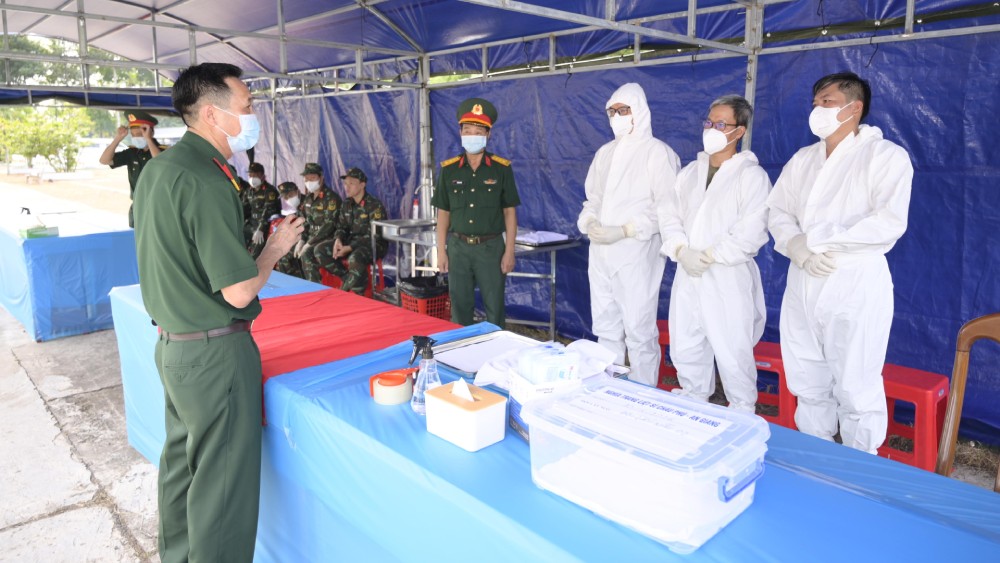
According to the plan, this practice phase will take samples for 37 martyrs' graves with unidentified information at the cemetery. These are graves that have been managed and collected for many years but do not have enough information to identify identities and relatives. DNA sampling will open up a scientific opportunity to gradually return the names of heroic martyrs.
The task force includes 2 specialized sample taking teams with about 76 officers and soldiers and inter-sectoral coordinating forces, organized tightly, implementing the technical procedures of the Ministry of National Defense from the stage of checking dossiers, determining the location of graves, taking samples, sealing, encoding, preserving to handing over samples.
Chau Phu Martyrs' Cemetery was selected as the first pilot organization point of An Giang province in deploying DNA sampling of martyrs' remains. This is a practical model to draw comprehensive experience on force organization, technical procedures, coordination work and ensuring security and safety, before being deployed simultaneously throughout the province.
From this model, An Giang province aims to expand implementation in all martyrs' cemeteries in the area, ensuring synchronization, unity and efficiency, aiming to complete the DNA sampling of martyrs' remains by May 2027.
Speaking at the ceremony, Mr. Le Van Phuoc, Vice Chairman of the Provincial People's Committee, Head of Steering Committee 515 of An Giang province emphasized: "Organizing the sampling of martyrs' remains for DNA testing is a task of particularly important significance in terms of politics, science and profound humanity. This is a new step in the work of searching for and identifying martyrs' identities, contributing to restoring the names of heroic martyrs who have not yet identified information, meeting the expectations of relatives and families of martyrs".
Mr. Le Van Phuoc also affirmed that the selection of Chau Phu Martyrs' Cemetery as the starting point is of great significance to comprehensively draw experience, complete the organizational and technical process and inter-sectoral coordination, as a basis for simultaneous deployment throughout the province in the coming time.
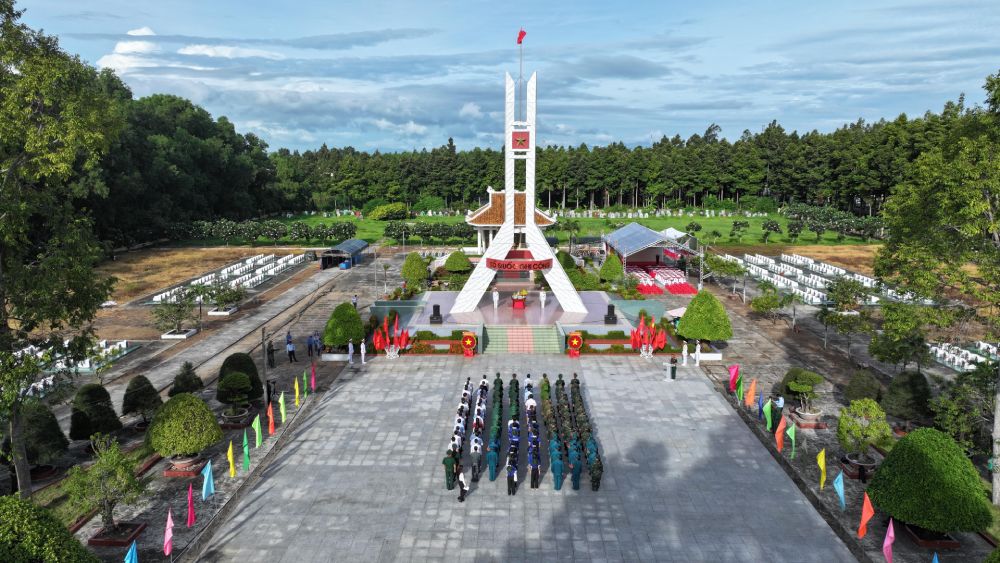
Colonel Cao Minh Tam - Deputy Political Commissar of An Giang Provincial Military Command said: "We identify this as a particularly important task, both scientific and deeply humane. The Provincial Military Command - in its role as the standing agency of the Provincial Steering Committee 515 - has directed close preparation from personnel, vehicles to technical procedures, ensuring that each step of sampling is accurate, safe and in accordance with regulations. Each DNA sample is not only scientific data but also a tribute to heroic martyrs.
Throughout the implementation process, the sample taking teams worked in strict conditions, meticulously handling each operation. Security, medical, technical and logistical assurance work was deployed synchronously, maintaining solemnity at the martyrs' cemetery.
At the end of the practice session, the teams proceeded to seal, preserve and hand over samples in accordance with regulations, ready to serve DNA testing work in the near future.
The campaign is expected to take 15,747 samples at 20 martyrs' cemeteries throughout the province.


