
On May 7, information from the Traffic Police Department (CSGT) - Ministry of Public Security said that on May 6, traffic police forces nationwide simultaneously strengthened patrols, inspections and handled violations at level crossings and passageways across railways to prevent railway traffic accidents.
According to statistics, the local police have arranged 67 working groups with 197 turns of officers and soldiers participating in the task, including 33 disguised officers to record and handle violations.
Through inspection, functional forces discovered and handled 179 violations. Among these, 99 cases were handled by remote fines.
The main violations include stopping vehicles within the railway traffic safety zone (59 cases); 10 cases of crossing level crossings when the red light has been turned on but the barrier has not been lowered; 7 cases of intentionally overtaking when the barrier has been completely lowered; 1 case of crossing level crossings when the barrier is lowered. In addition, there are 102 other violations.
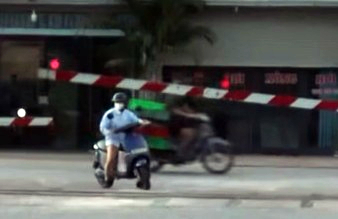
According to the Traffic Police Department, Ho Chi Minh City is the locality recording the highest number of violations with 99 cases, of which up to 92 cases were fined remotely. Next is Hanoi with 19 cases, Ninh Binh 9 cases, Khanh Hoa 7 cases and Bac Ninh 6 cases.
The Traffic Police Department emphasized that acts of intentionally crossing level crossings when warning signals are already operating, stopping and parking within railway safety or swerving through barriers can all lead to particularly serious accidents. When trains approach, the braking distance is very long, so train drivers can hardly handle it in time if unexpected situations occur.
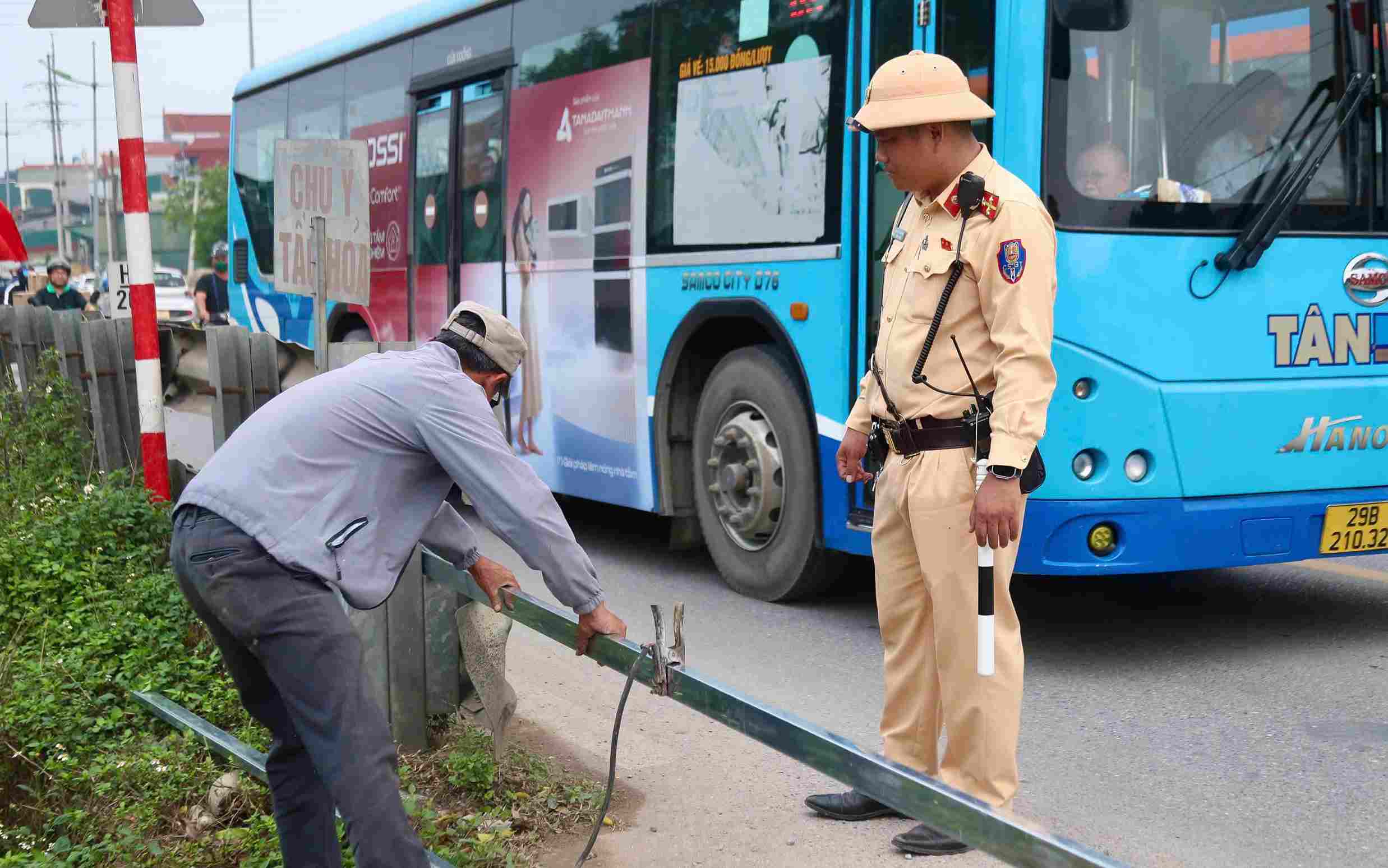
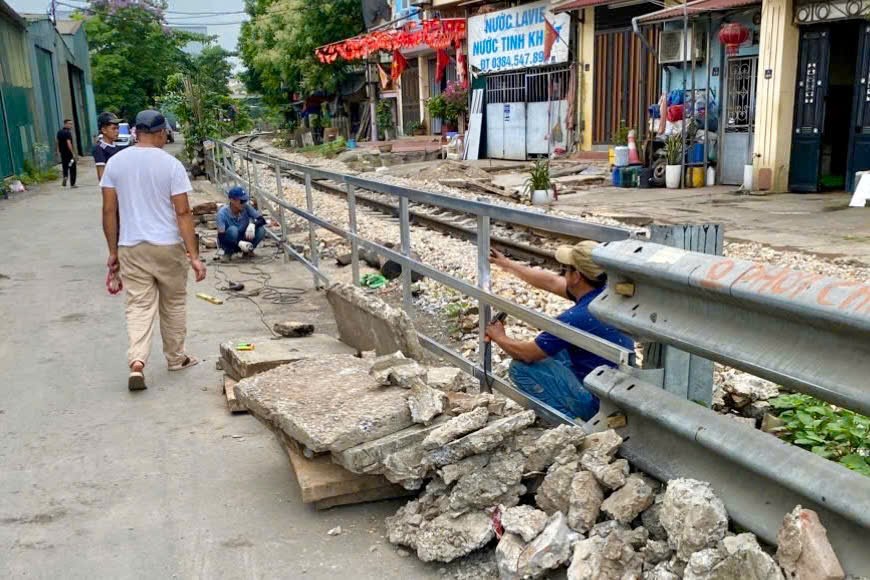
Also on May 6, in Hanoi, Road Traffic Police Team No. 14 - Traffic Police Department of Hanoi City Police coordinated with Ha Thai Company, Thanh Tri Commune People's Committee, Commune Police and Van Dien Station to remove and fence off 6 self-opened passages through the North-South railway line in the area.
The self-opened walkways removed are located on the section from Km38+465 to Km38+570. These are locations arbitrarily opened by people to serve travel, without warning systems, without guards, posing a potential risk of railway traffic unsafety.
At the identified locations, functional forces have erected fences with iron stakes, buried deeply and reinforced firmly to prevent the reopening of the walkway.
The removal of self-opened walkways on the North-South railway line makes an important contribution to ensuring train safety and preventing traffic accidents. After completion, the locations have been handed over to local authorities for management and monitoring.


