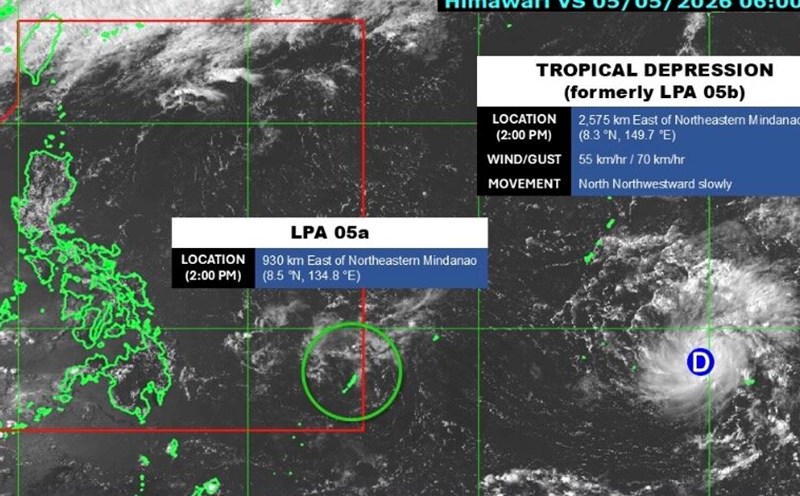
In the next 24-48 hours, the continental high pressure will continue to strengthen southward, then maintain stable intensity and gradually weaken. Above, the subtropical high pressure with its axis passing through the Central Central region is operating stably. At the same time, easterly wind disturbances at high altitude still exist and affect the Southern region.
In the next 3-10 days, the continental high pressure will weaken and gradually move eastward, creating conditions for the re-formation of a low pressure trough with an axis of about 25-28 degrees North latitude, connected to the low pressure area to the West. After that, this trough will be compressed and gradually pushed southward due to the impact of the continental high pressure from the North.
Above, the subtropical high pressure continues to operate stably with its axis through the Central region; around May 8-9, it tends to raise its axis to the North (through the North Central region), and around May 10, it lowers its axis to the South (through the South Central region) and then weakens and gradually recedes to the East. East wind disturbances at high altitudes maintain good activity until the end of May 9.
The weather in the Southern region tends to be hot in the afternoon, posing a risk of fire and explosion and affecting health, especially cardiovascular diseases. Rainstorms can appear accompanied by tornadoes, lightning, hail and strong gusts of wind, causing risks to agricultural production, causing trees to fall, damage to houses and infrastructure.
This type of weather is expected to last for many days to come as the South is entering the seasonal transition phase. It is noteworthy that hot weather is likely to increase significantly from around May 7 onwards.