
In 2025, prolonged heavy rains, flash floods and landslides continuously in Dien Bien province claimed the lives of 14 people, injuring 21 people. Total property damage is estimated at about 1,372 billion VND.
In the first quarter of 2026, two natural disasters occurred in the province, including heavy rain causing landslides in Tua Thang commune and heavy rain accompanied by tornadoes in Pu Nhung and Si Pa Phin communes. These natural disasters injured 2 people and damaged 18 houses.
Recently (April 18), in Huoi Ha village, Na Sang commune, a tornado caused 1 elementary school to have its roof blown off, 9 households were affected, and many properties, people's houses and educational institutions were damaged by the tornado.
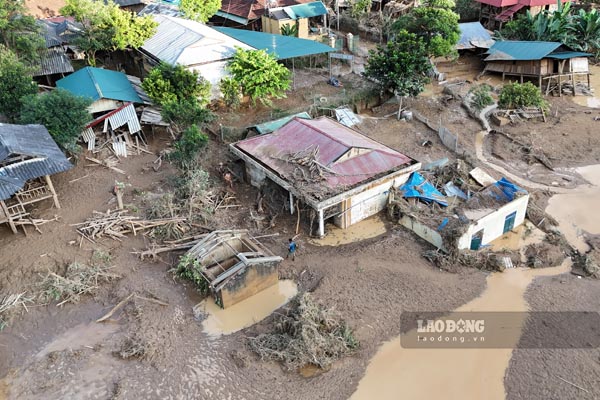
Accordingly, the work of relocating people out of disaster-stricken areas is identified by the province as a key task, with long-term strategic significance. After the flash flood in 2025, hundreds of households in Xa Dung, Tia Dinh, Muong Luan, Na Son communes were arranged to safe resettlement areas.
The whole province currently has about 790 households living in high-risk areas that need to be urgently relocated.
These households are concentrated in the highland communes: Na Son, Muong Luan, Thanh Nua, Quang Lam, Muong Lan, Muong Cha, Nua Ngam, Muong Pon, Sang Nhe...
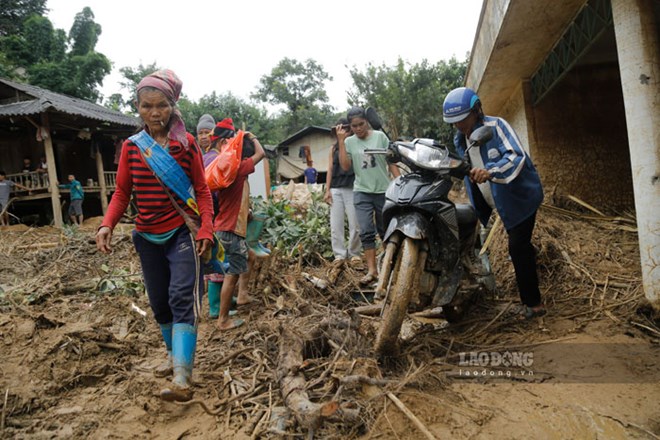
The difficulty in implementing relocation is that the safe land fund is extremely limited, while essential infrastructure at the planned destinations has not been synchronously invested.
According to preliminary calculations, to build infrastructure and stabilize the lives of 790 households waiting for urgent relocation, about 775 billion VND is needed.
In order to proactively respond, Dien Bien Provincial People's Committee has a natural disaster prevention and control plan for the period 2026-2030 with the core goal of maximizing the protection of people's lives and property.
Leaders of Dien Bien Provincial People's Committee requested to accelerate the project progress, organize relocation in advance for households living in key areas, "flood centers" and landslide-prone areas.
Regarding early warnings, although there are 31 automatic rain gauge stations, 4 meteorological stations and 3 hydrological stations, the province still believes that it is necessary to increase the density of the gauge station to suit the complex hilly terrain.
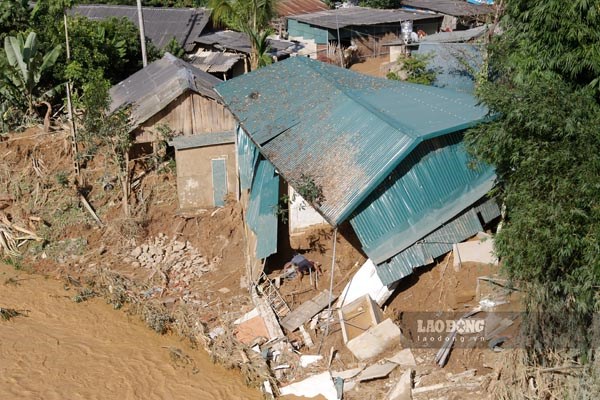
At the grassroots level, the People's Committees of communes are assigned the task of directly developing response plans in accordance with the "4 on-the-spot" principle; maintaining 24/24 hour duty forces, preparing evacuation positions and consolidating shock forces.
In particular, the Sub-Department of Irrigation and Natural Disaster Prevention (Department of Agriculture and Environment) is assigned to promptly update weather developments on the situation of rain and floods. When there is a risk, it is necessary to advise and issue directives at least 24 hours in advance to proactively evacuate people and property.
The province has also zoned 75 locations of riverbanks and streams at risk of landslides that need to soon invest in embankments.
With a system of 14 irrigation reservoirs (capacity of more than 67 million m3) and 23 hydropower plants, the province requires reservoir owners to strictly implement the buffer discharge process to receive floods to protect downstream, and at the same time must still calculate water storage for dry season production.


