On May 20, information from the People's Committee of Nghe An province said that after a period of inspection, sampling and analysis, the Department of Agriculture and Environment has sent a report to the Provincial People's Committee on issues related to the phenomenon of caged fish and mass deaths of aquatic products on the Lam River and some downstream areas.
According to the report, functional agencies have conducted field surveys, taken surface water samples on the Lam and Dao rivers, and dead seafood samples to assess environmental quality and determine the cause.
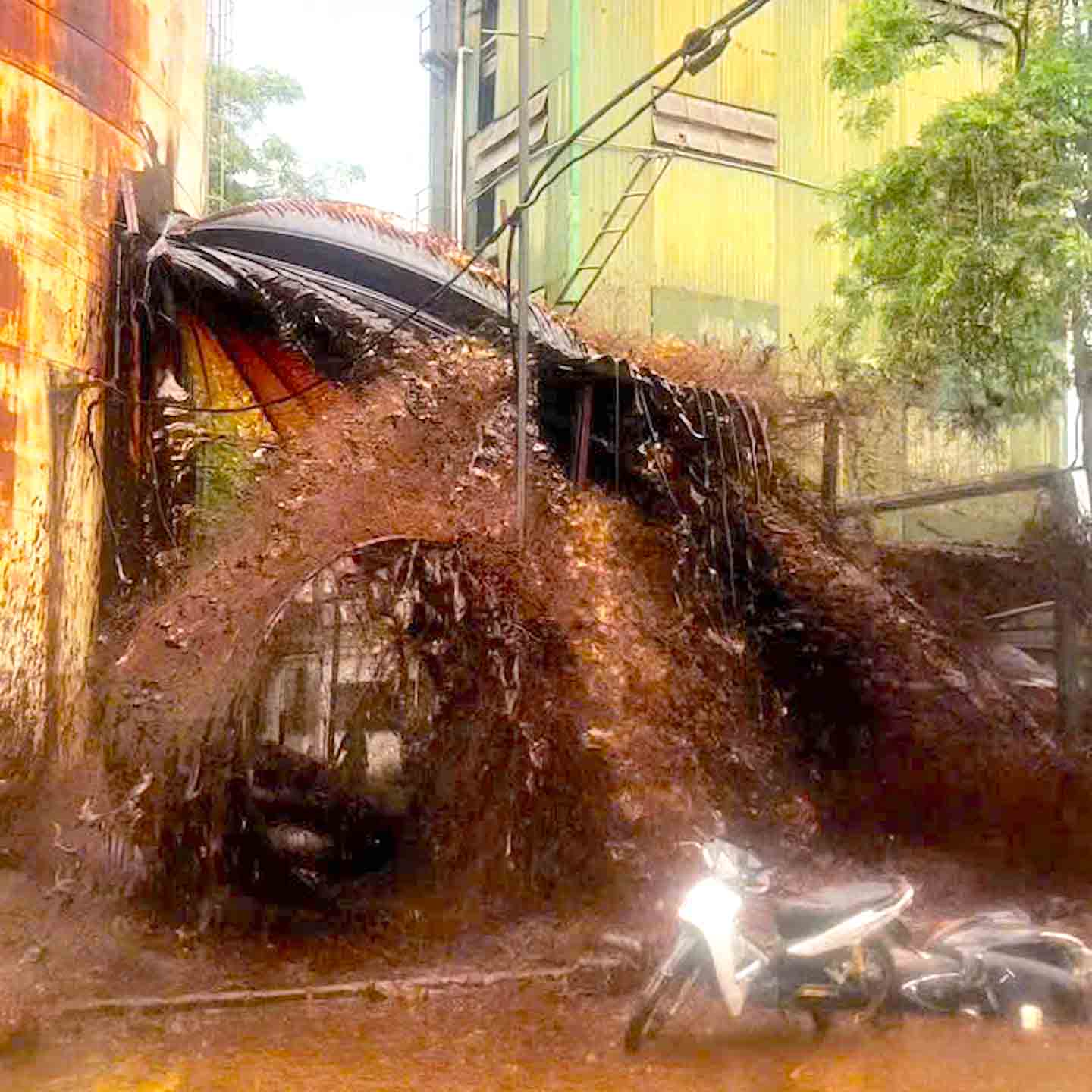
The results of checking the current terrain status, elevation of the ground and drainage direction at the area where the leachate tank puncture incident occurred showed that at the time of inspection, no signs of leachate flowing directly into the Lam River were recorded.
This is a noteworthy development in the process of verifying the cause of the fish deaths, because previously there was information suspecting that this phenomenon was related to a leachate tank puncture incident.
By the time of reporting, the Nghe An Department of Agriculture and Environment determined that there was not enough basis to conclude specifically the cause of mass fish deaths, as well as to determine the link between the leachate tank puncture incident and the phenomenon of fish deaths on the Lam River.
The reason given is that the results of rapid measurement and analysis of surface water quality at the Lam and Dao rivers show that basic environmental indicators are still within the permissible limits according to current regulations. Test results for farmed snail samples also did not detect disease-causing parasites.
Previously, at the beginning of May, the phenomenon of unusual fish deaths occurred on the Lam River section passing through Anh Son commune, affecting 13 households with 19 cages, with a total damage output of more than 8.6 tons. In addition to cage-raised fish, some natural fish species also appeared with heads floating and dying sporadically.
Preliminary reports from specialized agencies previously stated that this phenomenon is not like a common epidemic. Some signs indicate that it may be related to sudden water environmental fluctuations, such as reduced dissolved oxygen or increased organic load after heavy rain.
Currently, functional agencies continue to monitor, take samples, and verify the source of emissions and scope of impact to clarify the cause of the incident.