
Informing the press, Mr. Le Minh Cuong - Director of the Project Management Board for Investment and Construction of Transport and Agriculture Works of Can Tho City (Project Management Board), the investor of component projects 2, 3, 4 of the Chau Doc - Can Tho - Soc Trang expressway (phase 1), said that in the face of a shortage of leveling sand and urgent progress requirements, the Project Management Board has agreed to choose the option of using about 2 million m3 of sea sand to construct component project 4.
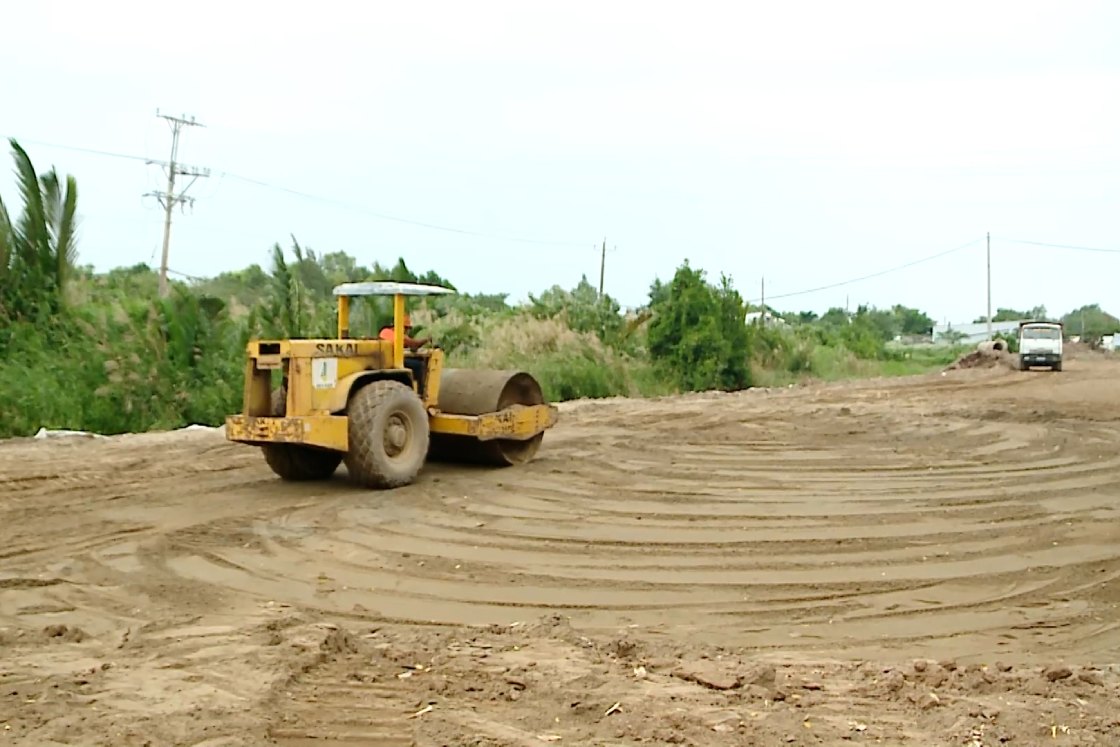
According to Mr. Le Minh Cuong, putting sea sand into use is a suitable solution in the current context, when this type of material has been practically applied on the Can Tho - Ca Mau expressway. In particular, relevant ministries and sectors have issued technical standards allowing the use of sea sand as a material for roadbed filling, thereby ensuring full legal basis, technical requirements as well as quality management and environmental protection.
Regarding environmental issues, Mr. Le Minh Cuong said that the Project Management Board has agreed on strict control measures during the construction process. Specifically, sea sand is only allowed to be used to fill the upper layer of technical fabric and must be transported to the construction site by specialized vehicles.
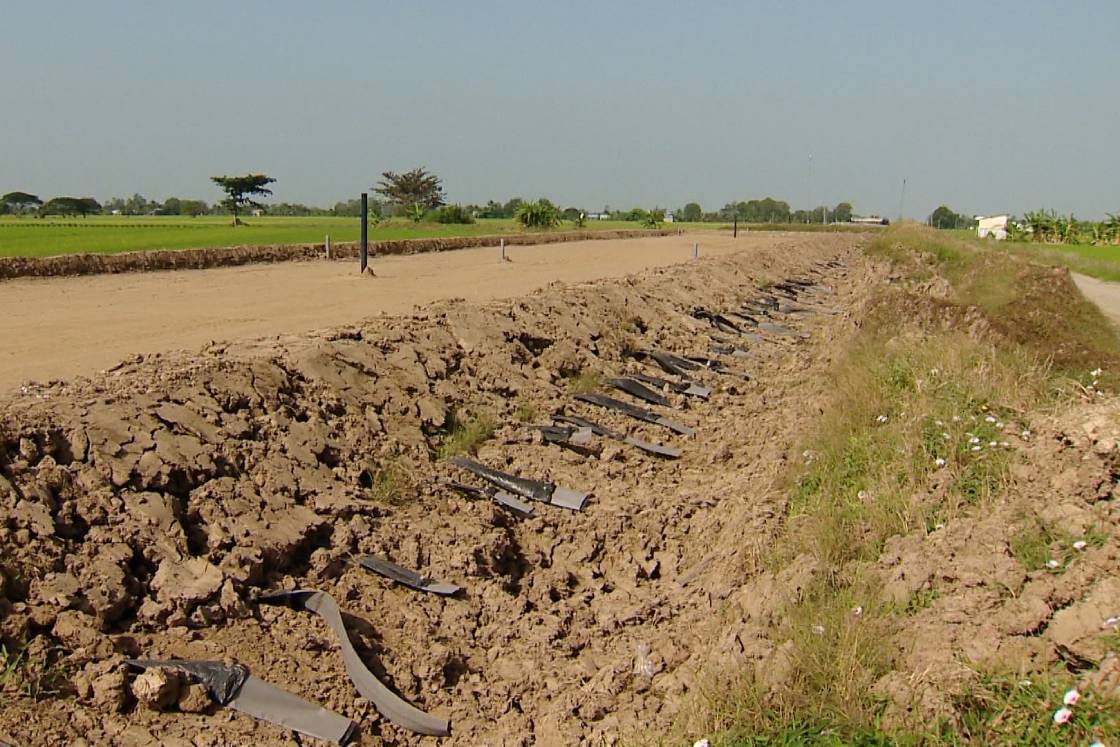
Although the process of exploiting and treating sea sand outside the site may go through stages such as: pumping and suction, cross-section or salt washing... but when brought into the construction area, absolutely do not use direct pumping and suction. According to the Project Management Board, this requirement is to prevent the risk of saltwater spreading to the surrounding environment, avoiding affecting agricultural production and aquaculture activities of people in the area adjacent to the project.
At the inspection of the expressway project progress recently, Mr. Nguyen Van Hoa - Vice Chairman of Can Tho City People's Committee informed that the review results showed that the sand reserves for construction are basically guaranteed. However, the biggest challenge currently lies not in the supply but in the solution of organizing exploitation and mobilizing materials on schedule.
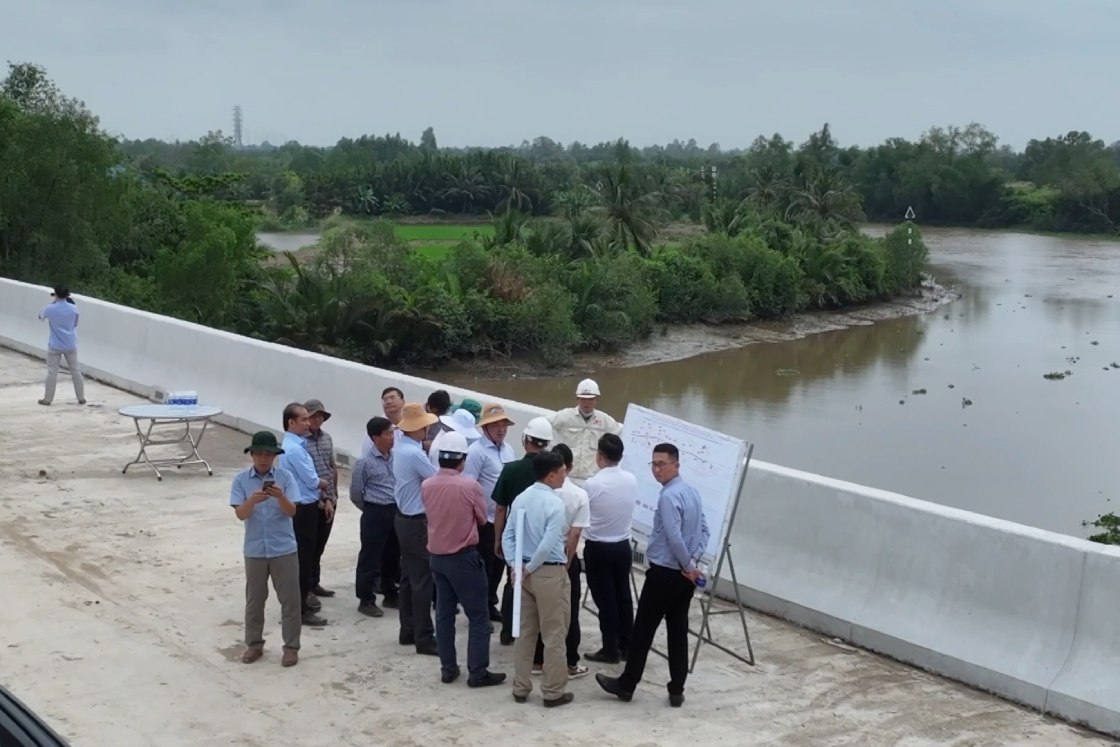
To remove this difficulty, the Vice Chairman of Can Tho City People's Committee requested to focus on implementing three key groups of solutions. First of all, the city proposed that sand mine owners coordinate and support to increase exploitation capacity to meet the actual needs of the project.
Next, for sand mines that have agreed to participate in supporting the city, it is necessary to urgently complete all legal procedures to soon bring sand back to the construction site, striving to complete it in January 2026. In addition, the city requests to increase vehicles and equipment at mines that already have reserves to ensure continuous and stable material sources for construction.
The Vice Chairman of Can Tho City People's Committee also assigned the investor to proactively work specifically with construction units and supervision consultants, develop detailed implementation plans weekly, monthly and quarterly, thereby ensuring the overall progress of the project according to the Government's direction.
According to the Project Management Board, by the end of 2025, the progress of component projects under the Chau Doc - Can Tho - Soc Trang expressway has achieved positive results. In which, component project 2 reached 48.83%, component project 3 reached 55.09%, component project 4 reached 45.05%, bringing the overall progress of 3 component projects to 44.13%.
Regarding material sources, the total demand for leveling sand for component projects is about 20.101 million m3. To date, the project has identified about 15 million m3, of which 9.111 million m3 has been exploited and transported to the construction site. The rest is still working with localities such as An Giang, Dong Thap, Vinh Long to supplement the supply.
For stone materials, the total demand is about 3.143 million m3. Currently, 0.723 million m3 has been collected and used; the volume has been sourced to reach 1.838 million m3. The remaining part is still being contacted and registered by the investor and contractors at stone mines in Dong Nai and Ho Chi Minh City, basically meeting construction requirements in the coming time.
It's a bit of a bit of a bit of a bit of a bit of a bit.


