
This event marks the closing of the construction process of 2 tunnel pipes with a diameter of 6.55m and a length of 4 km underground under the Capital - one of the most complex items of the entire project, with high requirements for accuracy in construction and ensuring safety for the densely populated urban area above.
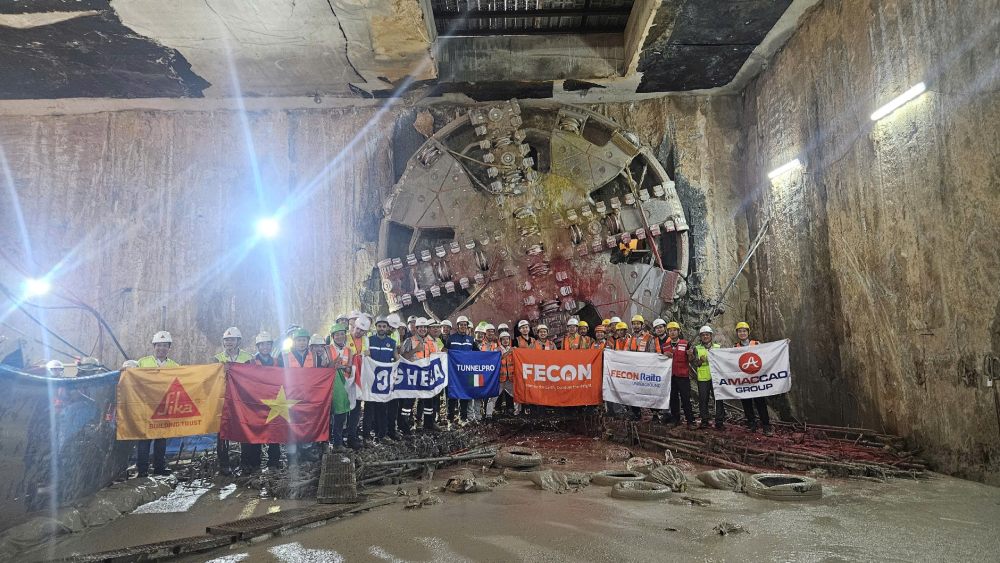
This is also the first time Hanoi has a section of underground Metro line completed with TBM technology. This result reflects an important step forward in the construction capacity of underground works in Vietnam - a field considered a "difficult area" due to large dependence on geological conditions and construction technology level.
For many years, underground construction in Vietnam has mainly been associated with the leading role of foreign contractors. Domestic enterprises often participate in auxiliary tasks, accumulating experience according to each project. However, the actual implementation of Metro lines in recent times shows a clear trend of shift: Vietnamese contractors are gradually participating more deeply in high-technical value stages, instead of just stopping at supporting roles.
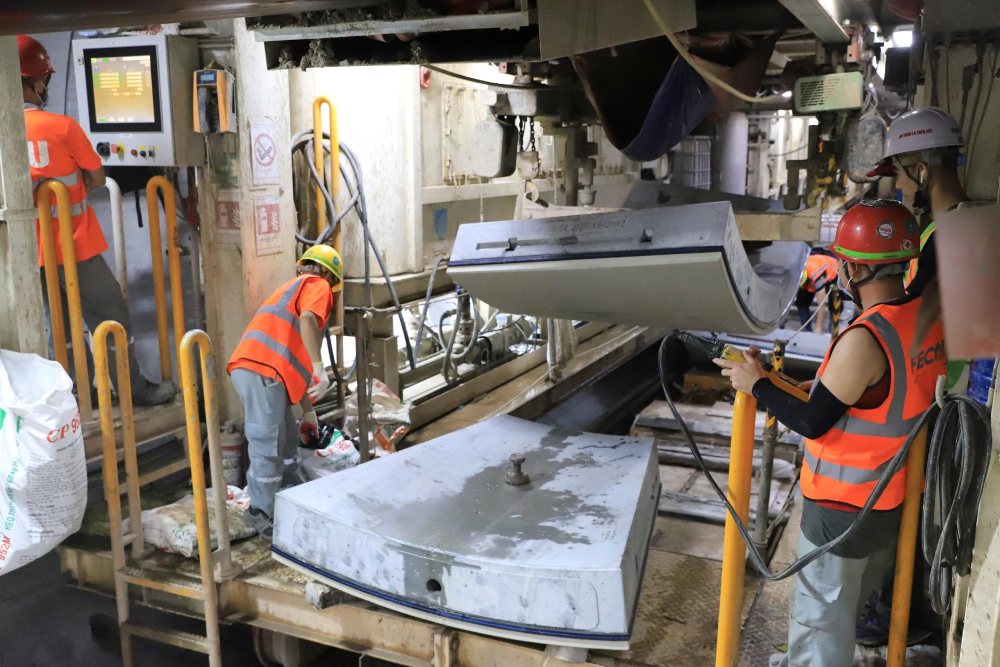
The Nhon - Hanoi Metro Project is a typical example of this shift. During the construction process, many important items such as foundation treatment, surrounding walls, underground structures... have been undertaken by domestic contractors with an increasingly proactive role. Notably, the direct participation of Vietnamese engineers in the operation of TBM shows that the level of technology access has taken a significant step forward, from learning to mastering each part.
Among the participating businesses, FECON is a typical example of the process of accumulating capacity in a systematic direction. Starting from foundations and geotechnics, this business has gradually expanded to urban underground works, where the integration between geological and stratigraphic understanding, groundwater conditions, survey and design experience and the ability to apply modern technology to construction is required.
On the Nhon - Hanoi Metro line, FECON not only performs familiar items such as foundation treatment, fence wall construction or underground structure, but also directly participates in the tunnel excavation process using TBM machines. This is an important difference, because tunnel excavation using TBM is not only a technical problem but also related to overall risk management of the project, from soil pressure, groundwater to subsidence control and safety of adjacent works.
This participation process is not a sudden step, but accumulated over many years. Since 2017, at the Metro Line 1 project in Ho Chi Minh City (Ben Thanh - Suoi Tien), FECON has for the first time approached and participated in operating TBM in 2 tunnel pipes about 781 m long from Ba Son Station to City Opera House Station and vice versa. Although the scale is still limited, this is an important starting step, helping the team of engineers get acquainted with the operating process, control equipment and coordinate with international experts in controlling response to soil and groundwater. In parallel with participating in the project, the enterprise also invests significantly in training specialized human resources in the field of geotechnics and underground works to proactively grasp all technical aspects from design to construction and monitoring throughout the excavation process.
Reality shows that capacity in the field of underground construction cannot be formed in a short time, but requires a continuous accumulation process through each project, each different geological condition. Each project is a "private problem", requiring high level of adaptation and risk control. Deeper participation in Metro projects helps domestic enterprises gradually form combat capabilities - ready to master technology for subsequent projects.
In the context that Vietnam is promoting the development of urban railway systems in major cities, the space for domestic contractors is wide open, especially real-world contractors like FECON. Projects such as Metro Line 2 Ho Chi Minh City, Metro Line 5 Hanoi, along with many new Metro lines, will create more opportunities for Vietnamese businesses to participate more deeply in the value chain, from surveying design, constructing with TBM shields to real-time monitoring to conduct excavation work professionally.
Opportunities only truly transform into capacity when accompanied by a long-term overall strategy. Mastering underground construction technology not only depends on each enterprise, but also needs support from the State's mechanisms and policies, especially in promoting technology transfer, human resource training and assigning tasks to domestic enterprises to participate in core items of the project.
From an industry perspective, the combination of breakthrough policies in infrastructure development with the orientation of improving the capacity of domestic enterprises and experience accumulated from practice will determine the level of mastery of Vietnam's underground construction sector. This is not only a requirement of Metro projects alone, but also part of the process of building national competitiveness for modern urban infrastructure development. Should the Ministry of Construction and the Government gather the advice of the business community and experts to quickly have the most appropriate policies to realize the goal of localizing the country's urban railway industry.


