
There are fields, there are pumps, but salt water is unacceptable
Standing in the middle of a rice field that is ripening in Dien Ban Dong ward, Da Nang, Ms. Le Thi Muoi gently rubbed a branch of rice that had turned yellow. A few days ago, she even hoped that if there was just one wave of fresh water in time, the rice would get through the most difficult stage. But the sun kept going, the water in the canal gradually dried up, and the Vinh Dien river water was salinized.
Farming is most scary when rice needs water but we are powerless. Looking at the dry and cracked fields, the rice blooms unevenly, the heart is burning like fire" - Mrs. Muoi said.
Her family has a few sao of rice. That area is not large if calculated by statistics, but it is the source of rice, revenue and effort of the whole crop. Since sowing, her husband and wife have put fertilizer, weeding, and guarding against pests and diseases. When the rice is about to sprout, water is scarce again. The difficulty is not only not having water, but also not daring to pump water because they are afraid of bringing salt into the field.
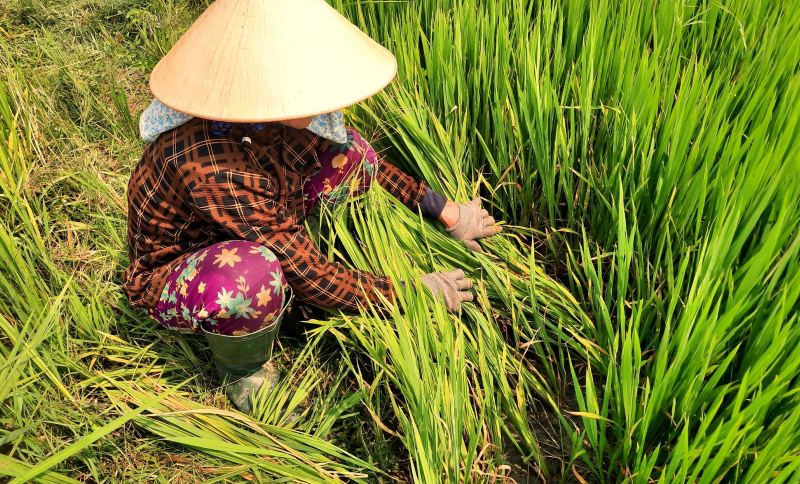
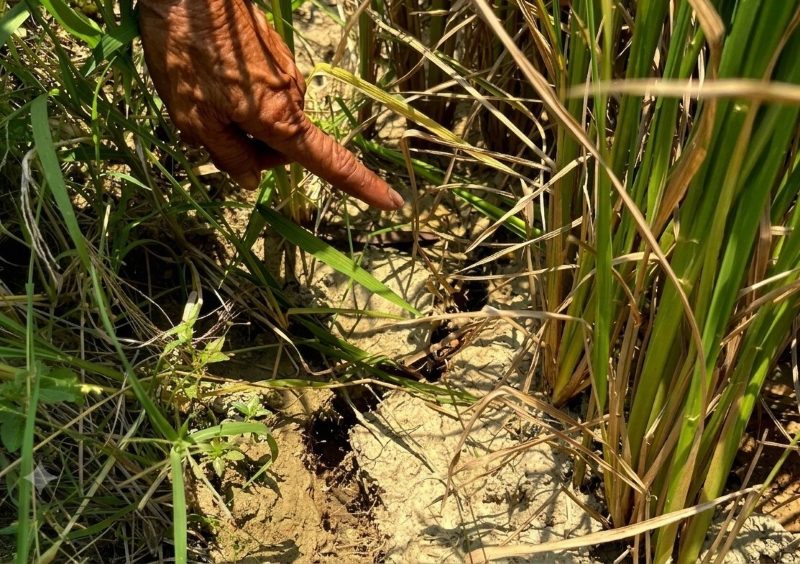
Ms. Muoi's story is also a common concern of thousands of farming households in Dien Ban Dong, Dien Ban Bac, Go Noi and production areas dependent on the Vinh Dien river water source. On hot sunny days, people go to the fields from early morning, walking along canals and ditches, waiting for each pumping phase. But at many times, pumping stations have to operate intermittently or temporarily stop due to increased salinity.
Mr. Tran Van Tu, a farmer in the Tu Cau area, recounted that one day he heard the news that the pumping station opened water, people rushed to the fields to dredge ditches. But the water did not return for long and then had to stop. "There are pumps, there are canals, fields are also waiting, but saltwater is unacceptable. Pumping in will only kill rice faster," Mr. Tu said.
Not only rice plants, but also vegetable beds along the river also suffer from the same thirst. Some households have to use well water for moderate irrigation, but in the middle of the dry season, the well is also gradually weakening. Some vegetable beds that have just grown green have yellow leaves, slow to grow, and even die dry after irrigation with unsafe water sources.
For farmers, saltwater intrusion is no longer a strange thing. What makes them tired is having to wait every year. Waiting for salinity to decrease. Waiting for temporary damification. Waiting for fresh water from upstream. Waiting for a rotating pumping schedule. Meanwhile, rice plants do not know how to wait.
Hoping for a long-term solution for fresh water
According to the irrigation sector, Vinh Dien River is an important water source for more than 2,000ha of agricultural production through 14 pumping stations, and is also related to domestic water and economic and service activities in the downstream area. When saltwater intrudes deeply, the impact does not stop at a few rice fields but affects the entire large production area.
To save from drought, this year Da Nang has deployed a seasonal saltwater dam on the Vinh Dien River, Dien Ban Dong ward area. The project is about 105m long, with a total investment of about 2.6 billion VND. At the same time, the agricultural sector is assigned to complete the project to build a permanent saltwater dam.
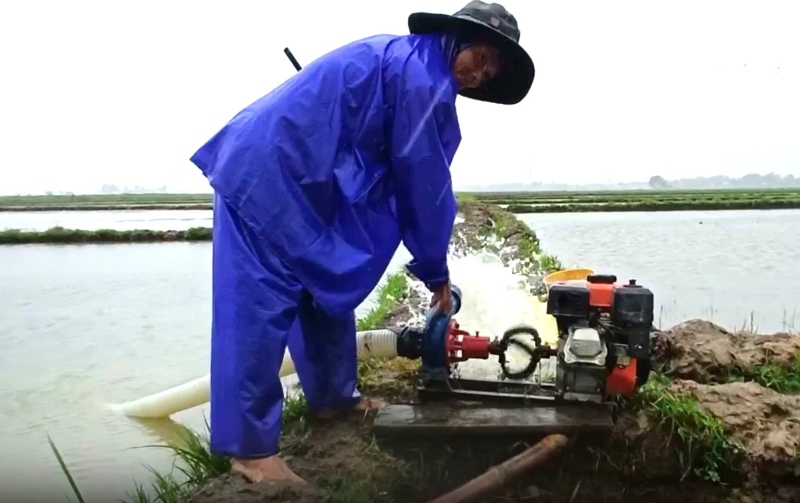
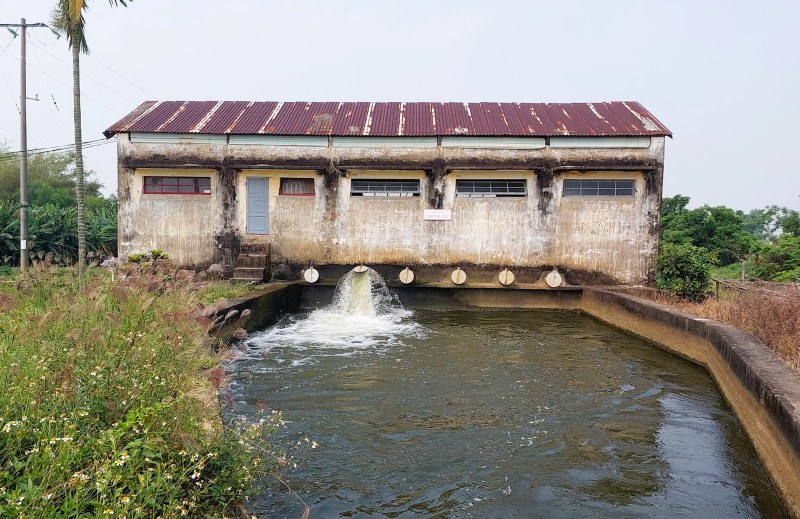
The temporary dam can help save a crop in an emergency situation. But for thousands of hectares of rice, crops and livelihoods of people along the Vinh Dien River, what is more needed is a sustainable drought and salinity prevention solution.
Therefore, when hearing information that the city government is preparing a project to submit to competent authorities for approval of the policy of investing in a permanent saltwater dam on the Vinh Dien River, many farmers in the area secretly rejoiced.
Hearing that the city plans to build a dam for a long time, our people are very happy. We only hope that the project will be implemented soon, with reasonable regulating valves so that fresh water can be maintained in the sunny season and safe flood drainage in the rainy season. Doing so will reassure farmers to stick to their fields" - Mr. Tu said.


