
Thousands of households struggle because of alum and saltwater intrusion
Once considered an area with abundant ground freshwater thanks to being naturally filtered through many thick layers of sand, but in recent years, many coastal sand areas of Quang Tri province are facing a situation of water source decline and serious alum contamination.
In Cam Hong commune, groundwater sources are heavily contaminated with alum, causing people many difficulties. Among more than 6,000 households in the whole commune, currently only 36 households are using clean water from Kien Giang Water Plant thanks to being located in the adjacent area.
Mr. Tran Hai Nguyen, a resident of My Duyet village, said that the source of domestic water is mainly exploited from sand dunes, so it is often in shortage in the summer. "If the drought lasts, the water has alum. People have to buy alum to treat it or pump water into tanks themselves to filter, which is very hard," Mr. Nguyen said.
To have water to use, many households have to invest in filtration systems or buy bottled water, but this is a significant cost for families who mainly live by agricultural production.
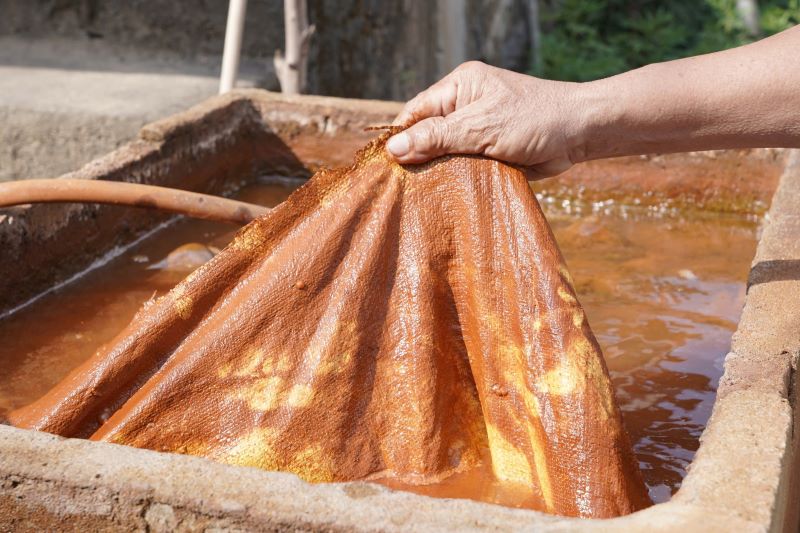
In Tan Gianh commune, although located near the Gianh River, people have struggled for many years to find domestic water sources. Ms. Doan Thi Xuan, 77 years old, residing in Trung Tien village, said that her family has switched from dug wells to drilled wells but still cannot avoid the situation of water being contaminated with alum and salt.
The family built a filter tank, but the water is only used for watering plants and washing clothes, and drinking water must be bought," Ms. Xuan shared.
Mr. Truong Xuan Tien, Head of Trung Tien village, said that the village currently has 268 households, and for many years there has been a shortage of clean domestic water. Although people have self-invested in filtration tanks to remove alum and salt, the effectiveness is not high.
People here have too much difficulty finding a guaranteed water source to use. For decades, the biggest wish of the people has been to have a stable clean water source to reduce difficulties in daily life," Mr. Tien said.
According to statistics, out of a total of 24 villages in Tan Gianh commune, 16 villages lack clean domestic water. Not only is there a shortage of water in the dry season, but many wells are also polluted in the rainy and flood season, causing clean water shortages to last for many years.
Efforts to find solutions to the clean water problem
The prolonged shortage of domestic water is directly affecting the lives and health of rural people. However, due to limited investment resources, many localities have not yet been able to build synchronous centralized clean water supply systems.
Mr. Tran Thanh Hai, Chairman of Tan Gianh Commune People's Committee, said that the situation of people lacking clean domestic water has existed for decades, but local resources are limited, so investing in a clean water system faces many difficulties.
The lives of the people are facing many difficulties. The commune has sent official letters requesting all levels and sectors to pay attention to support so that the locality can soon have clean water for people to use," Mr. Hai said.

According to the Quang Tri Provincial Center for Clean Water and Rural Environmental Sanitation, currently the percentage of rural people using clean water that meets new standards is about 64%, of which only about 40% use water from centralized water supply works.
Areas that regularly lack domestic water are concentrated in mountainous areas, semi-mountainous hilly areas, saline-contaminated downstream areas and coastal sandy areas.
Mr. Nguyen Truong Giang, Deputy Director of the Center for Clean Water and Rural Environmental Sanitation of Quang Tri province, said that functional sectors are reviewing areas at risk of water shortage to upgrade and invest in more clean water supply projects.
According to Mr. Giang, Quang Tri province is developing a thematic resolution on developing a clean water supply system for the period 2026-2030, with a vision to 2050. The goal is that by 2030, over 80% of rural people will use standard clean water.
In the context of climate change, prolonged hot weather and increasing saltwater intrusion, the clean water problem in many rural areas is still an urgent issue. The early implementation of synchronous and sustainable investment solutions for the clean water supply system not only helps people stabilize their lives but also contributes to ensuring social security and sustainable rural development.


