
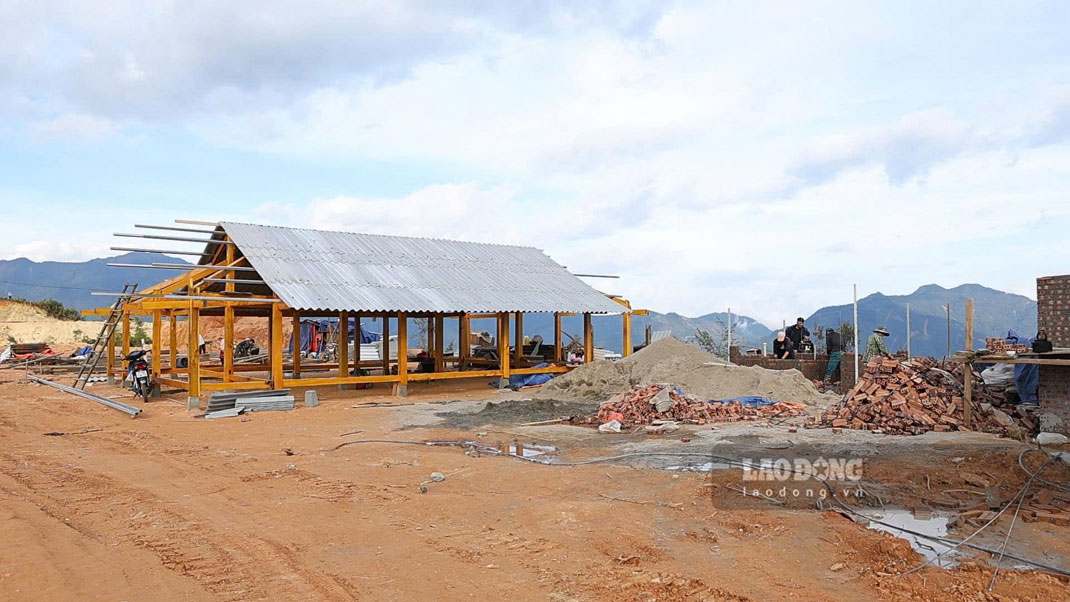
On the newly leveled red soil, wooden house frames gradually appear at the top of San Tra (Hanh Phuc commune, Lao Cai province). Old people set up kitchens to roll wood, young people erect poles, and young children run around the small construction site in the middle of the mountains and forests.
Everyone shares a common desire: this Tet to sleep peacefully in a new house, no longer worried about landslides every time heavy rain comes.
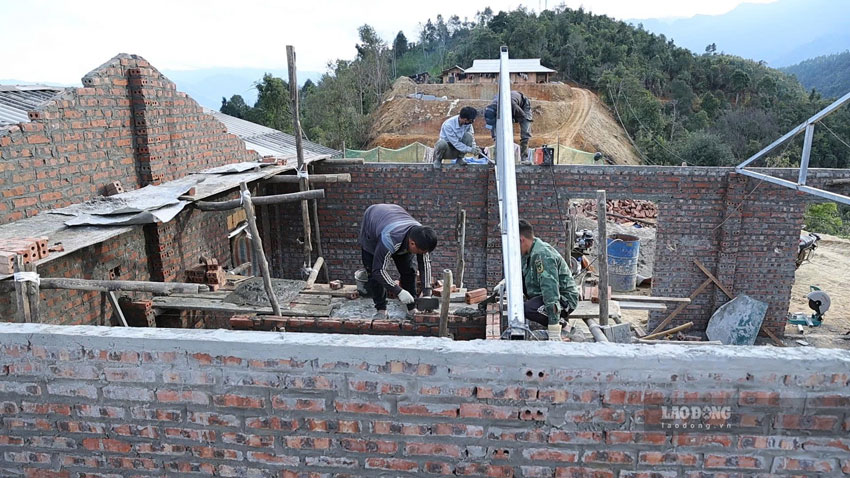
Not long before that, after storm No. 10, many hillsides appeared with long cracks, soil and rocks at risk of collapsing into residential areas. Through review, Hanh Phuc commune had 100 households with 537 people affected, of which 51 households had to be urgently relocated.
San Tra - a high hilltop with stable geology is chosen as a resettlement area for about 20 households. Looking from afar, the new residential area stands out in the green of the Northwest mountains and forests like a warm patch of color in the clouds, signaling a new life is forming.
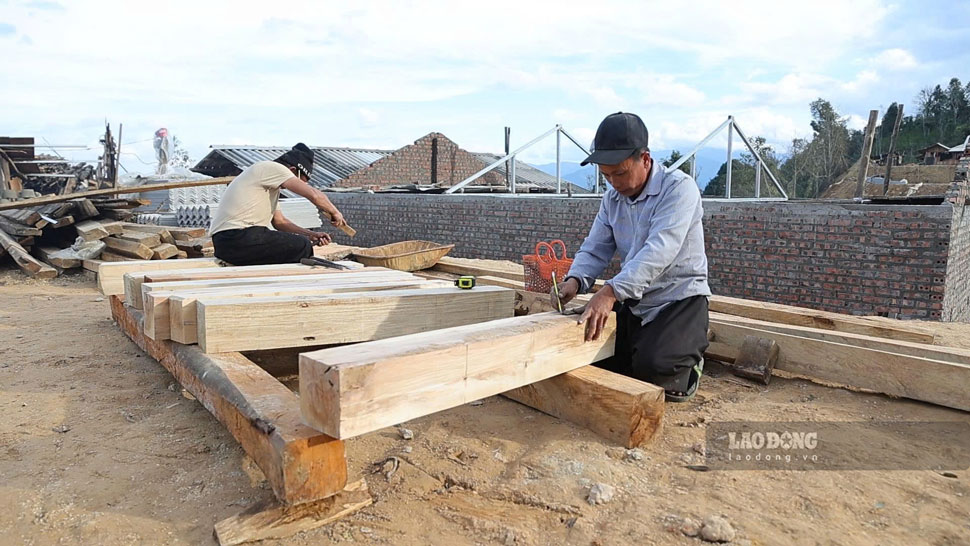
According to Mr. Hoang Van Tai - Chairman of the Vietnam Fatherland Front Committee of Hanh Phuc commune, the most difficult thing is not the lack of materials or harsh weather, but persuading people to leave the land that has been associated with them for many generations.
Some households told us that - this land is left by our ancestors, even if we die, we want to die here. Officials must go to each house, persistently analyze and explain so that people understand that safety is paramount," Mr. Tai shared.
Some families initially resolutely refused to go. But after many times commune officials returned, pointing out the risk of landslides, they finally agreed to apply for relocation.
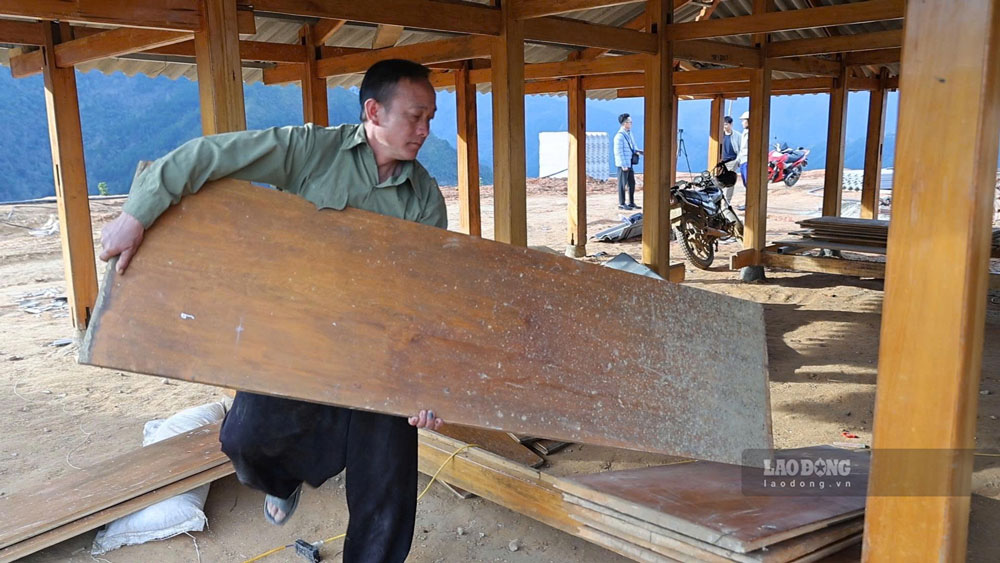
While the support funds have not been disbursed in time, local authorities have flexibly advanced, even some officials spend personal money to help people dismantle and transport houses.
Mr. Thao A Tinh's family (San Tra village) is one of the first households to stabilize their lives in the resettlement area. According to the plan, each household is allocated 200m2 of residential land to build main houses and auxiliary works.
Standing in front of a new house still smelling of wood, Mr. Tinh smiled gently: "The house has 5 people, moved here for almost a month now. Living high and dry, sure, even heavy rain does not worry about soil and rocks falling into the house anymore. Being allocated this flat land by the State, my family is very happy.
Not far away, Mr. Giang A Sia (Ban Cong village) is completing the final stages. His old house is located on a steep slope, each rainy season is a season of anxiety.
Moving up here is crowded, I am very excited. The road is still difficult when it rains, but after finishing the concrete road, life will be much more stable," Mr. Sia said, his hands still quickly tied the porch.
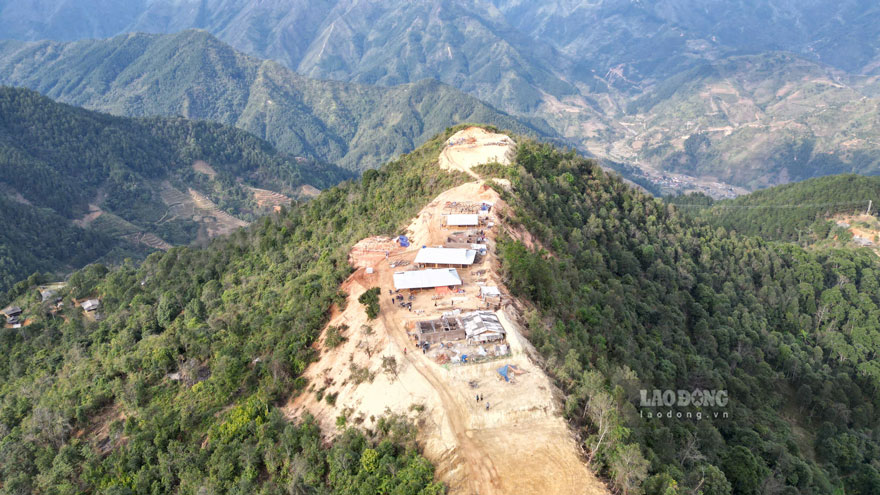
According to Hanh Phuc commune leaders, San Tra resettlement area not only serves storm and flood shelter but is also planned with a long-term vision.
Located on a high hilltop, this place has spacious space, overlooking valleys and terraced fields - an advantage for developing livelihoods and community tourism in the future.
In parallel with stabilizing housing, the locality is piloting the planting of economically valuable crops such as *hoi*, *doi*, and *nhat de*, gradually creating sustainable livelihoods for people in the highlands.


