
On the morning of July 30, the Ho Chi Minh City Department of Construction organized a preliminary conference after a month of implementing the toll exemption policy on 134 bus routes, including 109 subsidized routes and 25 non-subsidized routes.
According to the Ho Chi Minh City Public Transport Management Center, the city sets out 5 key targets to evaluate the effectiveness of bus fare exemption policies and develop public passenger transport, including: increasing passenger volume; improving people's satisfaction; ensuring at least 95% of bus trips depart and arrive at the station on time; by the end of the assessment period, 100% of passengers will have electronic authentication when using buses; and striving to switch to using green and clean energy for all inter-provincial buses by the end of 2026.
In the first 4 weeks of policy implementation (28 days), output reached about 7.7 million arrivals, an increase of 2.18 million passengers. The growth rate per week ranged from 33% to 45%, of which the fourth week maintained an increase of about 45%. A noteworthy point is that the passenger growth pattern over the years has changed.
It is estimated that by the end of July 2026, the Ho Chi Minh City bus system will serve more than 8.4 million passengers, an increase of about 39% compared to the same period in 2025.
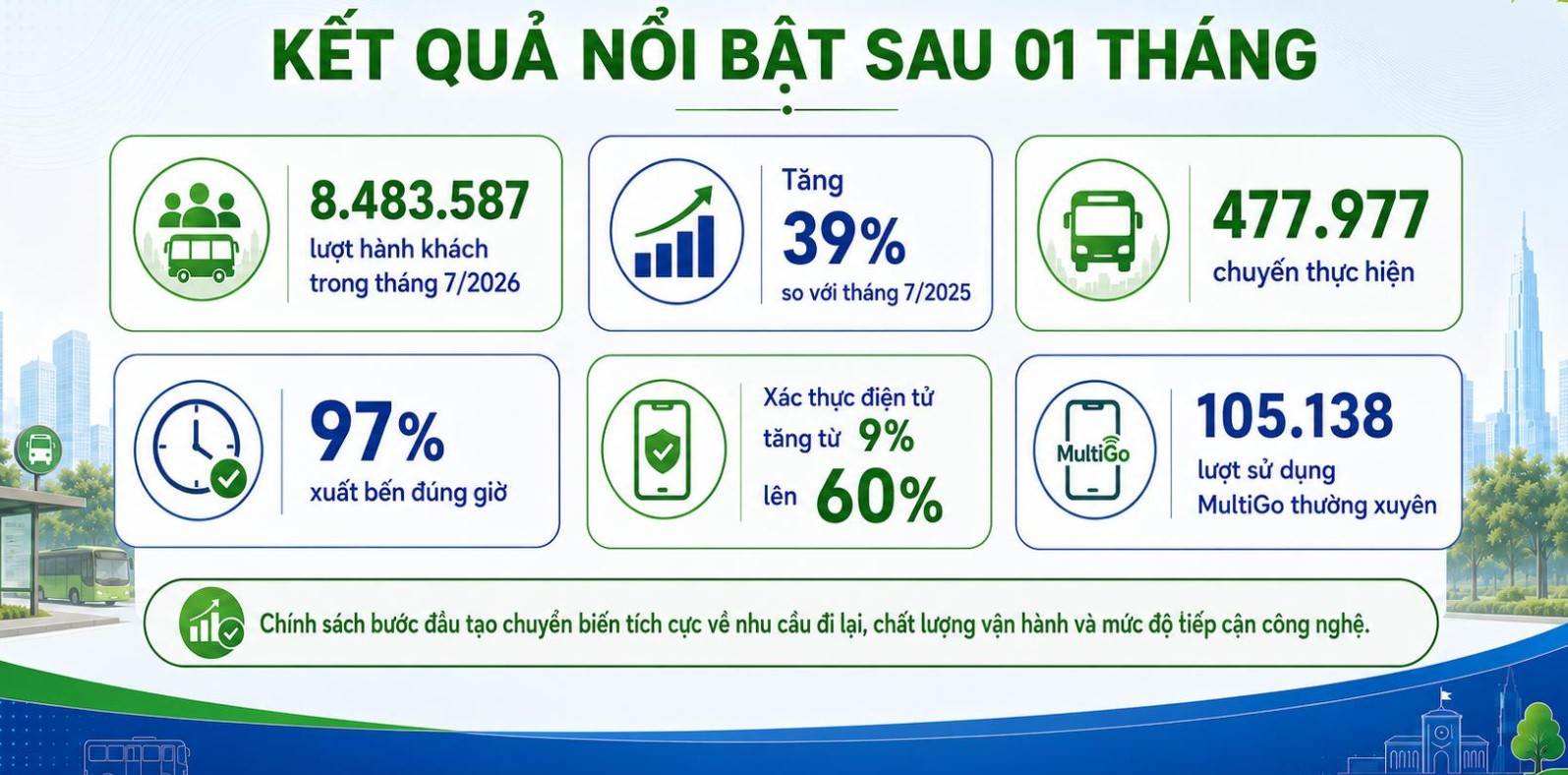
According to the Public Transport Management Center, in previous years, from May to August, bus volume often decreased due to student summer vacations - passenger groups accounting for a large proportion. However, this year this trend is no longer repeated. June recorded about 7 million passengers, and in July it increased to about 8.4 million passengers.
Representatives of the Center said that the toll exemption policy and synchronous solutions of the People's Council and People's Committee of Ho Chi Minh City have contributed to attracting more people to use public transport, changing the growth law of capital maintained for many years. Currently, Ho Chi Minh City has 134 bus routes, including 109 subsidized routes and 25 non-subsidized routes.
In which, inner-city routes increased output by about 38%, while non-subsidized and inter-provincial routes increased by up to 64%. In particular, some routes in the old Binh Duong area recorded an increase in passenger volume of up to 135%, nearly double compared to the same period last year.
Not only increasing in output, many operating targets also achieved positive results. The rate of buses departing and arriving at the station on time currently reaches about 97%, exceeding the minimum target of 95% set by the city.
Meanwhile, the rate of passengers performing electronic authentication when traveling by bus has increased from about 9% before the policy implementation to more than 60% after 4 weeks. All 134 bus routes are now equipped with card readers, supporting payment with bank cards, international cards, e-wallets and chip-based citizen identification cards.
Assessing the initial effectiveness of the policy, a representative of the Ho Chi Minh City Public Transport Management Center said that through actual monitoring, the bus fare exemption policy has contributed to reducing travel costs for people, gradually changing personal vehicle use habits, encouraging people to switch to public transport and creating a platform for interconnected connection between types of transport.
According to this unit, the city expects the policy to continue to contribute to reducing traffic pressure, reducing environmental pollution and forming people's habits of using public transport in the coming time.


